I was pleased to see that a collection of papers, American Magazine Writing was available on NetGalley for review, and next week I’ll write about my responses to the articles deemed good enough to have won prizes and be included in the published collection. The Atlantic came to my attention through interviews with some of its writers on various political programs on MSNBC. and I was pleased to see one of their articles included. However, I was disappointed to find that one of the women who writes for The Atlantic and whose contribution to debate I admire, Anne Applebaum, does not appear.
Anne Applebaum is a staff writer at The Atlantic. She is also a senior fellow at the Agora Institute at Johns Hopkins University, where she co-leads a project on 21st-century disinformation. Her books include Red Famine: Stalin’s War on Ukraine; Iron Curtain: The Crushing of Eastern Europe 1944–1956; and Gulag: A History, which won the 2004 Pulitzer Prize for General Nonfiction. Her most recent book is the New York Times best seller Twilight of Democracy, an essay on democracy and authoritarianism. She was a Washington Post columnist for 15 years and a member of the editorial board. She has also been the deputy editor of The Spectator and a columnist for several British newspapers. Her writing has appeared in The New York Review of Books, The New Republic, The Wall Street Journal, Foreign Affairs, and Foreign Policy, among many other publications.
Interviews with her and her contributions to political debate have always been well reasoned, thoughtful and, in my view, valuable. So, I finished the collection less inspired than I thought I would be. But more of that next week.
This week I returned to London after ten days visiting cities in the south of England – Brockenhurst (some information below), Southampton, Bath, Bristol and Exeter. I’ll follow those up next week.
Voting Yes in the Voice to Parliament Referendum
One of the most important things I had to do on my return was to go to Australia house to vote Yes for the Voice in the referendum. It was a wet day, but there was quite a crowd, most of whom had yes pamphlets which was a comfort as we edged forward to make this most important vote.
Back to my travels with some lovely memories of Brockenhurst.
The New Forest
The village we chose to stay in for our first visit to this area was Brockenhurst, and it really was ideal. It was thrilling to see the way in which the horses are part of this warm and friendly community. The forest we could see from the train recalled Enid Blyton’s Faraway Tree books, although she glossed over the accompaniment to the forest, the horses and ponies who wander the streets of the village. Their visits overnight are all too apparent in the manure which has to be sidestepped (not a problem for Jo, Bessie and Fanny in their excursions!) when pottering through the village. Another delightful feature showing the intermingling of animals, domestic and wild, and people is the ponderance of dogs in the streets (and cafes – their owners do not have to sit in the cold as we do in Canberra if we want a coffee on our dog walk). Dogs were gamboling in the forest, clearly accustomed to sharing it with the horses with no negative outcome for either. During the summer a hop-on-hop-off bus takes people through the forest, and there are numerous walks marked out. We did nothing organised, just wandered, coming into close range of horses and enjoying the forest. The blackberry bushes were not so kind. Gates on the pathways into the housing areas are a little complicated, but a person slowed to tell us how to get one open – adding to the friendly nature of the whole experience.
There was no Enid Blyton ginger beer, chocolate and surprises from lands over the faraway tree, but a terrific Italian restaurant, Enzee, and delicious cheese scones at The Buttery. Enzee featured a singer who added to the ambience of warmth, something different, and excellent food. The restaurant was a short walk from our accommodation at The Thatched Cottage. Breakfast was served at the Cottage – it was plentiful and included fruit, fruit juice, a variety cooked items, cereals and yoghurt. There is outdoor seating for the summer months, and cream teas are served in the afternoons.
The book I review this week is by Virginia Pye, a writer I have not read before. Net Galley sent me the uncorrected proof of The Literary Undoing of Victoria Swann for review.
The novel is inspired by a woman writer who wrote under the pen name, Gail Hamilton. She was exploited by her Boston publisher who paid her far less than her male counterparts. She was unsuccessful in her court case against her publisher and Virginia Pye began thinking about the impact on women writers in a similar position. Their fiction was not considered ‘high’ literature, whereas the men with whom they competed for recognition, were deemed to write meritorious works. Victoria Swann was the fictional outcome of Pye’s concerns on this issue, and she paints her as a writer whose books earned the company profits which allowed them to pay more highly respected writers (who did not sell so well) more favourable royalties than those paid to the woman writer who kept them in profit. Victoria Swann’s books were romances, ‘women’s novels’, and not to be revered or considered of any value – except in that they earned the publisher huge dividends in comparison with those works that were revered. The novel takes up arguments in which I am particularly interested, so to read this fictional account was thoroughly engaging.
Virginia Pye, The Literary Undoing of Victoria Swann, Regal House Publishing, 2023.
Virginia Pye has woven an insightful and engrossing story from a news story about a woman writer who, exploited by her publishers, took them to court. Victoria Swann’s narrative is the outcome, combining debate about the value of women’s and men’s writing, the way in which romantic novels are described to compare them badly with fictional work that has no romantic narrative, the feminist arguments for women’s right to equal payment and, alongside this, their right to property and how they might be seen as respondents or plaintiffs in a court. Victoria Swann, and in her later iteration, when she returns to her own name, Victoria Meeks is a wonderful vehicle for conveying these arguments. She is a captivating character, with a background that raises even more issues about women’s role, and a warm but strong presence.
Victoria Swann is introduced weathering the remains of winter in the slush and mud of Boston. She carries a carpet bag, which continues to feature as part of her apparel, although her beautiful clothing and smart boots give way to simple country clothing when she returns home, and later, to clothing that reflects her changed circumstances. The change is not only financial, but an indication of the way in which she begins to see herself as an author and purveyor of women’s concerns and demands for equality. Here, when she first appears, she is going to her publisher where she expects to be feted, provided with comfortable seating, delicious pastries of her choosing and tea. She is about to undermine the seemingly favourable circumstances she enjoys as a cosseted writer of bestselling novels, an advice column and shorter, but ever popular ‘penny dreadfuls’. See Books: Reviews for the complete review.
Porto Food Tour (cont.)
The photos from the Porto Food Tour reappeared – how I do not know. They really belong with last week’s blog; however, they could be of interest. Included are additional photos of the port wine cellars (old cellar, entrance, port that was offered for tasting); the food that was offered during the tour (Franceschina saucing, the fish alternative to the traditional Franceschina, a display of the pastries we discovered and the demolished sausages) and traditional buildings, including the swallows that appear on walls, internal and external with the friendly meaning of ‘welcome and please return’.
Walking between cafes
Van Gogh Museum
Van Gogh used a tea towel (see accompanying information) for his first painting of Daubigny’s Garden as he did not have a canvas!
The Hague
We took a short train trip to The Hague, visiting the Peace Palace (closed, but an impressive building) and admiring the combination of old and new architecture.
Peace Palace
Eurostar Amsterdam to St Pancras, London via Brussels
The Eurostar trip between Amsterdam and London passed through some tulip gardens and the photos below give a small insight into the travel by this really comfortable means. Although there has been a long queue each time I have travelled Eurostar, it is a great alternative to air travel for the short distance. This time we had one change, at Brussels, but this was easily accomplished because the signage is so clear.
Sunflowers for Ukraine – singers on the River Douro
This week’s blog is mainly about travelling in Porto and Amsterdam. However, I have been indulging myself with some novels bought for fun rather than NetGalley reviews. Two have men as their main protagonists, which is an interesting change for me. One, The Trophy Wife by Valerie Keogh I have not finished.
It is a psychological thriller, following novels such as The Lawyer, The Librarian and The Housewife – all of which feature a woman as the main protagonist. Good reads for the beach, or as has been the case at the moment, a train or plane. The Clare Chambers that I finished recently joins other of her work that I found really worthwhile reads. Back Trouble combines an autobiography by Phillip written while he is incapacitated with a back injury, with his present life. This is the aftermath of the failure of the publishing business he and his friends established and his current relationships with his parents and brother and various others. Although not as poignant as Small Pleasures this is worth reading.
Small Pleasures was a wonderful, although distressing read. However, there are certainly differences of opinion – a friend who read it as part of her reading group list found it unfinished and unsatisfying; another was in tears she was so engrossed and at one with the characters. The Other Mothers by Katherine Faulkner was a disappointment after her first novel, Greenwich Park.
Lisbon to Porto and Food Tour
We travelled from Lisbon to Porto by train, and after a short taxi ride arrived at our hotel. It was close to a train station, San Bento, which was a good start to our first day’s activity which was a food tour, a short train ride away over the Douro River in Gaia. Having experienced a similar tour in Amsterdam I had high hopes of this one – some of which were fulfilled. It is an ideal tour for people fascinated by the Portwine industry and keen to taste some of its products. The food suffered by comparison, and this makes the tour a bit of a disappointment for those more interested in the Portuguese culinary experience. There was some discussion of historical features as we walked – or rather, climbed up slopes of cobbles.
Unfortunately, some of the photos from the food tour disappeared. Here, the vats in which the wine is stored are shown – alas, the old wine cellar complete with bottles encrusted in cobwebs is in the ether somewhere. The placemat shows the wines that we tasted at the end of the tour. Lastly, my dish that replaced the meat sausages that were the typical Portuguese meal provided to the meat eaters. They came unaccompanied, so I hastily piled my chips onto the sausage platters. They disappeared more quickly than the sausages. My white fish was a dry fish in a light batter. The last photo is a Franceschina, the traditional bread, meat and sauce meal that is advertised everywhere -and eaten at any time it seems. The sauces (mild and hot) are poured on at the table. My alternative was a fish dish, replete with a crumbed topping instead of the toasted bread that is part of the traditional Franceschina.
As we walked through the streets, we were told about the value given to the introduction of Trash Art, as well as the attempts to retrieve the tiled walls that were originally destroyed. Trash art adorned one wall – but the traditional patterned walls seem far more attractive.
Bus and boat tour
After the long walk around Giai, the next day a peaceful bus and boat tour seemed an excellent antidote.
The bus took us through Porto’s streets, to the beach, and then to the river where we met the cruise boat. Porto’s hills and cobbles are quite a challenge, so the bus was an attractive option. It also took us further than we’d have been able to travel using public transport in the time available. The Casa de Musica is the last photo.
The last photo shows the hill we had to climb to leave the Gaia area to catch the train back to Porto. The bridge in the photo is the one the train travels over the river. We started somewhere near the bottom and had to climb to the tower, on cobbles. A very healthy walk after the food on the tour! And before eating at 29 Marina, below.
Eating in Porto by the river
There are numerous places to eat by the River Douro, and musicians appear at many of them. The lively woman singer replaced a man singing from our era, which had been really lovely. However, her loud and impassioned singing certainly brought people to their feet dancing.
The food at 29 Marina was delicious, the service friendly, and the drinks rather marvellous.
Amsterdam
Once again, we are staying in the Museum Quarter, a part of Amsterdam we enjoyed immensely last time we were here. One of the best features of this district (apart from the museums of course) is Zaza’s, a restaurant we ate at last time. We were able to get a table as we were happy to begin our meal early and leave by 7.45. Having just arrived by KLM from Porto, train from the airport to Central Station and then a taxi we were more than happy to do this. Speaking of KLM – what an excellent service! The check in was seamless, the boarding no more onerous than on other occasions, and the food and beverages served free for a two-and-a-half-hour flight were excellent. This compared markedly with the British Airways flight from Heathrow to Lisbon. Also, there was an interesting environmental effort displayed before we boarded.
Zaza’s
Zaza’s has an inventive menu, the chef magics up the most delicious concoctions, the service is friendly and efficient, and the ambience is delightful. Warm bread with a garlicky and light humous was served, then a small, delicious treat (eaten before I took a photo, and although special I recall only the goat’s cheese and poppy seed cracker) was followed by an appetiser – we chose the goats caramelised onion cheese tart topped with fig and rosemary – and a between course delight. Mine was a carrot and ginger soup, and my friend’s a champagne and lemon sorbet. These were served with panache – the champagne bubbling and fizzing and the soup being poured into a delicious accompaniment.
The main dishes were also successful – the problem being that the temptation to eat everything on the plate is insurmountable. Once again, we left Zaza’s without trying the dessert menu. The veal was served with parsnip puree, tarte tartine, sauces and greens. The prawns were served with a delicious risotto, a delicious sauce and peas.
Senor Moustache
Our next evening meal was very different, but also really great. Again, it was a return to an old haunt from our previous stay in Amsterdam. The meals we chose were a chicken taco salad and a beef taco salad. The taco provided a very light crisp bowl for a luscious salad. This comprised lettuce, carrot, beans, rice, radishes, onion, sauces and coriander.
Another small environment care effort
The NH Hotel in Amsterdam also has the ‘give up having your room cleaned and get a free drink ‘ as part of their contribution to doing something about the environment. I have some concerns as I am not sure how these measures impact on the staff. However, I am also taking advantage of the offer – tonight we had our free glasses of Sauvignon Blanc and our shared pizza before leaving for London on the Eurostar.
Van Gogh Museum
We made sure not to miss out on this experience by booking tickets in advance after having found that the museum was unable to cater for people arriving on the day. Although our time was set for 10.45, we were allowed in upon arrival and made the most of our time there. This was one of the most well curated exhibitions I have seen, with excellent signage and explanations in English as well as Dutch, all at easy eye level and clear. There will be more of this next week. But a good start is some of the many and varied self-portraits Van Gogh painted throughout his lifetime.
Hillary Rodham Clinton is the subject of this week’s review. Do All the Good You Can, How Faith Shaped Hillary Rodham Clinton’s Politics by Gary Scott Smith, University of Illinois Press, 2023 will be published in October.
Gary Scott Smith provides a rather different perspective on Hillary Rodham Clinton, or so it seems to me. My response may not be significant, after all, I am not an American political commentator, voter, or resident. However, I was strongly interested in the 2016 American election, and of all the many aspects of Hillary Rodham Clinton that became apparent throughout that period, advertisements, speeches, commentary and the debates, religion and Clinton’s commitment were not some. Scott Smith writes movingly of the role of religion in Hillary’s life and suggests that, if her campaign had addressed her commitment, it is possible that the 2016 run for President might have had a different result. Although I am not always impressed with his case for this, the discussion of religion in Clinton’s life makes valuable reading, showing as it does, the role of religion in American politics which is so different from that in Australian politics, and as Scott Smith demonstrates, from many other countries.
The book makes thorough use of quotes from Hillary Rodham Clinton’s speeches, the bible, and religious sources admired and referred to by Clinton. The chapter headings follow this pattern, with titles such as “Stay in Love with God”; “I Felt My Heart Strangely Warmed”: Clinton’s Spiritual Roots; “Let your Light Shine to All”: From Wellesley to the White House; “Be Rigorous in Judging Ourselves and Gracious in Judging Others”: New York Senator and 2008 Presidential Candidate; “I look Upon All the World as My Parish”: Secretary of State and Seeking the Oval office; “Be Not Weary of Well Doing”: The 2016 Presidential Campaign; and “God Grant That I May Never Live to Be Useless!”.
Scott Smith’s addition of the quotes to the basic information about the progress of Hillary Rodham Clinton’s life through childhood, Wellesley, First Lady, Senator, Presidential Candidate 2008 and Secretary of State, and during the 2016 Presidential Campaign and its aftermath highlight the flavour of this biography. It is aimed at being markedly different from others in giving Clinton’s religious commitment an enduring and empowering role. Scott Smith argues comprehensively for a woman known for a host of other virtues (and shortcomings) to be known for her sincerity and commitment to her religion, and its essential role in her life. In taking up the cudgels for the possibility that a greater public commitment to religious thought and teachings by Clinton during the 2016 Presidential Campaign may have achieved a different result he also moves into different ground. See Books: Reviews for the complete review (to be finished).
After the Covid update: Cindy Lou reviews; trip to Portugal; Heather cox Richardson.
Covid update Australian figures on 15 September 2023.
The latest COVID-19 news and case numbers from around the states and territories
Posted Fri 15 Sep 2023 at 3:38pm ABC
Australian Capital Territory
There were 169 new COVID-19 cases in the ACT last week. The territory has four people in hospital with COVID-19, and none in intensive care. There were three new deaths recorded. Source: ACT Health
New South Wales
The state has recorded 2,020new COVID-19 cases, up from last week’s total of 1,919. There are 606 cases in hospital with the virus, 10 of those in intensive care. There were 20 new deaths recorded. Source: NSW Health
Northern Territory
The territory updates its COVID-19 data fortnightly, there have been 130 new cases between September 1 and September 15. The Northern Territory currently has four patients in hospital. No new deaths were recorded. Source: NT Health
Queensland
Queensland’s new COVID-19 reporting process now works on a seven-day rolling average system, as per the federal government’s national reporting site. The state recorded 64 average daily cases as of September 13, down from an average of 91 the previous week. There is a seven-day rolling average of one death as of September 12, with 949 patients in hospital with the virus, and 25 in intensive care. Source: Federal Department of Health and Aged Care
South Australia
The state has recorded 625 new COVID-19 cases the past week, as of September 13. South Australia currently has 41 patients in hospital and none in intensive care, as of September 12. There were no new deaths recorded. Source: SA Health
Tasmania
We are still waiting on an update from the state’s health department. Please check back for the statistics or scroll down to find the national data.
Victoria
Victoria recorded 746 cases in the week from September 8 to September 14, a 28 per cent increase from the week before. There were three deathson average each day over the week. The state also recorded a seven-day rolling average of 133 patients in hospital with the virus, and nine people in intensive care.Source: Victoria Department of Health
Western Australia
We are still waiting on an update from the state’s health department. Please check back for the statistics or scroll down to find the national data.
Cindy Lou eats out in Checkendon near Wallingford
Dogs allowed inside – a delightful welcome to The Highwayman Inn. Another dog appeared later and in the course of conversation her owners described their links to Australian cities, Melbourne and Brisbane where close relatives live.
The Highway man has a good menu, with gluten free options. However, it was odd not to be offered a wine list. Fortunately, the wait person recalled that there was a Marlborough Sauvignon Blanc by the glass. Although not as stunning in appearance as the gin and two tonics, the Kakako was pleasant.
Desserts were an apple and rhubarb crumble with custard, pronounced a good crumble; a luscious rice pudding with a plum compote; and two scoops of Purbeck ice-cream – honey comb and raspberry ripple from a fine range of flavours. Purbeck ice-cream from Dorset is indeed special, and I shall look for it on other English menus.
From the delicious range of mains, birds won the evening with duck and guinea fowl chosen. Master Chef would probably have agreed that the duck was cooked well, and I enjoyed the guinea fowl.
Apart from the wine menu not being brought to the table, the service was pleasant and reasonably efficient. Perhaps the first course could have come a little more quickly, but the atmosphere was comfortable and the dinner table discussion excellent.
Breakfast on the Waterside Cafe narrow boat on the Regents Canal
This is an all-time favourite – a visit to Paddington usually includes a meal at the Waterside Cafe with its cream teas, omelettes and paninis. All of the latter have generous and interesting fillings and are served with salad or crusty bread. The bread needs to be mentioned, as so often it is not crusty, but thin white sliced. The latter is not a usual feature of Australian breakfasts in my experience. The scrambled eggs served with generously buttered crusty loaf made a lovely breakfast in the glorious setting.
Drinks at the 146 Bar The Hilton, Paddington
This is a pleasant bar, with friendly and competent service, a good drinks list, and attractive accompaniments served with the drinks.
Pearl Liang Sheldon Square Paddington
Pearl Liang is a really appealing Chinese restaurant that we have been going to for years. On several New Years Eves, a concert at Wigmore Hall was followed by a splendid meal at Pearl Liang, before watching the fireworks in Hyde Park from the windows of our flat. Returning, even without the concert, is always fun. This time we had old favourites and the wait person was keen to have us try something different on the next occasion.
Sheldon Square, in which the restaurant is located, has been beautified, with water and plants replacing the concrete tiers.
Trip to Portugal
After a successful trip to Lisbon several years ago we were interested in returning. This time, instead of booking a hotel in the city centre I chose a Secret Escapes offer of a hotel in the historic district, Alfama, close to the Castile de S. Jorge. Secret Escapes provided us with a different experience – a marvellous breakfast, port in the bedroom, and free entrance to several cultural exhibitions. We enjoyed the breakfast, had a glass of port, and decided to wander around the area, with a quick trip into the city centre to reprise our past experience. No cultural visits this time. But the bus ride into the city centre provided plenty of colour as the driver deftly avoided pedestrians, buildings and other vehicles on the steep narrow streets down the hill – and up again on return.
The hotel, Solar Do Costelo, was delightful. Although there were some stairs to climb it was probably just as well, as the breakfast was tempting and copious. The ocean could be viewed from one window, and a small section of the castle wall from the other.
The hot selection included broccoli one morning, which created some confusion to some guests. However, I found it a wonderful accompaniment to my smoked salmon. There was a variety of cakes as well, and these remained throughout the day together with tea and coffee for guest to have when they chose. For the healthier guests a large basket of apples was also available at reception.
After two nights in Lisbon, we boarded the train to Porto. This was easy to do without booking in advance. We had allocated seats, alas on the slower train, but as we boarded at S. Apolonia where the train started there was little difficulty in storing luggage and finding our seats. When the train filled up, at subsequent stations it appeared to be more difficult but somehow everyone found a seat and a place for their luggage. Most of the journey was uneventful, but some of the stations were highly decorative, we passed olive trees and some beautiful homes, interspersed with the usual downbeat sights familiar along most rail routes.
We ate in a street cafe familiar from our last visit in Lisbon city centre, and at a cafe near the hotel. The latter was wonderful, with its friendly staff, cooking seemingly accomplished in various buildings in the vicinity, and laundry hanging above (a familiar sight in all the streets). The Portuguese food will feature next week.
Flowering tree outside the Castile De S. Jorge
Heather Cox Richardson letter from America
18 September 2023.
Headlines this morning said that “Congress” is in crisis. But that construction obscures the true story: the Republicans are in crisis, and they are taking the country down with them.
The most immediate issue is that funding for the government ends on September 30. The Senate, controlled by Democrats, is moving forward on a strongly bipartisan basis with 12 appropriations bills that reflect the deal President Biden hammered out with Speaker Kevin McCarthy in May to get House Republicans to agree not to default on the United States debt. That deal, the Washington Post editorial board pointed out today, was a comprehensive compromise that should have been a blueprint for the budget.
But extremist House Republicans reject it, and there is no sign that House Republicans can even agree among themselves on a replacement, let alone on one that can make it through the Senate and past the president’s desk. Extremists in the Freedom Caucus insist they will not agree to any budget that accepts the deal McCarthy cut with Biden. In addition, although appropriations bills are traditionally kept clean of volatile issues, the extremists have loaded up this year’s appropriations bills with so-called poison pills: rules that advance their attempt to impose their ideology on the country but are unacceptable to Democrats. McCarthy had to pull back the Pentagon spending bill on Thursday before the House went home for the weekend, leaving without any plan in place for funding the government.
Over the weekend, six Republicans from five different party factions offered a plan for a short-term continuing resolution to fund the government and avoid a shutdown. Designed to appeal to the extremists, the plan goes back on the deal McCarthy struck with Biden. It proposes a 1% cut to the federal budget, but that 1% is not applied evenly: the defense budget and the budget for the Department of Veterans Affairs would not take any cuts—Republicans have learned how voters react to hurting veterans—requiring an 8% cut to everything else. It includes the border measures the extremists want, and provides no money either for Ukraine or for disaster assistance.
It’s not clear that Republican House members will vote for the bill, and if they do, the bill is unlikely, encumbered as it is, to make it through the Senate.
What the House Republicans have managed to do recently is to try to appease the extremists by launching an impeachment inquiry into President Biden, claiming that he enriched himself through his son Hunter’s business dealings when he was vice president. McCarthy had to open the inquiry himself, without a House vote, because lacking any evidence, he didn’t have the votes to set such an inquiry in motion. On the Fox News Channel on Sunday, Representative Michael McCaul (R-TX) said McCarthy has given him the role of assisting in the inquiry, but admitted: “We don’t have the evidence now, but we may find it later.”
To try to get at the president, the Republicans have hammered at his son Hunter, who has begun to push back, today filing a lawsuit against the Internal Revenue Service for failing to keep his tax information private as the law requires. He is referring to the two men who testified before House committees trying to find dirt on Hunter Biden and who made the rounds of reporters with their allegations that the IRS did not adequately pursue charges against him.
Meanwhile, video has emerged of the conditions under which extremist Representative Lauren Boebert (R-CO) was kicked out of a kid-friendly Beetlejuice concert last weekend. Boebert has repeatedly accused those protecting LGBTQ civil rights of “grooming” children for sexual activity. Not only was she vaping, she and her date were groping each other quite intensely. Boebert is in the process of getting a divorce, and her date, it turns out, is co-owner of a gay-friendly bar that has hosted drag shows.
Things are not all ducky with Republicans in the Senate, either. Senator Tommy Tuberville (R-AL) refuses to lift his hold on more than 300 military promotions until the Pentagon changes its policy of allowing service members leave time and travel expenses to obtain abortion care. While he insists he is doing no damage to the military, actual military officers, as well as members of his own party, disagree. They say the holds are hollowing out our military leadership and that the damage will take years to repair, since the promotion holds also stop junior officers from moving up. Those holds mean lower pay and retirement, tempting junior officers to move out of the military to higher-paying private sector jobs.
The Veterans of Foreign Wars (VFW) today wrote a public letter to Tuberville asking him to remove his hold and warning that “harming American service members as leverage in Washington political battles” set a “very dangerous precedent.” They also noted that in a survey of VFW members, including those in Alabama, “VFW members strongly conveyed that politicians should not be able to harm the troops over political disputes and that political decisions that harm the troops would affect the way they would vote in upcoming elections.”
And now Trump, who leads the extremists, has suddenly changed course on abortion, the leading issue for most of his base, in order to weaken his rival for the 2024 Republican presidential nomination, Florida governor Ron DeSantis. After packing the Supreme Court with three extremists who helped to overturn the 1973 Roe v. Wade decision by which the Supreme Court recognized the constitutional right to an abortion, Trump yesterday said the six-week abortion ban DeSantis signed, which would ban abortion before most women know they’re pregnant, was “a terrible thing and a terrible mistake,” although he also appeared to endorse abortion bans in general. Trump’s vice president Mike Pence, in contrast, is calling for a federal ban on abortion.
Republicans have finally recognized that about 63% of Americans think abortion should be legal in “all or most circumstances,” according to a new poll by 19th News jand SurveyMonkey. But only 9% believe it should be illegal in all cases, although 14 states have enacted such extensive bans. The survey also found that support for abortion rights has increased since the June 2022 Dobbs v. Jackson Women’s Health Organization decision that overturned Roe v. Wade.[These figures are interesting in relation to one of the arguments made by Gary Scott Smith – see book review above].
Trump has suddenly also become more problematic for the Republicans. On Sunday night, Trump doubled down on his past antisemitism by sharing a Rosh Hashanah message that celebrated the Jewish New Year by accusing “liberal Jews” of voting to “destroy” America and Israel.
Then, today, Katherine Faulders, Mike Levine, and Alexander Mallin of ABC News reported that long-time Trump assistant Molly Michael told agents investigating Trump’s mishandling of classified documents that he wrote to-do lists for her on the back of documents with classified markings.
Meanwhile, the administration continues to go about the daily work of governance.
On Sunday, U.S. national security advisor Jake Sullivan met in Malta with China’s top diplomat to keep communications between the two countries open. Today, Secretary of State Antony Blinken met with Vice President Han Zheng of China on the sidelines of the United Nations General Assembly in New York. “The world expects us to responsibly manage our relationship,” Blinken said. “The United States is committed to doing just that.”
Also on the sidelines of the U.N. General Assembly today, 32 coastal Atlantic countries from Africa, Europe, North America, South America, and the Caribbean launched the Partnership for Atlantic Cooperation. This new multilateral forum echoes regional organizations the administration has backed elsewhere and seeks to establish a mechanism for implementing “a set of shared principles for the Atlantic region, such as a commitment to an open Atlantic free from interference, coercion, or aggressive action,” as well as coordinated plans for addressing issues including climate change.
Finally, five Americans who have been imprisoned in Iran are home tonight, along with two of their spouses. In exchange, the U.S. freed five Iranian citizens who were imprisoned or were about to stand trial, although three of them declined to return to Iran (two have chosen to stay in the U.S., and another went to a third country). The Republic of Korea has released $6 billion of Iran’s money to Qatar for use for humanitarian aid to Iranian citizens suffering under the sanctions that prevent medicines and food from coming into the country.
Brett McGurk, the National Security Council’s coordinator for the Middle East and North Africa, told the Washington Post’s Jason Rezaian that the funds had not previously been frozen; they were held up in South Korea because of that country’s own regulations. Under Trump, Iran spent heavily from similar accounts in China, Turkey, and India. Now that they are released, the funds will have more legal restrictions than they did when they were in South Korea.
The Biden administration has prioritized bringing home wrongfully detained Americans. Today’s events bring the number of those the administration has brought home to 35.
This week I have recovered my earlier review of The Agatha Christie Collection as I am renewing my acquaintance with her work during my visit to Wallingford where Agatha Christie is being commemorated.
Agatha Christie, The Agatha Christie Collection(Kindle Edition)
The Agatha Christie Collection is a great ‘starter’ collection for readers new to Christie. It comprises an excellent overview of her work, including four novels and a short story collection. I have some criticism of the way in which the works are sequenced, but not with the variety: two Poirot and Hastings detections; a Tommy and Tuppence; and an independent story that featured none of Christie’s usual sleuths.
I wonder why The Mysterious Affair at Styles, the first Poirot case, was not placed at the beginning of the collection. To get the flavour of the Poirot /Hastings relationship I suggest reading it, and The Murder on the Links in sequence. In The Mysterious Affair at Styles we have the beginning of the important relationship between Poirot and Hastings, its development through the first case where both are relatively young. In The Murder on the LinksHasting’s departure from London upon his marriage takes place, preparing the reader for his more spasmodic involvement with the cases after this. Although the collection does not include any of the future partnerships Poirot enjoys, Hasting’s departure leaves the way open to those between Poirot and Ariadne Oliver, for example.
The Tommy and Tuppence story, The Secret Adversary, relates to their first case, an exciting amalgam of the lives of a post WW1 young couple who had made their mark during the war but are now finding it difficult to find employment. They are drawn into an adventure that includes spies, Americans, important British officials and romance. Including this novel shows Christie’s ability to not only produce her popular Belgian sleuth detective stories which revolve around a small group, Poirot’s unique detection of clues and red herrings, but a fresh young couple whose pace contrasts vividly with Poirot’s.
The independent story, The Man in the Brown Suit, does not rely on a major sleuth. Rather, the characters speak for themselves, with a range of comedy, romance and exciting locales.
Short stories are not my favourite, but Christie turns her mastery of clues and red herrings to effect in this collection.
After the review: Agatha Christie statue in Wallingford; celebration of Agatha Christie in Wallingford; The Guardian coverage of the Agatha Christie statue; recycling initiatives; innovative play area in Cambridge; Secret London – 17 bookshops in London.
Agatha Christie Statue
I seem to be following writers on my travels around England. Last week I was at the Barbara Pym Conference at St Hilda’s. Now I am in Wallingford where Agatha Christie lived in nearby Winterbrook at the house that was to become known through its portrayal in The Mysterious Affair at Styles. Christie was not fond of the house, with its memories of Christie and her unhappy first marriage.
However, Wallingford is remembering Agatha Christie with the erection of a statue to her celebrated status. It is on the edge of the Kinecroft, a large expanse at which the annual Bunkfest is held. What Christie will think next year, as she sits quietly with her book on the sidelines, with loud music, 2000 visitors drifting around eating and enjoying the surrounds and their favourite bands I do not know. Sophie Hannah, who has written some new ‘Agatha Christie’ novels, might even find material for a new one in this environment.
The bookshop is also celebrating Agatha Christie, with new publications of her books, and books about her and her writing.
A local restaurant has used the title of one of Christie’s books, Five Little Pigs.
Despite Agatha Christie’s Five Little Pigs being associated with the poisoning of a larger-than-life artist, his mistress whom his painting, and his wife who is found guilty of his murder, the restaurant appears to be a lunch time favourite.
Walligford is a market town a bus ride from Oxford and is also the location for the filming of some of Midsomer Murders. It looks rather too for any of that quiet on my morning walk.
The interest in Agatha Christie is replicated by this article in The Guardian.
The Guardian
Agatha Christie statue takes seat on bench in Oxfordshire town
Memorial by Ben Twiston-Davies is sited in Wallingford, where the mystery writer lived for more than 40 years
A life-sized bronze statue of Agatha Christie has been unveiled in the Oxfordshire town of Wallingford, near where the detective novelist resided for more than 40 years.
The statue depicts the writer holding a book and seated on a bench overlooking the Kinecroft, an area of open grassland. Sculptor Ben Twiston-Davies – who also designed the Agatha Christie memorial in London – said in a YouTube video about the statue that it shows her “looking out as if she’s seen a clue for one of her stories”.
Christie bought Winterbrook House, located on the banks of the River Thames near Wallingford, in 1934. Many of her books were written at the house, and it remained her primary residence until she died there in 1976. She is buried in the churchyard of St Mary’s Church, Cholsey, just south of Wallingford.
Christie’s grandson, Mathew Prichard, unveiled the statue on Saturday. “This is a real honour and I am thrilled to be here. The family lived here for decades and at the time Agatha would not have welcomed this as she was very private,” he said, according to an ITV report. “But today I am sure she is looking down on all of us and delighted at this tribute. The local council and the artists have done an incredible job. It is a great day.”
Hundreds turned out to the weekend event, ITV reported. The statue is positioned near Wallingford Museum, which houses a permanent exhibition, At Home with the Queen of Crime, displaying photos and letters from the time the writer spent living in the area.
Being commissioned by Wallingford town council to create the statue was “music to my ears”, said Twiston-Davies. Making the figure was about “a year’s work”.
The sculptor added that statues should represent an “idea that we all cherish” and that the new Christie figure is “a little monument to the importance of imagination”.
New publications are displayed in the Wallingford Bookshop
The BBC played a dramatised version, in three episodes of Why Didn’t They Ask Evans? recently. A friend who is an astute reader and television audience member deemed it a worthwhile program, so I look forward to seeing it on Australian television in the future.
Two recycling initiatives
Seen in the Grand Plaza Cambridge – a child friendly initiative.
During shopping hours this play area is filled with children and carers comfortably ensconced in the deck chairs. I was there early so was able to take this photo – before I scurried away to have my morning coffee and read a book.
Secret London
17 Charming London Bookshops That Are Perfect For Literature Lovers
All wisdom can be found in a book – which makes these London bookshops pretty valuable places… Find your next thrilling read at one of these brilliant spots.
The creak of wooden floors. The hushed reverence of people browsing the shelves. The unmistakable scent of new books. There honestly is nothing like a good bookshop to while away the hours, losing yourself in the finest literature known to humanity. And you better believe that London has some winners – in fact, we’ve found a whole host of London bookshops that will satisfy anyone with a love for the written word. So, what better way to spend World Book Day than pottering around one of these beauties and picking up your next paperback.
Where better to start than with a bookshop inspired by literature? Libreria was shaped by Jorge Luis Borges’ ‘The Library of Babel’, a short story about a library which holds all books. Mirrored walls and ceilings make this place seem huge, and the books are arranged in idiosyncratic categories such as ‘mothers, madonnas, and whores’. Leave the phone behind though, because this is a tech-free space. Find out more here.
This little bookshop near Camden High Street is perfectly hidden away from the hustle and bustle. In springtime, expect this bookshop to be adorned in flowers (making it all the more harder to find, just FYI) and offering up a wide selection of used and rare books. Prices range from 50p to £50, so you can pick up bargains or go for the pricey stuff if you’re flush with cash (you lucky thing you).
Bookshops and Notting Hill are a dream team, so we’re big fans of this spot. Charming, and stuffed to the rafters with an epic selection of literature, it’s a brilliant spot to while away the hours. You can head along for their regular talks and Q&As with authors, but for our money, your best bet is to find the right book and head up the road to Biscuiteers, to lounge around reading and munching biccies.
Staying in notoriously foodie Notting Hill, you’ll find a bookshop and intimate eatery all in one. As the name suggests, Books for Cooks focuses on the wonderful world of food, with floor to ceiling shelves filled with cookbooks. Even better, they regularly trial recipes in their on-site test kitchen, meaning you’ll leave with both inspiration and a full stomach.
An endlessly charming, Dickensian-looking spot just off the Kings Road, John Sandoe Books has been fiercely independent for over sixty years. With over 30,000 titles in stock, you’d have to be insanely picky to leave here empty-handed – the stock is so large, there are even books stacked up the stairs!
Lying behind the highly ‘grammable green facade is a gem of a bookshop. Foster Books boasts a charming bow window, along with a stunning range of rare books. The shop regularly leads lifestyle bloggers on a pilgrimage to Chiswick, but they’d do well to stick around and browse once the posing’s done.
There are multiple branches, but you all know the one we’re talking about. The original Marylebone branch of this bookshop chain features heavily on Instagram – hey, we’ve all done it – with the Edwardian features making for a picture-perfect bookshop. Books are arranged depending on their country (no matter what the genre), and will surely stir up a sense of wanderlust in the casual visitor. Find out more here.
This one barges aside other competitors in the race for London’s best bookshop. Floating on Regent’s Canal, Word on the Water is easily the most buoyant of London bookshops. Whilst the novelty of browsing on a barge is a big draw, the boat’s range of talks, poetry readings, and musical performances make it one to visit. Read all about it.
Owner Ray Cole opened Hurlingham Books back in 1968, and is still running things a half-century later. It isn’t the kind of place for window-shopping, purely because the windows are usually blocked by stacks and stacks of books. Between the shop and the nearby warehouse, this bookshop boasts over one million books – so if you can’t find something here, you’re no friend of books.
The UK’s oldest LGBTQ+ bookshop, Gay’s the Word has been a London institution since the 1970s. In the intervening years, they’ve faced down homophobia, Customs raids, and the rise of online booksellers to sell fiction and non-fiction to the good people of London, as well as acting as the headquarters of several gay rights movements. Long may they continue. Read more here.
For both longevity and prestige, Hatchards remains unsurpassed amongst London bookshops. They’ve been flogging fiction since 1797, making it the oldest bookshop in the UK – and one of the most trusted, too, with no fewer than three royal warrants to its name. In recent years, they opened up a St Pancras branch, but nothing matches the original for old-world charm. See more here.
Tucked away in charming literary haven Cecil Court, this is the most specialist of specialist bookshops. Alice Through The Looking Glass is (unsurprisingly) dedicated to all things Wonderland, a treasure trove full of gifts, memorabilia and rare editions of Lewis Carroll’s stories. There’s artworks! First edition books! Clothing! Stationery! Basically anything and everything Alice related. There’s also a mini museum featuring some extra special items that, unfortunately, aren’t for sale, but they do have a white rabbit called Harley as more-than-adequate compensation. You can read all about it here.
The bricks and mortar shop of the London Review of Books sits a stone’s throw away from the British Museum. It’s a place to find everything you knew you needed, plus a load of books you definitely didn’t need but secretly coveted. Their coffee and cake shop is rather nifty, and it’s a frequent stop for writers publicising their newest work.
The name gives it away: buy as much or as little as you’d like from this bookshop. From their perch on Charing Cross Road, they’ve sold secondhand books to passersby of a literary bent – particularly those in the market for rare or hard to find treasures. It’s a sweet spot for a lovely bit of bargain hunting.
Is there a prettier London neighbourhood than Primrose Hill? Once you’ve drunk in those magnificent views over the city, you can mosey on over to Primrose Hill Books for your next literary indulgence. The bookshop, which is run by a lovely husband and wife team, have got new and second hand books aplenty, so you’re not going to be leaving empty-handed.
The London literati are a frequent fixture at this lovely little bookshop on Fulham Road, with author Michael Morpurgo and former New Zealand Prime Minister Helen Clark amongst the recent visitors. A beloved fixture in the community since 1990, the bookshop caters to all, and boasts a well-stocked children’s section that’ll make it a hit with the little folk in your life.
781 Fulham Road, SW6 5HA
17. Artwords Bookshop
Tucked into a little corner of Broadway Market, this east London bookshop is a palace of pleasure for all sorts of alternative titles that you might not find in many other places. Plus, if the books aren’t quite doing it for you at the moment, you can dive into their section of glossy magazines that should scratch an itch. Egg-cellent.
Barbara Pym, her novels and her relationship with her sister, Hilary, are at the forefront of my mind this week. I have just attended the Barbara Pym Conference on the theme of sisterhood, so Some Tame Gazelle (first published 1950, Virago Modern Classics 2009) is an appropriate place to begin.
Barbara Pym’s first published novel was Some Tame Gazelle, which she began in 1935 and redrafted until its first publication in 1950. This was a fictional account of herself and her sister as contented spinsters, enjoying a life of happily unrequited love, and a comic proposal in Barbara/Belinda’s case, and for Hilary/ Harriet of flirtations, a constant admirer, and an ill-judged proposal. Barbara Pym’s friends from Oxford also feature, in varying comic and unappealing guises. The Bede sisters were to appear briefly in a future novel, An Unsuitable Attachment, still happy spinsters, but now seeing the world with the assistance of one of Harriet’s devoted curates following in their wake.
However, while I was at the conference the novel that most frequently came to mind was Excellent Women (first published 1952, Virago Modern Classics 2008).
Excellent Women, written between 1949 and 1951, and published the next year, the second novel to be published, features Mildred Lathbury, a spinster who to all appearances, has the features typical of her unmarried state. She is contrasted with Helena Napier, a vivacious anthropologist who, with her husband Rocky, complete with the glamour of his navy days flirting with Wrens, moves into the flat above Mildred. That they must share a bathroom is a lingering concern for Mildred, whereas Helena is serenely unaware of the niceties, dedicated as she is to her work. Rocky provides Mildred with some romantic moments that wilt like the mimosa she buys, but Everard Bone, Helena’s co-anthropologist is more likely to provide a future, even if that, as Mildred ruminates, is making an index or washing dishes.
Excerpt from The Reality behind Barbara Pym’s Excellent Women: The Troublesome Woman Revealed, Robin R. Joyce, Cambridge Scholars Publishing, 2023.
An Excellent Woman of Delicious Intent
Excellent Women, Pym’s second published novel, is a more sophisticated work [than Some Tame Gazelle]. While Pym continues to use comedy and irony, the significance of Mildred Lathbury’s control of the narrative must not be underestimated.
Throughout the novel Mildred’s dual voice undercuts her public utterances; assumptions about spinsterhood; and convention. Pym’s use of the dual voice for Mildred’s observations works against the typical understanding of a spinster: she is expected to be ‘involved and interested in other people’s business’ (EW, 5) ‘mousy and rather plain [… dressed in a] shapeless overall and old fawn skirt’ (EW, 7) or ‘fussy and spinsterish’ (EW, 12). However, throughout the novel Mildred’s observations and internal voice, juxtaposed with her conventional behaviour and utterances, give her authority. Doan’s explanation of Pym’s double narrative helps to describe this feature of Pym’s writing when she says ‘On the surface, the reader is presented with a narrative voice fully compliant with normal social expectations […]. Yet underneath this veneer of mild-mannered conformity, another voice speaks to challenge, even to ridicule, a social order that calls for the repression of unkind retorts. […].
Contrary to the view that spinsterhood is synonymous with sadness, the spinsters in Excellent Women exhibit a range of feelings and personalities. Only one is a figure of sadness and hers is an affected sorrow. Pym describes Winifred Malory as of a ‘romantic, melancholy nature, apt to imagine herself in situations […who] kept by her bed a volume of Christina Rossetti’s poems bound in limp green suede’ (EW, 40-41). Mildred affects no sorrow. Although she also has a volume of Rossetti, she is more inclined to read a book of Chinese cookery (EW, 21). Mildred is open to the new experiences the Napiers bring into her life. At the same time, she continues to enjoy her annual meals with William Caldicote, uninhibited by any possibility of romance; outings with Dora Caldicote; her relationship with the Malorys; her church activities and part-time work on behalf of impoverished gentlewomen. See Books: Reviews for the remainder of this excerpt.
After Covid comment: Barbara Pym Annual Conference in Oxford; Heather Cox Richardson; Cindy Lou; Heather Cox Richardson.
Covid in London, Oxford and Cambridge
Here, some people are wearing masks, and the hand sanitation stations remain. Mask wearing is not significant on the tube, although some commuters are taking precautions.
Barbara Pym 28th Annual Conference September 1 – 3 2023, St Hilda’s College Oxford
This week I went to the Annual Barbara Pym Conference held in Oxford in September. The North American Barbara Pym Conference is held in Cambridge USA in March. I have attended both in the past, and they are a joy in both venues.
However, the modernisation of St Hilda’s where Barbara Pym attended Oxford University in the 1930s is rather disconcerting. The accommodation is far easier to navigate than the Hall with its stairs and old-fashioned bathrooms (or even shared bathrooms – reminiscent they may be of Mildred Lathbury’s concerns in Excellent Women, but reminiscing can only go so far!) On the other hand, I miss the hot Vernon Harcourt Room where the presentations used to take place, and the SCR where one could imagine Barbara at work or play (we did end up being in this room, where the team I was on came second in the trivia quiz). The old buildings remain, and registration took place in one of these. Again, Excellent Women takes up a theme that applies: Helena Napier cuts through the ideals associated with old buildings in preference for new when she imagines Mildred’s former home as ‘a large. inconvenient country rectory with stone passages, oil lamps and far too many rooms…One has a nostalgia for that kind of things sometimes. But how I’d hate to live in it’. Yes, the Vernon Harcourt Room often saw participants giving into jet lag with the heat, and the stairs were an uncomfortable climb!
Tomorrow the presentations will be as excellent as ever, and perhaps the shiny new buildings will eventually become as much part of the Barbara Pym history as the ones more closely associated with her. In the meantime, reading a Barbara Pym novel must suffice. Here, I return to Mildred from Excellent Women with some comments on this most splendid of Pym’ novels with its juxtaposition of Mildred the spinster and Helena the married woman, its anthropologists and the siblings from the vicarage. The hallmarks of a Barbara Pym novel woven in a style that allows for the ‘warm bedsocks’ nature of Pym’s work to be appreciated at the same time as my feminist approach to Pym’s work gets a hearing.
St Hilda’s
Dinner was held in the modern Pavilion. Another disappointment- oh for the grand old dining room! But even this dismay turned to joy when the large soulless windows gave diners the chance to see a magnificent sunset.
The AGM heralded a new committee and Chairperson, as well as some changes to the constitution. Both appeared to have been well considered by the outgoing committee and members and were accepted without much debate. The Conference Dinner was held in the familiar older part of the St Hilda’s complex – a welcome return to chandeliers and white tablecloths .
Conference Speakers
And then on to the first speakers of the conference. The papers were markedly different, demonstrating the ability of the organisers to ensure the appeal of the conference to a range of audience members. The first speaker, Jutta Schmidt, with the topic of sisterhood in literary families, gave an excellent run down of some of the writing sisters we know – and, so appealingly, some we did not. It is always pleasant to have confirmation of ideas and knowledge, and in some cases, this is what this presentation achieved. A reminder that the relationships between the Bronte sisters were not amicable, compared with the high esteem that Jane and Cassandra Austen held for each other, was noted. This relationship could not compete with the sometimes vitriolic ‘sisterhood’ between A.S. Byatt and Margaret Drabble. Vanessa Bell and Virginia Woolfe were linked to the title of a Barbara Pym novel, An Unsuitable Attachment, an example of sisterhood and friendship rather than the antagonism between other couples. Less well-known literary sisters were a particular joy to hear about. The Porter sisters, Jane and Anna Marie provided a different story, perhaps one that resonates with Barbara Pym’s experience in the 1960s, with their sinking into oblivion. Before this occurred, they were famous amongst British novelists in the nineteenth century, paving the way for the sisters Bronte and Jane Austen. They published twenty-six books. Devony Looser has written Sister Novelists: The Trailblazing Porter Sisters, Who Paved the Way for Austen and the Brontes to celebrate their work, and hopefully upgrade our history of women writers.
Kate Murphy, a historian and author of was the next speaker. Before she began researching for this paper her knowledge of Pym was scant. However, her work on the women in the BBC (Behind the Wireless: A History of Early Women at the BBC) made her eminently suitable for talking about Barbara’s sister, Hilary who worked for many years at the BBC. Kate cleverly wove together her formidable knowledge of that institution, and her new appraisal of Hilary Pym into an excellent presentation. By the end I felt that I knew so much more about Hilary and her working experience, alongside the familiar story of Barbara Pym and her writing and work at the African Institute.
Kathy Ackley later gave a presentation on her personal relationship with Hilary Pym, using letters, meals with Hilary and discussions over several years of Kathy’s Pym authorship (The Novels of Barbara Pym) and involvement with the Barbara Pym Society. Having the two perspectives of Barbara’s sister was a marvellous contribution to the conference.
Amongst the other papers was a spirited talk on bringing Pym to film; Some Tame Gazelle and its presentation of Harriet/Hilary (and Belinda/Barbara) at the BBC; and Barbara Everett’s accessible and academic talk about the Pym sisters and Barbara’s work.
The conference, as always ended with a read dramatisation of one of Barbara Pym’s work. This time Some Tame Gazelle was the inspiration for a humorous end to the conference. The very contented spinster sisters, having rejected a proposal of marriage each was indeed a suitable finale for this conference about literary sisterhood.
Yvonne Cocking, now in a wheelchair (see Photo above), wrote the play keeping faithfully to Barbara Pym’s words, and deftly moving between scenes in her inimitable way (Yvonne has produced numerous Pym short stories and novels for these dramatisations). Yvonne is a star of the Barbara Pym Conferences, and it was thrilling to see her in her familiar role.
Punting on the Cherwell – there were enough breaks in the program to enjoy walks around the gardens and to admire punters on the Cherwell.
The participants were a diverse group, with long term members and newer members who enjoy Pym’s work and want to know more about this wonderful writer. Young and older mingled happily during presentations, coffee breaks, meals, and wandering around the gardens. Barbara Pym’s work, the conference organisers and participants make the newest Pym reader welcome, along with those to whom her work and conferences are so familiar. It was splendid, as Barbara would say, to return to St Hilda’s, old and new friends, and an abundance of insights into the joy of being a Pym reader – and, of course, a listener at a very splendid conference.
On my return to London there was yet another reminder of a Pym novel at Paddington Station –
After all, who can forget Sophia’s mother’s concern that she lived in North Kensington, rather too close to the Harrow Road? See Barbara Pym’s An Unsuitable Attachment for this gem. On the sign is the address of one of the flats I lived in while I was in London – oh dear! far too close to the Harrow Road.
Heather Cox Richardson Letter from an American
Yesterday, Vice President Kamala Harris arrived in Jakarta, Indonesia, to attend the U.S.–Association of Southeast Asian Nations (ASEAN) Summit and the East Asia Summit. ASEAN is a political and economic union of 10 member states in Southeast Asia whose combined population is more than 600 million (almost twice the size of the U.S.); the East Asia Summit expands ASEAN with several more nations. At meetings today, she emphasized the U.S. commitment to Southeast Asia and the Indo-Pacific. “We are a proud Pacific power, and the American people have a profound stake in the future of the Indo-Pacific,” she said.
Harris noted that Americans “share historic bonds and common values with many of the people and nations here” and that the region shares the same interests in security and prosperity. Commerce between Southeast Asia and the United States supports more than 600,000 American jobs, and ongoing economic cooperation offers enormous potential for growth. “It is therefore in our vital interest to promote a region that is open, interconnected, prosperous, secure, and resilient.” She announced the establishment of a U.S.-ASEAN Center in Washington, D.C., to deepen the economic and cultural engagement between members of the two entities.
She emphasized that the United States is committed to the Indo-Pacific and that it is “committed to ASEAN centrality.”
As the press was leaving a photo opportunity between Harris and Indonesian president Joko Widodo, the White House pool reporter called out two questions, one to each leader. The White House pool reporter is the one designated by all the other outlets to represent the press for the day. This reporter, Patsy Widakuswara, is an Indonesian American and the White House bureau chief for the Voice of America, the government-owned but independent U.S. broadcaster around the world. Indonesian officials physically blocked Widakuswara, told her to leave, and banned her from any other events.
“It was tense, but I didn’t feel anxious or panicked or anything like that, because I knew that I was just doing my job,” Widakuswara told Liam Scott of VOA. ”And I also knew that the VP’s office would stand by me.”
And stand she did. Harris refused to enter the summit room until the entire press pool, including Widakuswara, was inside. Indonesian officials later expressed their regret, said her shouts raised security concerns, and reiterated support for press freedom (although Reporters Without Borders ranks Indonesia 108th out of 180 countries for press freedom).
A spokesperson for the U.S. State Department told VOA: “A free and independent press is a core institution of healthy democracies and is vital for ensuring electorates can make informed decisions and hold government officials accountable.”
Harris’s defense of freedom of the press, a key pillar of democracy, stands out today as judges enforced the rule of law—the central pillar of democracy—in important ways.
This morning, U.S. District Judge Lewis Kaplan ruled that Trump’s liability for defaming writer E. Jean Carroll had already been established by the jury in May and that the jury in the January trial will only have to decide how much money to award her. Kaplan also refused to cap the damages. The jury in May awarded Carroll $5 million.
In Austin, U.S. District Judge David Ezra ruled that Texas must remove the barrier buoys and razor wire it has installed in the Rio Grande by September 15, and he prohibited Texas governor Greg Abbott from installing any others without proper approval. Ezra, who was appointed by Republican president Ronald Reagan, found that the United States was likely to win a lawsuit against Texas on the grounds that the state violated a federal law by affecting the navigation of the river and that the state cannot usurp the power of the federal government to enforce immigration laws.
About 80% of the barrier was initially in Mexican waters in violation of international treaties, and the Mexican government has formally protested it three times. Texas Republicans are calling for Congress to defund the Department of Homeland Security until they are satisfied with its border policies. The court found “that Texas’s conduct irreparably harms the public safety, navigation, and the operations of federal agency officials in and around the Rio Grande.”
Texas has already appealed today’s decision.
In Florida, Yuscil Taveras, the IT worker at Mar-a-Lago who alleged that Trump and his aide Walt Nauta and property manager Carlos de Oliveira tried to delete incriminating videos concerning the handling of classified national security documents from surveillance cameras, has reached a cooperation agreement with special counsel Jack Smith’s office. In exchange for not being prosecuted for his own part in the activity, Taveras will testify against the others.
Los Angeles Times senior legal affairs columnist Harry Litman wrote, “This was coming but important that it’s here…. Now [the] question is: how can Nauta and DeOlivera not do the same?”
In that same case, Katherine Faulders and Mike Levine of ABC News reported today that voice memos made at the time by Trump lawyer Evan Corcoran show that he warned Trump in May 2022, just after the Department of Justice issued a grand jury subpoena for all the classified documents he had at Mar-a-Lago, that he had to comply and, if he didn’t, that the FBI might very well search Mar-a-Lago. Trump had asked “what happens if we just don’t respond at all or don’t play ball with them?” Despite Corcoran’s warning, Trump continued to suggest lying about the documents: “Wouldn’t it be better if we just told them we don’t have anything here?”
Another lawyer warned Corcoran that Trump would “go ballistic” if Corcoran pushed him to comply with the subpoena. When the FBI did, in fact, search the property the following August, Trump called it “a “shocking BREAK-IN,” with “no way to justify” it. The FBI found more than 100 classified documents still in Trump’s possession.
Today, six Republican and unaffiliated Colorado voters, including former state, federal, and local officials, sued the Colorado secretary of state and former president Trump to keep him off the 2024 ballot. Represented by Citizens for Responsibility and Ethics in Washington (CREW), they argue that Trump is “disqualified from public office under Section 3 of the Fourteenth Amendment” and therefore “does not ‘meet all qualifications for the office [of the President] prescribed by law.’” They believe the secretary of state must exclude him from the ballot because he is “constitutionally ineligible” to hold the office.
Like freedom of the press, the rule of law is central to our democracy. Its slow gathering of information and argument, weighing of evidence, and eventual verdicts is not foolproof, but it creates space to approximate the idea that we are all equal before the law. Today in Indonesia, the vice president defended freedom of the press. In contrast, faced with the inexorable march of legal processes that finally appear to be catching up to MAGA Republicans who appear to have considered themselves above the law, those same MAGA Republicans are trying to destroy the rule of law itself.
Today on Trinity Broadcasting Network, which senior NBC News reporter Ben Collins says bills itself as the largest Christian television network in the world, former Arkansas governor Mike Huckabee opened his most recent episode by saying that if former president Trump loses the 2024 election because of the many indictments grand juries have handed down concerning his behavior, “it is going to be the last American election that will be decided by ballots rather than bullets.”
I enjoyed the dinner with its excellent menu choice, evidence of a good chef, service with a smile, and some amusing asides. For example, my joy at seeing samphire was to be served with the fish became disappointment when broccolini replaced it. The explanation was that the samphire was not up to standard – but one could buy it locally! The entree of brie on beetroot with a crisp toile was delicious, and the fish meal was good – but would have been excellent with the samphire.
Breakfast was a pleasant enough buffet, but the coffee left much to be desired. The view, however, had the promise of magnificence.
I just received this Letter from an American and felt it worthwhile posting before publishing this week’s blog.
Heather Cox Richardson
Today, at the initiative of the George W. Bush Institute, U.S. presidential foundations and centers for thirteen presidents since Herbert Hoover released a statement expressing concern about the health of American democracy. The statement notes that while the diverse population of the United States means we have a range of backgrounds and beliefs, “democracy holds us together. We are a country rooted in the rule of law, where the protection of the rights of all people is paramount.”
“Americans have a strong interest in supporting democratic movements and respect for human rights around the world because free societies elsewhere contribute to our own security and prosperity here at home,” the statement reads. “But that interest is undermined when others see our own house in disarray.” Without mentioning names, it called on elected officials to restore trust in public service by governing effectively “in ways that deliver for the American people.” “The rest of us must engage in civil dialogue,” it said, “respect democratic institutions and rights; uphold safe, secure, and accessible elections; and contribute to local, state, or national improvement.”
Traditionally, ex-presidents do not comment on politics, and this extraordinary effort is the first time presidential centers have commented on them. Because this step is unprecedented the Eisenhower Foundation chose not to sign, although it commended the defense of democracy. But the centers for Hoover, Franklin D. Roosevelt, Harry S. Truman, John F. Kennedy, Lyndon Baines Johnson, Richard Nixon, Gerald Ford, Jimmy Carter, Ronald Reagan, George H. W. Bush, Bill Clinton, George W. Bush, and Barack Obama all did.
That the executive director of the George W. Bush Institute felt obliged to take a step that is a veiled critique of today’s Republican Party—Bush’s party—is a sign of how deep concern over our democracy runs. David Kramer, the Bush Institute’s executive director, said the statement was intended to remind Americans that democracy cannot be taken for granted and to send “a positive message reminding us of who we are and also reminding us that when we are in disarray, when we’re at loggerheads, people overseas are also looking at us and wondering what’s going on.”
While concerns about the weakening of American democracy have been growing since the beginning of the century, the 2024 election presents new challenges. The campaign season is heating up just as state and federal prosecutors are beginning to hold senior figures accountable for their attempt to overturn the results of the 2020 presidential election.
This timing means that on top of the usual partisanship of this era is layered a political fight over holding leaders accountable for crimes. On the one hand, we are seeing the release of increasing amounts of damaging information about right-wing figures. On the other hand, we are faced with the determination of right-wing leaders to stop the prosecutions. Since the best way to do that is to make sure a MAGA Republican wins the White House, we are in the midst of a storm of disinformation designed to undermine the key institutions of our democracy, particularly the rule of law.
In disbarment proceedings yesterday in California, Trump lawyer John Eastman refused to answer a question about whether he and others seeking to overturn the results of the 2020 presidential election discussed getting Senator Chuck Grassley (R-IA), the most senior member of the Senate, to preside over the counting of electoral votes on January 6 in place of Vice President Mike Pence, who had made it clear he would not go along with the president’s scheme to refuse to count votes for Biden in states Trump falsely maintained that he won. Eastman declined on the grounds of attorney-client privilege. When asked, he said his client was Trump.
Los Angeles Times legal analyst Harry Litman said: “That’s going to have to come out, and it’s a whole new nugget” about what was going on in Trump’s orbit to overturn the election results.
Today a Washington, D.C., jury found Trump’s former trade advisor Peter Navarro guilty on two counts of contempt of Congress for defying a subpoena from the House Select Committee to Investigate the January 6th Attack on the U.S. Capitol. A jury found another Trump ally, Steve Bannon, guilty of contempt of Congress in July 2022, but he is appealing the conviction. Navarro took to social media to say that he was “doing my duty to God, country, the Constitution, and my commander-in-chief.” He, too, is appealing his conviction.
Navarro’s attempt to cast himself as a patriotic victim—although it was a jury of his peers who convicted him—is part of a larger attempt to portray the rule of law as persecuting patriots. Proud Boys leader Enrique Tarrio, who yesterday was sentenced to 22 years in prison for his part in the conspiracy, abandoned the humble pleading he engaged in before the sentencing and turned to positioning himself as a political prisoner who is imprisoned for “speaking the truth.” (He also asked for donations to help his family.)
As they try to portray the rule of law as political persecution, Republicans are attacking the Department of Justice. Representative Jim Jordan (R-OH), chair of the Judiciary Committee, today made more accusations about the department’s handling of the case against Trump for stealing national security documents.
Also today, Fulton County, Georgia, district attorney Fani Willis responded to Jordan’s earlier demand to see communications between her office and Department of Justice officials investigating Trump’s attempt to overturn the results of the 2020 presidential election. Jordan has suggested that normal communication was improper.
Willis told Jordan that his attempt to interfere with and obstruct her office’s prosecution of state criminal cases is illegal and unconstitutional, and urged him to deal with the reality that two separate grand juries made up of ordinary citizens reviewed the evidence and decided that Trump had committed crimes. She called out his attempt to spin the case for political gain and suggested that instead he address “the racist threats that have come to my staff and me because of this investigation,” attaching ten examples of those threats.
Other countries are pushing the disinformation that splits Americans. A report published last week by the European Commission, the body that governs the European Union, says that when X, the company formerly known as Twitter, got rid of its safety standards, Russian disinformation on the site took off. Lies about Russia’s war against Ukraine spread to at least 165 million people in the E.U. and allied countries like the U.S., and garnered at least 16 billion views. The study found that Instagram, Telegram, and Facebook, all owned by Meta, also spread pro-Kremlin propaganda that uses hate speech and boosts extremists.
The report concluded that “the Kremlin’s ongoing disinformation campaign not only forms an integral part of Russia’s military agenda, but also causes risks to public security, fundamental rights and electoral processes” in the E.U. The report’s conclusions also apply to the U.S., where the far right is working to undermine U.S. support for Ukraine by claiming—falsely—that U.S. aid to Ukraine means the Biden administration is neglecting emergencies at home, like the fires last month in Maui.
Russian operatives famously flooded social media with disinformation to influence the 2016 U.S. election, and by 2022 the Federal Bureau of Investigation (FBI) warned that China had gotten into the act. Today, analyst Clint Watts of Microsoft reported that in the last year, China has honed its ability to generate artificial images that appear to be U.S. voters, using them to stoke “controversy along racial, economic, and ideological lines.” It uses social media accounts to post divisive, AI-created images that attack political figures and iconic U.S. symbols.
Today, President Joe Biden extended the national emergency former president Trump declared on September 18, 2018, before that year’s midterm elections, “to deal with the unusual and extraordinary threat to the national security and foreign policy of the United States constituted by the threat of foreign interference in or undermining public confidence in United States elections.” Biden noted that the internet has “created significant vulnerabilities and magnified the scope and intensity of the threat of foreign interference,” and thus the national emergency must be extended for another year. The original executive order provided for sanctions against foreign people or companies who try to influence U.S. elections.
In the impeachment trial of Texas attorney general Ken Paxton, we are getting a ringside view of a justice system in which equality before the law is replaced by MAGA Republican ideology. On Tuesday, Vianna Davila and Jessica Priest of the Texas Tribune and ProPublica reported that while Paxton’s office engaged in nearly 50 lawsuits against the Biden administration, it has refused to represent state agencies in court at least 75 times, forcing those agencies to turn to private lawyers and then to bill their expenses to Texas taxpayers.
Paxton appears to have used the powers of his office not to help the people who elected him, but to advance an ideological agenda along with his own interests.
Eliot A. Cohen The Hollow CrownShakespeare on How Leaders Rise, Rule, and Fall Basic Books: New York, 24 October 2023
Thank you, NetGalley, for providing me with this uncorrected proof for review.
This is an exciting read, from an author whose political experience and preceptive approach to politics, power and Shakespeare is only occasionally influenced by his own politics. Eliot A. Cohen’s The Hollow CrownShakespeare on How Leaders Rise, Rule, and Fall is a book to be read, savoured, read again, and used to interpret both modern and historical politics as well as every time you read or see a Shakespeare play. Although his political plays with their power-oriented characters predominate, there is an occasional reflection on a wider range of Shakespeare’s work. Readers of this book will find it difficult to watch any of Shakespeare’s plays without thinking about the way in which Cohen might approach them. This is an added joy to this thoroughly compelling work.
The book is divided into three sections: Acquiring Power; Exercising Power; and Losing Power. Chapter 1, Why Shakespeare? And the Afterword, Shakespeare’s Political Vision provide sharp and detailed bookends to the sections. Cohen acknowledges that Shakespeare’s political views, if any, were not known. Nor are they conveyed sharply through his work. As Cohen observes, Shakespeare’s characters are ambiguous, their arguments and stances are ambiguous, the plays do not simplify the political themes he addresses. However, as Cohen also observes, the questions and themes inform aspects of power, and it is these he addresses in detail. See Books: Reviews for the whole review.
After the Covid update: Vote Yes and date announcement to be announced; Are the Greens going to elect Trump (again)?- Bob McMullan; Slavery stole Africans’ ideas as well as their bodies: reparations should reflect this; Canberra welcomes spring early: London gardens next week!; Last supper? – Jane Goodall; Letter from America – Heather Cox Richardson.
Covid update
Australia cases – Updated 28 Aug at 7:06 pm local
Confirmed 11,576,428
Deaths 22,696
Global cases – Updated 28 Aug at 7:06 pm local
Confirmed 769,805,366
Deaths 6,955,484
–
There were 160 new cases recorded on 25 August, with 7 in hospital and none in ICU or ventilated. Three deaths were recorded in this period.
There are some worrying signs in recent polling which raise the disturbing possibility that a third-party campaign by the Green Party may once again divert enough votes from the Democratic Party candidate, in this case almost certainly Joe Biden, to get Donald Trump over the line in some key states and thereby deliver another Trump victory.
As this would be devastating for all the policies the Green Party supports it is worth considering how such a perverse outcome may come about.
It is early days yet, and I am more optimistic than some about Biden’s prospects, but the alarming possibility of a further and more dangerous term for Trump is realistically possible.
Harry Enten, the respected CNN analyst, wrote recently that “The chance of Trump winning another term is very real”. I am more optimistic about the probability than Enten, but his conclusion is correct, there is a real chance of Trump winning again.
Enten points out that no-one in Trump’s current polling position in the modern era has lost a presidential primary that didn’t feature an incumbent.
And while it is early days in the presidential election proper Trump is currently competitive in a contest with Biden.
Anyone thinking of becoming involved should measure their impact against this awkward reality.
A quick glance at history illustrates the potential problem for the Green Party.
There is no doubt that Ralph Nader cost Al Gore the 2000 election, with all the consequences that followed from George Bush’s election.
The data is clear. In Florida, the key state in deciding the outcome of the 2000 election, the final margin in favour of Bush was a mere 537 votes. Ralph Nader received more than 97000 votes in that state. If only 1% of them had voted for Gore he would have been President.
And election results have consequences. Bush was not as dangerous as Trump for American democracy, but there is little doubt that if Gore had been the president there would have been no invasion of Iraq.
What a difference that would have made to global peace and stability.
It is arguable, but not so obviously clear, that Jill Stein cost Hilary Clinton the 2016 election and therefore gave us the first iteration of Donald Trump as president.
The underlying evidence suggests that Stein definitely won sufficient votes in some key states to make the difference between Clinton winning and Trump. For example, in Michigan, Trump won by 10000 while the Greens candidate received more than 50000 votes.
In 2024 the potential for the most likely Green Party candidate, Cornel West, to help to elect Trump is emerging as a possibility. The first sign was a recent Emerson poll in Michigan. Between Biden and Trump, the poll indicated a probable tied vote. But when West was included in the question, Trump won by 2%. Another recent poll showed West having a similar net impact, this time in New Hampshire. Biden was clearly ahead in both surveys, but the inclusion of the Green Party candidate cut Biden’s margin by 2%.
Of course, the Green Party have every right to run a candidate and advocate for their preferred positions. And I don’t suggest the election of Trump is in anyway part of their motivation.
However, when potentially disastrous consequences may flow from actions you are considering I believe any failure to take them into account constitutes wilful neglect at best and dangerous adventurism at worst.
Ralph Nader may have been able to say that the impact of his candidature could not have been foreseen.
No-one in 2024 will have the same excuse.
First published in Pearls and Irritations, and The New Daily.
Slavery stole Africans’ ideas as well as their bodies: reparations should reflect this.
Jenny Bulstrode
Lecturer in History of Science and Technology, UCL.
The authors do not work for, consult, own shares in or receive funding from any company or organisation that would benefit from this article, and have disclosed no relevant affiliations beyond their academic appointment.
Republished from The Conversation under Creative Commons Licence
In a speech to mark Unesco’s campaign for the Remembrance of the Slave Trade and its Abolition, UN secretary-general António Guterres told the United Nations general assembly earlier this year that the inequalities created by 400 years of the transatlantic chattel trade persist to this day. “We can draw a straight line from the centuries of colonial exploitation to the social and economic inequalities of today,” he said.
Guterres’ words were echoed by Judge Patrick Robinson of the international court of justice, who has called for the UK to recognise the need to pay reparations for its part in the slave trade, telling The Guardian on August 22 that: “Reparations have been paid for other wrongs and obviously far more quickly, far more speedily than reparations for what I consider the greatest atrocity and crime in the history of mankind: transatlantic chattel slavery.”
Investment into the trafficking of African people in the Caribbean created a lucrative economic system that helped Britain develop into a global economic superpower. The consequences continue to be felt today – not only in vast inequities in the distribution of wealth and resources, but also in the denial and effacement of the people of African descent whose skills and knowledge helped power that industrial and societal transformation.
This year marks the 240th anniversary of arguably one of the biggest thefts in the history of intellectual property. The so-called “Cort process”, patented by the financier Henry Cort between 1783 and 1784, has been called one of the most important innovations of the British industrial revolution. Yet recently published findings show the process was first developed by 76 black metallurgists, many of them enslaved, in an 18th-century foundry in Jamaica.
The foundry was forcibly shut down for presenting too much of a threat to Britain’s economic and political domination. We know some of these black metallurgists’ names: Devonshire, Mingo, Mingo’s son, Friday, Captain Jack, Matt, George, Jemmy, Jackson, Will, Bob, Guy, Kofi and Kwasi.
Stolen heritage
African enslavement may be considered one of the quintessential depictions of global theft and destruction in human history. In 2018, Felwine Sarr and Bénédicte Savoy’s report on the restitution of cultural heritage pointed out that 90% of sub-Saharan Africa’s material cultural heritage is held outside the continent. From the kidnapping of Africans from their homelands, the eradication of native populations, to the forced loss of African culture, history and identity, the damage that chattel enslavement has done continues to permeate development and economic discourse the world over.
But as the global reparations movement gains traction it opens a new discourse about the debt owed for that which was stolen. It also highlights the need to create a robust educational system aimed at highlighting the realities of slavery and colonialism. The history of the black metallurgists is just one example of the contributions of people of African descent to the wealth of European and US societies today.
For much of recent history, institutions in the global north have dominated the narrative of where and who drives innovation. But history – and history taught in schools – must also recognise and name enslaved Africans as true innovators of their times. In Florida, the governor and Republican presidential hopeful, Ron DeSantis, has introduced new educational standards which teach that some enslaved people benefited from slavery. History must challenge this constant narrative of black bodies merely being machines.
Truth and reparation
In the search for truth and reparation, truth of brutalities inflicted alone is not enough. There must also be truth about the pioneers and innovators of colonised and enslaved societies – such as the 76 black metallurgists – whose ideas changed the trajectory of civilisation and who laid the building blocks for growth, change and development.
The simultaneous theft and denial of black innovation has served a purpose for the global north. The Caricom Reparations Commission, notes that one of the main policies of the European colonisers was that there should be “not a nail to be made in the colonies”. A fundamental part of the global north’s accumulation has been to create captive markets and maintain those markets post-independence. Colonies and post-independence states alike have been actively deprived of the developmental apparatus to create a thriving society.
Resource extraction during this period was not merely centred on sugar, tobacco and cotton. It also drew on intellect and innovation which was stolen from the colonies and used to help build the prosperous nations of the global north.
Reparation is not only about money. It is also about recognition. Alongside the names of freedom fighters such as Sam Sharpe and Queen Nanny, children must learn the names of black innovators. Part of truth and reconciliation must be this re-centring of black identity as part of a decolonised education system across former colonial and colonising states.
It must be a curriculum which includes the names and identities of enslaved African people whose skill and knowledge both challenged and transformed the global industrial and economic system. Through this, descendants will gain an understanding of the importance of their own history and ancestral cultures and all it contributed.
Recognition of the theft of black intellectual property provides a starting point for quantifying the harms that were done and continue to resonate to this day. This is necessary for any process of truth and reconciliation.
Quantification and monetary reparation, while necessary, are not in themselves enough. They must be combined with institutional recognition through an education system that acknowledges the role of enslaved African people in both challenging and driving forward the economies, scientific innovations and cultures of European enslavers.
Canberra welcomes spring early: London gardens next week!
Below is a follow up to the story posted on the week beginning 16 August 2023. I wonder what other people think about Jane Goodall’s reflection on the ABC audience of Kitchen Cabinet? I believe that they are fully capable of dealing with everything served up in this political program that dares to be a little different – a basket? a gathered full skirt replete with petticoats from the 1950s? Is this really a problem? A risk that Annabel Crabb will be swallowed? I do not think so. The Hollow Crown, reviewed this week takes a more academic approach to politics and politicians, joining the many approaches, including Kitchen Cabinet, to this topic that should be in the public arena. Goodall’s claim that ‘Crabb’s enterprise serves only to inflame the ferocity’ is at best overstated. It is melodramatic to suggest that Annabelle and the ABC are now, or will at any time in the future, be in the same category as former President Trump and Fox News.
Last supper?
Inside Story Books and Arts
In its attempt to be light-hearted, Kitchen Cabinet has steered into dangerous waters.
Time to draw a line? Opposition leader Peter Dutton dining with Annabel Crabb. ABC
“What big teeth you have, grandma!” We all know what comes next. And so does Annabel Crabb, dressed in a sweet fifties frock with a basket on her arm, as she arrives at the front door of some smiling politician for another episode of Kitchen Cabinet, now embarking on its seventh season.
The Red Riding Hood persona is surely tongue in cheek, but Crabb is taking a real risk by evoking a fairytale figure who proved terminally naive: quite literally, since she was swallowed alive. Whether or not there’s a wolf in the house, Crabb can expect savage attacks in the surrounding media environment.
In another reversal of traditional symbolism, rather than discovering a wolf in the guise of a trusted human, she is about to use a cheerful domestic setting to reveal the human who, in political guise, may have inspired fear and loathing. “Every single politician we elect has a backstory that dictates the way they behave in politics, and whether you love or loathe them, it’s always worth knowing that story,” she says.
Given the temperature of responses to the program, that has proved a too-easy assumption. This week’s episode with opposition leader Peter Dutton showed, not for the first time, that Crabb’s enterprise serves only to inflame the ferocity. For Charlie Lewis, writing in Crikey, the “cosy and humanising profiles of people responsible for variously sized portions of national shame” come across as “a prank on everyone involved.”
Amy McQuire’s excoriating review in New Matilda, prompted by the season five episode featuring Scott Morrison, was circulating again on social media in the lead-up to the Dutton appearance. McQuire calls the program “ridiculous, sickening,” “junk food journalism.”
The chorus on Twitter, where #KitchenCabinet has been trending since the start of the new season, has been virulent. A photoshopped image shows Crabb lunching with Adolf Hitler, whom she describes as “good company” and “funnier than I was expecting.” Other posts focus on those who have suffered the consequences of Dutton’s political decisions: the Biloela children, Reza Barati and others held in long-term detention, communities in Melbourne vilified in response to his “African gangs” claims.
These and other highly charged issues, including Dutton’s current campaign for the No vote on the Voice, are raised over a lunch of chowder cooked by the opposition leader in the kitchen of his beautiful old Queenslander house. He seems to take Crabb’s insistence that some of his public remarks are straight-out racism in his stride, without seeming riled, excessively defensive or especially embarrassed.
Crabb encourages him to talk about his life before politics, including the experience of attending violent crime scenes as a police officer. In answer to Crabb’s suggestion that he might suffer from PTSD, he says that probably most police officers do. That exchange triggered his antagonists, who saw it as a bid for sympathy put forward by Dutton himself.
Distortions like that are par for the course on social media, where criticisms of programs and presenters often take the form of personal abuse. The problem has been serious enough for Leigh Sales, Stan Grant and Hamish Macdonald to leave political roles at the ABC, and has led to the broadcaster’s recent decision to withdraw its program accounts from Twitter.
While the personal abuse is intolerable, the reactive high dudgeon is often too sweeping. Professional journalists, especially if they have a television profile, are prone to characterising social media users as a rabid species, demented by a diet of disinformation and immune to reason or civility. But something of vital importance gets missed: behind the apparent savagery lies an essentially human response that warrants serious attention. Seen collectively, the attacks on Kitchen Cabinet are not in the vein of criticism or argument but are manifestations of a visceral moral outrage.
This is what Crabb in her smiling Red Riding Hood persona has failed to take account of. “Sometimes people who disagree with each other, and even people who agree with each other on some things, do not have conversations with each other,” she says. “And I think that’s madness.” Is it? Suggesting that the reaction reflects a pathological refusal to have conversations across lines of disagreement is missing the point by a country mile.
“The tygers of wrath are wiser than the horses of instruction”: the poet William Blake might not have written that line if he’d been around in the age of social media, but it remains a succinct and unforgettable evocation of wrath as a moral force, and one that may be collectively generated. Blake himself wrote under its influence in response to the social cruelties and political degeneracies of the industrial revolution.
We in Australia may no longer send children down mines or up chimneys, but we do put them into solitary confinement, isolate them in island compounds, and subject their parents to prolonged and abject misery. As we’ve learned from the robodebt debacle, we drive people to suicide through government-initiated programs of extortion. We create pariah communities through the racial stereotyping that is sometimes explicitly promoted by elected politicians.
Is it really so incomprehensible that many people take offence at being vicariously invited by the national broadcaster to have a chatty meal with those seen as instrumental in perpetuating these kinds of torments? Or if we do decide to spend half an hour in this way, and we find the company genial and good-humoured, and the host quite a decent bloke, where does this leave us?
Kitchen Cabinet started out as an experiment in genre-crossing: equal parts reality TV, chat show, cooking program (the dessert recipes are posted on the ABC site) and political inquisition. Crabb’s deliberately ingenuous persona was presumably intended to push the dial to the lighter end of the spectrum, but she was an experienced enough journalist to know how to introduce more serious registers as the conversation rolled along.
Guests have been chosen from across the political spectrum, with a predominance of women, and they do tend to open up in unexpected ways, offering new perspectives on the personalities and motivations of those in power. But personal trust in politics is a high-risk investment.
In season one, lunch with National Party senator Nigel Scullion, Indigenous affairs minister at the time, involved a trip up river in the Northern Territory to catch crab and giant prawns that he cooked on a makeshift barbecue. “How do you fit into the Senate?” Crabb asked. The Australian people shouldn’t be represented in parliament just by lawyers, he responded; there should be tradies and fishermen too.
He sounded like a good bloke. Referring to the Warramirri people as “my mob,” he talked of his responsibility for finding better ways to address disadvantage in Indigenous communities. Barnaby Joyce, too, sounded like a good bloke when he weighed in against “back-pocket politics” and “the clever club” of lobbyists, mining companies and foreign investors in season two.
Five years later Scullion was in hot water with allegations he’d given Indigenous funding to his own former fishing-industry lobby group, and Barnaby Joyce had resigned as leader of the Nationals over an affair with a former staffer, with attendant allegations of nepotism over the appointment of his new partner to an unadvertised position. In retrospect, the good bloke talk does seem rather… disingenuous.
Many of the other guests on the program no doubt really are good people who maintain ethical standards and principled positions in situations of evolving complexity. But it would be impossible to draw a line between those who should and should not be featured in this pseudo-innocent format. Might the best thing therefore be to draw a line under it? There was, after all, a seven-year gap between this season and the last.
True, we’d have missed out on engagements with some of our most interesting and dynamic female politicians: Dai Le, Linda Burney, Anika Wells, Lidia Thorpe. The diversity of the current parliament, according to Crabb, was the compelling case for another season. Perhaps, though, it’s a sign of a lack of new ideas at the ABC, and a compelling case for a different kind of program.
Jane Goodall, Inside Story’s TV critic, is an Emeritus Professor with the Writing and Society Research Centre at Western Sydney University. Her latest book is The Politics of the Common Good (NewSouth, 2019).
Letter from America – Heather Cox Richardson
On this date in 1920, the U.S. Secretary of State received the official notification from the governor of Tennessee that his state had ratified the Nineteenth Amendment to the Constitution. Tennessee was the 36th state to ratify the amendment, and the last one necessary to make the amendment the law of the land once the secretary of state certified it. He did that as soon as he received the notification, making this date the anniversary of the day the Nineteenth Amendment was ratified.
The new amendment was patterned on the Fifteenth Amendment protecting the right of Black men to vote, and it read: “The right of citizens of the United States to vote shall not be denied or abridged by the United States or by any State on account of sex.“ Congress shall have power to enforce this article by appropriate legislation.”
Like the momentum for the Fifteenth Amendment, the push for rights for women had taken root during the Civil War as women backed the United States armies with their money, buying bonds and paying taxes; with their loved ones, sending sons and husbands and fathers to the war front; with their labor, working in factories and fields and taking over from men in the nursing and teaching professions; and even with their lives, spying and fighting for the Union.
In the aftermath of the war, as the divided nation was rebuilt, many of them expected they would have a say in how it was reconstructed.But to their dismay, the Fourteenth Amendment explicitly tied the right to vote to “male” citizens, inserting the word “male” into the Constitution for the first time.
Boston abolitionist Julia Ward Howe, the author of the Battle Hymn of the Republic, was outraged. The laws of the age gave control of her property and her children to her abusive husband, and while far from a rabble-rouser, she wanted the right to adjust those laws so they were fair. In this moment, it seemed the right the Founders had articulated in the Declaration of Independence—the right to consent to the government under which one lived—was to be denied to the very women who had helped preserve the country, while white male Confederates and now Black men both enjoyed that right.“The Civil War came to an end, leaving the slave not only emancipated, but endowed with the full dignity of citizenship. The women of the North had greatly helped to open the door which admitted him to freedom and its safeguard, the ballot. Was this door to be shut in their face?” Howe wondered.
The next year, Elizabeth Cady Stanton and Susan B. Anthony formed the National Woman Suffrage Association, and six months later, Lucy Stone and Julia Ward Howe founded the American Woman Suffrage Association.The National Woman Suffrage Association wanted a larger reworking of gender roles in American society, drawing from the Seneca Falls Convention that Stanton had organized in 1848.That convention’s Declaration of Sentiments, patterned explicitly on the Declaration of Independence, asserted that “all men and women are created equal” and that “the history of mankind is a history of repeated injuries and usurpations on the part of man toward woman, having in direct object the establishment of an absolute tyranny over her,” listing the many ways in which men had “fraudulently deprived [women] of their most sacred rights” and insisting that women receive “immediate admission to all the rights and privileges which belong to them as citizens of these United States.”
While the National Woman Suffrage Association excluded men from its membership, the American Woman Suffrage Association made a point of including men equally, as well as Black woman suffragists, to indicate that they were interested in the universal right to vote and only in that right, believing the rest of the rights their rivals demanded would come through voting.The women’s suffrage movement had initial success in the western territories, both because lawmakers there were hoping to attract women for their male-heavy communities and because the same lawmakers were furious at the growing noise about Black voting. Wyoming Territory granted women the vote in 1869, and lawmakers in Utah Territory followed suit in 1870, expecting that women would vote against polygamy there. When women in fact supported polygamy, Utah lawmakers tried unsuccessfully to take their vote away, and the movement for women’s suffrage in the West slowed dramatically.
Suffragists had hopes of being included in the Fifteenth Amendment, but when they were not, they decided to test their right to vote under the Fourteenth Amendment in the 1872 election. According to its statement that anyone born in the U.S. was a citizen, they were certainly citizens and thus should be able to vote. In New York state, Susan B. Anthony voted successfully but was later tried and convicted—in an all-male courtroom in which she did not have the right to testify—for the crime of voting.In Missouri a voting registrar named Reese Happersett refused to permit suffragist Virginia Minor to register. Minor sued Happersett, and the case went all the way to the Supreme Court. The justices handed down a unanimous decision in 1875, deciding that women were indeed citizens but that citizenship did not necessarily convey the right to vote.
This decision meant the fat was in the fire for Black Americans in the South, as it paved the way for white supremacists to keep them from the polls in 1876. But it was also a blow to suffragists, who recast their claims to voting by moving away from the idea that they had a human right to consent to their government, and toward the idea that they would be better and more principled voters than the Black men and immigrants who, under the law anyway, had the right to vote.
For the next two decades, the women’s suffrage movement drew its power from the many women’s organizations put together across the country by women of all races and backgrounds who came together to stop excessive drinking, clean up the sewage in city streets, protect children, stop lynching, and promote civil rights.
Black women like educator Mary Church Terrell and journalist Josephine St. Pierre Ruffin, publisher of the Woman’s Era, brought a broad lens to the movement from their work for civil rights, but they could not miss that Black women stood in between the movements for Black rights and women’s rights, a position scholar Kimberlé Crenshaw would identify In the twentieth century as “intersectionality.”
In 1890 the two major suffrage associations merged into the National American Woman Suffrage Association and worked to change voting laws at the state level. Gradually, western states and territories permitted women to vote in certain elections until by 1920, Colorado, Utah, Wyoming, Idaho, Washington, California, Oregon, Arizona, Kansas, Alaska Territory, Montana, and Nevada recognized women’s right to vote in at least some elections.Suffragists recognized that action at the federal level would be more effective than a state-by-state strategy. The day before Democratic president Woodrow Wilson was inaugurated in 1913, they organized a suffrage parade in Washington, D.C., that grabbed media attention. They continued civil disobedience to pressure Wilson into supporting their movement.
Still, it took another war effort, that of World War I, which the U.S. entered in 1917, to light a fire under the lawmakers whose votes would be necessary to get a suffrage amendment through Congress and send it off to the states for ratification. Wilson, finally on board as he faced a difficult midterm election in 1918, backed a constitutional amendment, asking congressmen: “Shall we admit them only to a partnership of suffering and sacrifice and toil and not to a partnership of privilege and right?”Congress passed the measure in a special session on June 4, 1919, and Tennessee’s ratification on August 18, 1920, made it the law of the land as soon as the official notice was in the hands of the secretary of state. Twenty-six million American women had the right to vote in the 1920 presidential election.
Crucially, as the Black suffragists had known all too well when they found themselves caught between the drives for Black male voting and women’s suffrage, Jim Crow and Juan Crow laws meant that most Black women and women of color would remain unable to vote for another 45 years. And yet they never stopped fighting for that right. For all that the speakers at the 1963 March on Washington for Jobs and Equality were men, in fact women like Fannie Lou Hamer, Amelia Boynton, Rosa Parks, Viola Liuzzo, and Constance Baker Motley were key organizers of voting rights initiatives, spreading information, arranging marches, sparking key protests, and preparing legal cases.And now women are the crucial demographic going into the 2024 elections. Democratic strategist Simon Rosenberg noted in June that there was a huge spike of women registering to vote after the Supreme Court in June 2022 overturned the 1973 Roe v. Wade decision recognizing the constitutional right to abortion, and that Democratic turnout has exceeded expectations ever since.—
The book reviewed this week is a study of Agatha Christie’s novels, referred to as looking at the science of her work. I initially saw this as considering the use of poison in her novels. I have not looked at this as an issue in the Agatha Christie work that appears at Further Commentary and Articles about Authors and Books*. However, I think it is a topic really worth some analysis. Net Galley provided me with the uncorrected proof of a book that seeks to analyse the ‘science’ of Christie’s work in a wider sense, The Science of Agatha Christie by Meg Hafdahl and Kelly Florence.
Meg Hafdahl; Kelly Florence The Science of Agatha Christie The Truth Behind Hercule Poirot, Miss Marple, and More Iconic Characters from the Queen of Crime Skyhorse Publishing September 2023.
Thank you, NetGalley, for providing me with this uncorrected proof for review.
This book appears to have been written for a particular type of audience with strong connections to the form of the podcasts which the authors produce. It includes boxed sections of print which at times repeat the information in the text, but do not necessarily add to the ease with which it is read. Sometimes they are just intrusive, as are the homilies and mini lectures that also appear with minimal application to the main text. I found this quite unappealing. The subtitle, The Truth Behind Hercule Poirot, Miss Marple, And More Iconic Characters From the Queen of Crime, is only partially covered in this book, which moves beyond Christie and her work to interviews with and material that, while interesting, do not add a great deal to knowledge about Christie. However, I also believe that the book deserves a review that provides readers, for whom these features would not be a negative, with some understanding of the novels covered, and some of the features this work illuminates. See Books: Reviews
After the Covid update: Community pantries in Canberra; Elizabeth Cummings, Exhibition; Screen Australia to support 47 projects with $1.2 million.
Records are now not so frequently and clearly updated to match with the time at which this post is made public. However, an overall picture will emerge over the months.
New Covid cases at 18 August number 175, with 9 people in hospital. One person is in ICU. Two lives have been lost.
Community pantry
Seen on the way to the O’Connor shops, making it an easy way to make a small contribution. It was gratifying to see that the package of bread had gone when we returned from the shops to leave a few items. Weekends are particularly busy so helping stock up in preparation for those busy times sounds like a good idea.
The Community pantry is a street pantry started by the O’Connor Buy Nothing Group – bringing neighbours together. oconnorcommunitypantry@gmail.com
Helping ACT’s weekly Street Pantries Restocking program:
This week’s Street Pantry is #braddonstreetpantry.
We just topped it up with some long life food and lots of fresh vegetable and fruit.
Elisabeth Cummings, 89, in the bush surrounding her studio at Wedderburn. (Supplied: Peter Morgan)
Elisabeth Cummings calls herself a “slow developer”.
Since she was a child growing up in Brisbane she has always painted, but she says it took time to find a voice of her own on the canvas.
There was no particular turning point, she says, in the evolution of her renowned landscapes and interiors.
“I just kept on painting, I suppose,” Cummings says in typically low-key fashion.
“That’s all I can say. And slowly, slowly, there were changes.”
The exhibition includes more than 40 paintings from the past 30 years.(Supplied: Elisabeth Cummings)
The now 89-year-old’s distinct visual language will be celebrated in a major show at the National Art School opening on Friday.
National Art School director Steven Alderton says Cummings is an inspiration to students today.
“She has determinedly and daringly painted her way to the stature of one of Australia’s most eminent artists.”
Preferring the freedom of memories, Cummings never paints from photos.
“The photos have already pinned down a subject in its own photographic way. I wanted to create my own image, how I want to interpret that subject,” she says.
“There’s always something to paint,” Cummings says. (Supplied: National Art School)
‘Mostly it’s a struggle’
Over time, Cummings’s paintings have become less traditional, less representational, as she strives to inject them with energy above all else.
“I hope to make them alive, that’s the aim anyway, to create that life in the painting,” she says.
“I love the process of doing a painting in spite of all the frustrations, it’s not easy. Sometimes it’s easier than others and it just flows.
“Mostly it’s a struggle, but it’s worth it.”
Early morning Osborn Bay, Kimberley by Cummings. (Supplied: Elisabeth Cummings)
The exhibition will add to her “wonderful” memories as one of a handful of students to complete the course there in the 1950s when it was the East Sydney Technical School.
Her talent was recognised early, but not all approved of a woman pursuing an artistic career.
Cummings, pictured in 1974, at Wedderburn.(Supplied: National Art School)
When Cummings was awarded the NSW Travelling Art Scholarship the head of the Julian Ashton art school, Henry Gibbons, wrote to the newspaper complaining that it was a waste to give it to a woman.
“I’d forgotten that … but yes, that was the attitude back then of some people. My own head of the art school, Douglas Dundas, wrote a reply to that, backing me up which was nice,” Cummings says.
She went to Florence in Italy and stayed in Europe for 10 years.
“You could live on very little, and travel a bit,” she says.
“You could do a lot in the 60s very reasonably, it was an exciting time.”
‘Always something to paint’
Cummings was surprised that she missed the Australian bush.
“I used to find the bush very boring, we used to drive through it or play in it, but it’s what I missed when I was away,” she says.
“There’s something about this landscape that gets into you.”
Cummings’s studio at her Wedderburn mud-brick home in south-west Sydney, which was originally part of an artist’s commune, also provides plenty of inspiration.
Cummings continues to travel to paint, recently going to Ross River, east of Alice Springs. (Supplied: Ann Cape)
Artists like her, she says, paint whatever’s around them, referring to a quote from the Dutch-American abstract expressionist Willem de Kooning.
“He said I could be locked away in a prison cell with a few objects and I could endlessly paint them,” Cummings says.
She has just returned from Ross River, east of Alice Springs, and when she gets back in the studio plans to work on ideas sparked on the trip.
“There’s always something to paint.”
Radiance: the art of Elisabeth Cummings opens Friday, August 18 and runs until October 21 at the National Art School in Darlinghurst.
ABC Sydney in your inbox
Screen Australia to support 47 projects with $1.2 million
Nearly 50 projects will benefit from $1.2 million through Screen Australia’s Premium and Generate Funds, including new work from Class of 07 creator Kacie Anning and multi-hyphenate Leah Purcell.
A total of 29 feature films, 13 television dramas, and four online projects will be supported as part of the story development funding, with 28 coming under Generate and 19 backed by Premium.
Among the titles receiving funding are six projects that came through Screen Australia and Australians in Film’s 2022 Untapped initiative. The announcement also includes the remainder of projects funded in the 2022/23 financial year, during which Screen Australia supplied over $3.1 million of story development funding to 97 projects.
Screen Australia’s development head Bobby Romia said the latest cohort represented a vast selection of dynamic and diverse voices, which showcased the strength and capability of the talent in our screen industry.
“It is an exciting time for filmmakers and storytellers in Australia and we are thrilled to be supporting so many exciting projects at the beginning of their journey,” he said.
Leah Purcell and Bain Stewart.
Features
Premium
Koa Kid Oombarra Productions PTY Ltd Genre: Action-adventure, Family Writer/Director: Leah Purcell Producers: Bain Stewart, Leah Purcell Synopsis: Set a task of ‘dinosauric’ proportions by ancient forces, our two pre-teen heroes, Gidgee and Tim, realise they are capable of anything they put their minds and hearts to.
45 and 47 Stella Street Tough Crowd Pictures Genre: Comedy, Family Writers: Vidya Rajan, Alistair Baldwin Producer: Bron Belcher Executive Producers: Charlotte Nicdao, Lital Spitzer Synopsis: When the horrible Mr and Mrs Phoney move into Number 45 and start ruining everything, the adventurous kids of Stella Street must band together to defend their community and discover exactly what their wealthy new neighbours are up to. Based on the bestselling novel by Elizabeth Honey.
Swept Dreaming Tree Productions Genre: Drama, Horror, Thriller, War Writer: Yolanda Ramke Synopsis: In a desperate bid to spare her childhood friend from certain death on the Western Front, a young woman strikes a dark bargain with The Sidhe, a race of otherworldly beings who dwell beneath her Irish village. Though her wish is granted, it comes with a perverse twist: Bronagh awakens in a trench, trapped inside Oran’s body instead of her own. In turn, Oran is returned to the home front in possession of Bronagh’s body, and must carry their unborn child.
The Good People Aquarius Films Pty Ltd Genre: Dark Fairytale Writer: Hannah Kent Producers: Angie Fielder, Polly Staniford, Martina Niland Synopsis: 19th century Ireland: as the Catholic church wages war against pagan beliefs, three women conspire to banish a changeling.
The Golden Age The Golden Age Rights Holding Pty Ltd Genre: Drama Director: Elissa Down Writers: Sue Smith, Cathryn Strickland Producers: Tristram Miall, Renee Kennedy Executive Producer: Geoffrey London Synopsis: In an act of defiance, two thirteen-year-olds in a polio rehab ward determine they won’t let their dreams and lives be defined by their condition, and poignantly fall in love.
The Golden Galah Monsoon Pictures Australia PTY LTD Genre: Comedy, Family, Heist Writer: Adam Dolman Producer: Adam Dolman Synopsis: An alienated boy and his twin sister, desperate to keep their ex-con dad out of prison, assemble a motley crew of kids in an attempt to return the valuable statue their dad stole to its near-impenetrable museum exhibit in a daring reverse-heist.
Jiling Darlene Johnson Genre: Drama, Coming of Age Writer/Director: Darlene Johnson Producers: Darlene Johnson, Tania Chambers Synopsis: Jiling, an angry young woman trapped in a life of self-destruction and violence, meets a tough mentor who could change everything. A timeless story of courage, self-discovery and survival.
Ascent Truant Pictures & Southern Light Films Genre: Survival Thriller Director: Jennifer Peedom Writer: Becca Johnstone Producers: Zareh Nalbandian, Toby Nalbandian, Gregory Schmidt, Timothy White Synopsis: On a remote mountain wall, a fearless free solo climber out on her most ambitious climb must help a stranded amateur ascend to safety without ropes or equipment, all the while the natural elements and their own personal demons conspire to keep them from reaching the top.
Canary Highway Lumila Films Genre: Comedy, Drama Writer/Director: Allanah Zitserman Co-Writer: Felicity Price Producers: Allanah Zitserman, Alexandra Taussig Executive Producers: Bruno Charlesworth, Michael Helfand Synopsis: In 1976, a young Sydney mother fed up with her confined existence breaks out of the suburbs for one liberating night on the town with her girlfriends.
Nest Mushroom Studios Pty Ltd Genre: Horror, Thriller Writer/Director: Guy Edmonds Producers: Bethany Jones, Marie Maroun Executive Producer: Joe Weatherstone Synopsis: Isolated in a new suburban house with his newborn daughter, a reluctant stay-at-home dad unearths an equally protective parent – a massive, predatory spider. It’s kill or be killed as this father must do whatever it takes to protect his family and their home.
Tinglewood Lonely Astronaut Pty Ltd Genre: Action-adventure, Horror, Thriller Writer/Director: Antony Webb Producer: Jaclyn Hewer Executive Producer: Tim White Synopsis: When a PhD student with a traumatic past investigates the healing properties of the ancient Tinglewood forest, she finds herself embroiled in a horrific world that will test her moral fibres, forcing her to overcome her past or die trying.
The Last Days of Lee McQueen Harvey House Productions Australia Pty Ltd Genre: Drama, Thriller Writer/Directors: Spencer Harvey, Lloyd Harvey Synopsis: A chronicling of the tumultuous final days of celebrated fashion designer Alexander McQueen, as he tries to complete his last runway show.
Generate
Three Moon Hunt Photoplay Films Genre: Comedy, Supernatural, Crime, Mystery Director: Tony Rogers Co-Director: Maurial Spearim Writers: Anthony Vercoe, Nicole Dade, Gillian Moody Executive Producer: Oliver Lawrance Producers: Linda Micsko, Karen Radzyner, Gillian Moody Synopsis: Two female detectives hunt their escaped murder suspect, discovering the Outback town of Ruby’s End holds a monstrous secret – and they are at its heart. Some legends are born. Others bite!
Alice Cookie-wise Pty Ltd Genre: Drama Writer: Matthew Cormack Synopsis: While holidaying in a small rural town surrounded by vast farmland and wilderness, Sally and Henry, an older unmarried and childless couple of twenty years, lose their dog Alice. Over the next few months they tirelessly search for Alice, walking a thousand kilometres through a struggling rural community, quitting their jobs, spending their small savings, as the quiet crisis of their relationship and future is laid bare by the sacrifices they make and the encountered community’s capacity to help.
Eurovisionary Sestra Films Pty Ltd Genre: Comedy, Drama, Coming of age Writer/Director: Jeneffa Soldatić Producers: Jeneffa Soldatić, Petra Lovrenčić Synopsis: Sydney, 1983: 10-year-old Croatian-Australian Julie is ostracized by her schoolmates, who accuse her of being connected to the notorious “Croatian Six” terrorist scandal. When Julie travels to Yugoslavia for a family holiday and her namesake song “Džuli” is performed at Eurovision, the village kids welcome her unconditionally. Returning to Australia, she’s determined to introduce Eurovision to her school. Will Eurovision have the same power to unite her school, so that she can belong again?
Brilliant Monkey Confidante Pictures Genre: Comedy, Drama, Road Movie Director: Warwick Young Writers: Warwick Young, Alan Dukes Producer: Belinda Dean Executive Producers: Timothy White, Josh Pomeranz Synopsis: On the death of their mother, two estranged brothers; an ageing punk rocker and a brain injured soldier, begrudgingly hit the road together to meet the deadline for her funeral and lay claim to their share of the estate.
Panos, Pannos and George Damien Strouthos Genre: Comedy, Drama, Crime Director: Peter Andrikidis Writer: Damien Strouthos Producer: Indiana Kwong Creative Developer: Danielle Stamoulos Script Editor: Kris Wyld Synopsis: Max’s road-trip to Melbourne and reconciliation with his estranged father is hijacked by three peculiar Athenians who are secretly on the run from the law.
Counting Cards With My Father Lydia Rui Huang Genre: Drama, Crime Writer/Director: Lydia Rui Synopsis: Introverted Lisa (16, she/they) has just moved into residential care and befriends Morgan (21, she/they), aspiring DJ and nightclub hostess. However, Lisa knows they’re not staying long: they’re going to find their poker playing, Chinese cowboy of a father, Sammy (59, he/him), and get the hell out of there. But life is a gamble, and you’re not always going to like the hand you’re dealt — especially if you lose yourself in the process.
Umuzimu (Spirit) Arenamedia Pty ltd Genre: Drama, Comedy, Magic Realism Writer/Director: Santilla Chingaipe Producer: Robert Connolly Synopsis: A grieving mother learns to parent her daughter in the afterlife.
Deluge The Luscri-Surgenor Film Company Genre: Drama, Psychological Director: Melissa Anastasi Writers: Melissa Anastasi, Ayeshah Zakiya Rose Producers: Chris Luscri, Hayley Surgenor Synopsis: A Muslim contemporary dancer, on the cusp of a career breakthrough, is struck down by mysterious seizures that force her to face her past.
The Child Brooke Goldfinch Genre: Drama, Thriller, Mystery, Science fiction, Coming of Age Writer/Director: Brooke Goldfinch Synopsis: Shy teen, Rhea Reid, develops an intense relationship with a charismatic young mother who claims to be her daughter from the future.
Three Cows Sara Kern Genre Drama, Horror, Mystery Writer/Director: Sara Kern Script Editor: Angeli Macfarlane Synopsis: A 13-year-old with an uncanny resemblance to her immigrant grandmother becomes a conduit for the severed past.
Revelations Dark Before Dawn Productions Genre: Horror, Psychological Writer: Travis Akbar Producer: Travis Akbar Executive Producer: Silvio Salom Synopsis: After a brutal storm forces them to take shelter in a church, parents-to-be Matthew and Elizabeth must face the church’s archaic Priest, who believes Elizabeth’s soon-to-be born child is the anti-Christ and will stop at nothing to destroy it.
Unravel Michael Hudson (Third Impact Films) Genre: Horror, Thriller, Psychological Writer/Director: Michael Hudson Producer: Michael Hudson Synopsis: The lives of an Aboriginal family slowly start to unravel after a single father is involved in a serious accident. In the days following, his only child will learn that guilt isn’t the only thing Dad has brought home.
Baby Face AP Pobjoy Genre: Romantic comedy Writer/Director: AP Pobjoy Synopsis: After their estranged sister dies, Bly, a millennial mid gender transition, is suddenly responsible for their troubled fourteen-year-old nephew, Michael. But on the cusp of going through puberty for the second time, Bly must now become the most adult thing in the world: a parent.
Playtime Causeway Films Genre: Psychological Drama Writer/Director: Alex Wu Producers: Kristina Ceyton, Samantha Jennings Synopsis: Returning to China, a psychologist starts working at a treatment facility for internet-addicted teenagers. Her desire to help one young man sparks an unexpected yearning for connection inside them both.
Calm Golden Moss Films Genre: Psychological Thriller Writer/Directors: Michael Leonard, Jamie Helmer Producers: Michael Leonard, Justin Pechberty, Susan Schmidt Synopsis: Forced to move her family to the dilapidated farmhouse of her childhood, Helen is unsettled by a strange presence in the house, while her son grows dangerously out of control.
Television Series
Premium
Thirteen Days 3 x 60 mins Curio Pictures Pty Ltd Genre: Drama, Thriller, Historical Writer: Andrew Bovell Executive Producers: Jo Porter, Rachel Gardner, Marian Macgowan, Andrew Bovell Synopsis: The revisionist history of a forgotten woman at the forefront of our political landscape.
The Housemate 6 x 60 mins Lingo Pictures Pty Ltd Genre: Thriller, Crime, Mystery Writer: Liz Doran Executive Producers: Helen Bowden, Jason Stephens Synopsis: Three Melbourne housemates. One dead, one missing and one accused of murder. It’s a mystery that has baffled Australians, including investigative reporter Oli Groves, for nearly a decade… Until the missing housemate returns. Together with millennial podcaster Cooper Ng, Oli uncovers a dangerous web of secrets that threatens to engulf her personal life too. How far will she go before she loses herself – or endangers the ones she loves?
Immersion 8 x 60 mins I Am That Pty Limited Genre: Crime, Science fiction Director: Garth Davis Writer: Matt Vesely Producer: Samantha Lang Executive Producers: Garth Davis, Emile Sherman Synopsis: When an investigation into his daughter’s illness leads to signs of a shadowy government Agency experimenting with the subconscious, a police detective becomes trapped in an immersive reality.
Forget Me Not 8 x 30 mins Kacie Anning Genre: Comedy Writer/Director: Kacie Anning Producer: Kacie Anning Synopsis: Famous as a child for her parents’ notorious prank-filled online channel, Sally (27) is still reckoning with her unwanted fame when an unforgivable stunt by her parents sets Sally on a crusade to wipe her own existence from the internet. Together with two other internet-famous-kids and a documentarian hoping to expose ‘sharenting’ culture, Sally will take on internet giants, trolls and hackers, but most importantly, her parents, in a bid to have her Right to Be Forgotten granted.
House of Kwa 8 x 60 mins Wooden Horse Pty Ltd Genre: Drama Creator: Corrie Chen Writer/Director: Corrie Chen Writers’ Room Collaborators: Penelope Chai, Niki Aken, Liselle Mei, Kim Ho Producers: Jude Troy, Richard Finlayson Executive Producers: Jude Troy, Richard Finlayson, Elizabeth Bradley, Corrie Chen Synopsis: When high-profile journalist Mimi Kwa’s father sues her over his beloved sister’s will, she faces a battle with the ghosts and misdeeds of her family’s dynastic past.
Unsettled 8 x 60 mins Tilt Media & Entertainment Pty Ltd Genre: Family Drama, Mystery, Indigenous Realism Creators: Nicole Sullivan, Melissa Lucashenko Writers: Melissa Lucashenko, Stuart Page Producer: Diane Robertson Co-producer: Nicole Sullivan Executive Producers: Chris Hilton, Rhoda Roberts, Simonne Overend Synopsis: In an Australian seaside town newly arrived French teenager, Sasha, discovers the body of an Indigenous child which has been mysteriously preserved for 150 years forcing two prominent families to face unsettling secrets and triggers a battle over coveted ancestral land.
Undercurrent 6 x 60 mins Sweet Shop Green Pty Ltd Genre: Drama, Thriller, Crime, Mystery Creators: Rebecca Ingram, Stuart Page Writers: Stuart Page, Rebecca Ingram, Jock Serong Producer: Gal Greenspan Executive Producers: Ayelet Waldman, Sharlene George SSG Head of Scripted: Rachael Turk Synopsis: When a mainland police officer is murdered on idyllic Norfolk Island, an islander finds herself caught between the fiercely independent community she loves, the much-maligned Island Administrator tasked with investigating the crime, and her own desperate need for a smoke.
Generate
A Lonely Girl is a Dangerous Thing 6 x 60 mins Thumper Pictures Pty Ltd Genre: Drama Writer: Jessie Tu Script Editor: John Collee Producer: Morgan Hind Synopsis: Jena is a Taiwanese-Australian woman and former child prodigy who is re-entering the white, male-dominated and privileged world of classical musicianship after a lengthy period out of the spotlight; in doing so she must grapple with her own understanding of her identity and power, which has been tied to this world and those that put her in it for as long as she can remember.
Unqualified 6 x 30 mins Catherine Moore Genre: Comedy Director: Matthew Moore Writers: Catherine Moore, Genevieve Hegney Producers: Catherine Moore, Genevieve Hegney Synopsis: The story of two women who are not just living a lie but lying for a living. Uptight, ambitious, Joanne Truebody and eternally optimistic, Felicity Bacon are over 45 and virtually skill-less. This odd couple team up to open a Temporary Employment Agency — but they’ll do ALL the jobs themselves. Jobs for which they are well and truly unqualified. Unqualified is for everyone who’s ever felt like an imposter in the workplace and anyone who actually is one.
Good Eggs 6 x 30 mins 3rd Gen Productions Pty Ltd Genre: Comedy, Drama Writer: Melanie Tait Producer; Cecilia Ritchie Synopsis: Nicola is 39 and wants a family, Sarah is 40 and she’s losing her family, Zoya is 39 and she hasn’t got any family left. They haven’t seen the nuclear family work for anyone. Can a baby or two help these three friends make a family together?
My Sister Ellie Jessie Mangum 6 x 60 mins Genre: Mystery Thriller Director: Laura Scrivano Writers: Samantha Collins, Laura Scrivano Producer: Jessie Mangum Synopsis: Jen and her husband Paul land in wintery London determined to find Jen’s sister Ellie, the surrogate carrying their child, who has fled Australia and vanished. Desperate, they discover Ellie has lied about her former life in London, fuelling their fears and triggering Jen’s memories of the childhood death of Ellie’s twin Marianne. As their search continues Jen discovers how deep the lies run – are those closest to her hiding a terrible secret?
Honeymoon 8 x 30 mins Gina Song Genre: Comedy, Drama, Romance Writers: Gina Song, Liên Ta Synopsis: In a near future with increasing global warming and decreasing fertility rates, a romantic optimist, Thea Lim, joins ‘The Honeymoon’ – a program designed to pair young people with their potential life partners. Her happily-ever-after is complicated when she begins to fall in love with her matched partner’s cynical sister, Haru.
Custodians 8 x 30 mins Natasha Henry Genre: Comedy Writer: Natasha Henry Synopsis: A Pasifika creative lucks her way into a high stakes public relations role at a public art museum, just as the state government threatens to close it down. To keep her job and the museum open, she must singlehandedly transform their eccentric director into a woke media darling and push her moral and cultural compass to its limits.
Online
Adventuries of the Century 42 x 1 mins Molly Daniels Genre: Comedy Director: Molly Daniels Writers/Producers: Molly Daniels, Dylan Murphy Synopsis: Dylan and Molly are two cousins who are regularly thrust into high-stakes escapades by their Grandma Catherine. In Adventuries of the Century, her demands will see the duo get to the bottom of an adoption scandal, rob City Hall, go on trial for their crimes, break out of prison, salvage a doomed wedding, and save Christmas!
I’d Rather Eat Cake 6 x 8 mins Blackwood River Films Pty Ltd Genre: Comedy, Drama Director: Mimi Helm Writer: Tahlia Norrish Producer: Sophia Armstrong Synopsis: Twenty-three-year-old Cobie assumed her sexual awakening would eventually arrive. But upon discovering she’s potentially asexual, Cobie takes matters into her own hands… I’d Rather Eat Cake is a comedy/drama based on truth that chronicles a young female’s journey towards radical self-acceptance.
Let’s Break Up 6 x 5 mins Kiosk Film Genre: Comedy, Drama Creator: Anisa Nandaula Writers: Anisa Nandaula, Gemma Bird-Matheson Producers: Tilly Towler, Sara Taghaode Synopsis: When Anisa, a seemingly conservative young Muslim woman, is rushed to hospital with a mystery illness, she must make a decision – will she come clean about her secret life of dating and stand-up comedy, knowing that her confession will radically change her closest relationships? Time is running out and her honesty seems to be the only way to figure out what is going on with her body.
Scrunt Hunt 15 x 5 mins Jordan Raskopoulos Genre: Comedy, Mystery, Fantasy Writer/Director: Jordan Raskopoulos Producer: Jordan Raskopoulos Synopsis: It’s Blues Clues meets Twin Peaks as Jordan and her son Scrunt; a yellow lizard boy powered by A.I. character technology, embark on adventures and solve mysteries in their animated neighbourhood.
The Place I Carry Within 1 x 20 mins Enoet Râz Pty Ltd Genre: Action adventure, Family, Fantasy, Game Writer/Directors: Enoet Râz, Ahnat Râz Producer: Enoet Râz Synopsis: Mina has requested to see you; she needs your help. With the passage of time, her most cherished childhood memories have faded away, destined to vanish forever. There is only one way to stop this from happening; you must go back in time, to the land she had to flee as a child, and relive her memories all over again. Will you agree to embark on this journey?
This week I review two novels by Kerry Fisher. They are both set in Rome, tempting me to add this city to my 2024 travels as features that I have not read about previously are brought to light in these detailed works. One, Secrets at the Rome Apartment, was sent to me by NetGalley as an uncorrected copy for review. I was able to buy the first in what might well become a very readable series, on book Bub for 99p – a good find indeed.
Kerry Fisher begins this delightful series with The Rome Apartment, in which the continuing characters, Ronnie and her daughter Nadia, and Marina are introduced. Their personalities are well observed in this first novel although it centres on Beth and the possible breakdown of her marriage. Ronnie’s and Nadia’s fraught relationship is sketched in around the possibility of the latter and her husband taking up residence in one of Ronnie’s Roman apartments, on a sabbatical from Britain. Ronnie and Marina’s relationship is described through their interaction with Beth, visiting in response to their advertisement of the apartment as a place for a woman in crisis to recuperate. Beth becomes the resident of the apartment Nadia would like to use. Although there are two other apartments they are in a state of disrepair. Their refurbishment and the manner in which is accomplished cleverly adds to the Marina’s characterisation. See Books: Reviews for the complete review.
Kerry Fisher, Secrets at the Rome Apartment (The Italian Escape Book 2), Bookouture July 2023
Secrets at the Rome Apartment continues the story of Ronnie, Nadia and Marina. A prologue establishes that one of the characters has been involved in a devastating accident. In the first chapter, Ronnie six years after his death, has obeyed her daughter, Nadia’s demand that she put flowers on her husband, Matteo’s grave. While there she meets Gianna, his mistress of twenty years and a reason for Ronnie’s reluctance. This chapter establishes that Ronnie’s secrets have impacted on her marriage and relationship with Nadia. Chapter 2 is a return to the past, June 1971, and Ronnie’s secrets begin to be revealed. See Books: Reviews for the complete review.
After the Covid update: Cindy Lou; Annabelle Crabb and Kitchen Cabinet; Heather Cox Richardson re the Republican Party; Guardian Live advertised talk – In conversation with Chimamanda Ngozi Adichie; Hillary Clinton interviewed by Rachel Maddow; Georgia Indictments.
Covid update by Australian state on Friday 11 August, 2023
Australian Capital Territory : 191 new cases; 9 in hospital; none in ICU or ventilated; no deaths recorded.
New South Wales: 1,993 new cases; 664 in hospital with 13 in intensive care; 36 new deaths recorded.
Northern Territory: Five average cases in the week to August 8, with one in hospital and none in ICU. No deaths were recorded. NB the Northern Territory records data fortnightly so the next record will be Friday August 18.
Queensland: Records on a seven-day rolling system (as per the federal government’s national reporting site). There were 183 daily average cases (a decrease from the previous week); 119 people in hospital and one in ICU.
South Australia: there were 503 new cases (a decrease from 536 last week); 37 people are in hospital and three in ICU. There were no deaths recorded.
Tasmania: there were 217 new cases with 7 people in hospital and 1 in ICU.
Victoria: no independent recording of statistics. However, the federal statics show that there were 63 average daily cases, another decrease. There were 85 people in hospital and 5 in ICU. There was one death recoded.
Western Australia: There were 677 new cases with 59 people in hospital, with 3 in intensive care. There were 10 deaths recorded.
Cindy Lou at Divine, Jamieson
A pleasant lunch at Divine Cafe and Bar meant that I did not have to venture into a cold Canberra night for a meal out for a change from home cooking. I chose from the lunch menu and my friend chose from the breakfast menu that is available until 2.30. My prawns were some of the nicest I have had – large and nicely cooked, no chilli, just luscious prawns. The accompaniment of rice noodles, egg, tofu, shallot and crisp bean sprouts made a delicious meal.
The spice beans shakshuka breakfast menu dish was generous and also, from the look of the dish at the end, delicious.
Two tropical juices accompanying the meals were excellent.
Annabel Crabb on what happens behind the scenes of Kitchen Cabinet and the importance of a travel-hardy dessert *
By Backstory editor Natasha Johnson Posted Yesterday [Saturday] at 12:21pm
Nationals Senator Bridget McKenzie opened up about what it’s like being at the centre of a political scandal over a meal of smoked trout pasta.(ABC)
Picture this… Annabel Crabb checking in at an airport, popping her signature wicker basket through security screening and boarding a plane, hoping the precious contents of her basket survive the flight and the change in weather conditions between the place of departure and the destination – the home of a politician she’s filming for her show, Kitchen Cabinet.
Dessert in transit and the basket that’s clocked up quite a few frequent flyer points.
Returning after seven years, the new series profiles former Home Affairs minister Karen Andrews, Minister for Indigenous Australians Linda Burney, Opposition Leader Peter Dutton, Western Sydney Independent Dai Le, Nationals Senator Bridget McKenzie, Greens Senator Jordon Steele-John, Independent Senator Lidia Thorpe and Labor Minister Anika Wells.
Filming with Peter Dutton on his Queensland farm.(ABC)
Crabb has travelled to the Gold Coast, Perth, Melbourne, Brisbane, Wodonga and Sydney and her logistical challenge – aside from the interview itself, of course — is always how to make sure the dessert she’s carefully crafted is delivered in the best shape possible.
“My friend Wendy Sharpe, with whom I’ve written a couple of cookbooks, is an imaginative cook and she helps me with the recipes, so we’ll go through who is this person, what’s their background, I might ask them what sort of dessert do you like?”
Crabb spends a lot of time coming up with a special dessert for each guest and practices the recipe several times before filming.(ABC)
“For example, Peter Dutton said he loves custard, and I thought okay that figures, so I made him a custard slice, but I put in some tweaks that I thought might appeal to a Queensland cop… like rum and coffee,” she explains. “So, we come up with a dessert that’s appropriate, looks nice on television and that will cope with a couple of hours in a plane [if we’re travelling interstate]. “Then, I make the dessert in my own kitchen, I’ll do a few trial runs first and once I’m confident I can make it, I devise a way of transporting it.”
After perfecting the recipe, the next challenge is working out how to ensure the dessert actually makes it to the dinner table.(ABC)
“At airports I carry the dessert in my basket, which fits into the plane’s overhead compartment, and people tend to recognise me and know what I am doing but travelling to Perth with food can be tricky, because they’re VERY conscious of what you take into the West. “I’ve been pulled up at Perth airport with cake forks several times, so I’ve also learned that cutlery can be an issue!”
There have — over the previous six seasons, which aired between 2012 and 2016 — been occasions when the dessert didn’t last the distance.
The well-travelled basket does its job but occasionally containers and cake forks have caused some headaches.(ABC)
“Probably my biggest disaster was the brandy snap baskets I made for Craig Emerson in 2012, which were supposed to be filled with passion fruit curd and berries,” she recalls. “They were a MASSIVE pain in the arse to make and then I made the mistake of transporting them in a vintage tin whose beauty sadly outshone its actual airtightness. “Combined with the Brisbane humidity, my crisp little baskets became flat, flabby discs. “You’ll notice in that episode that the camera doesn’t linger on the dessert! “Also, in the last Kitchen Cabinet that went to air – two days before the 2016 election – I took Bill Shorten a picnic.”
Bill Shorten politely ignored the fact that the sandwiches were a bit worse for wear when a picnic didn’t quite go to plan.(ABC: Kitchen Cabinet)
“Foolishly, I once again relied on a vintage item – a fabulous old picnic case. “The Thermos leaked all over the sandwiches. “Shorten very politely ate soggy sandwiches without complaint.”
Of course, the show is not really about food, either Crabb’s creation or her interviewees.
Rather, what politicians reveal about their personal and political lives during a relaxed conversation in the comfort of their kitchen, freed from the straitjacket of scripted ‘talking points’, evasions and snappy sound grabs that usually pepper daily political discourse.
“The food is essentially a device,” she says. “It gives people something to do with their hands and it’s something that they can concentrate on or switch to talking about if they feel uncomfortable. “If I’m going too far with something personal they go ‘oh, I think the beans are boiling’! “It’s a bit like how you have the best conversations with teenagers when driving in a car to footy training or somewhere and you’re not looking at each other. “Somehow, you get more out of that conversation. “This is the same thing; my main aim is to make them forget that they’re doing a televised interview so they will tell me more stuff.”
Rice pudding with rhubarb and blackberries which Crabb made for the episode with Indigenous Affairs Minister Linda Burney.(ABC)
Crabb came up with the idea for the show after years working as a political journalist in the Canberra press gallery and says Kitchen Cabinet aims to give the audience a new insight into their elected representatives.
This season showcases the diversity of the current parliament, with the eight politicians featured having very different life stories and paths into politics.
“I always thought it was interesting that when you met politicians when it wasn’t in a formal interview situation you often learned a lot more about them and it was always useful in predicting how they were going to jump on certain issues because politicians are humans with huge subjectivity,” she says. “The thing that they will pursue and pursue and pursue or the thing that they will expend some political capital on is something that’s important to them because of something that happened to them in their life. “I don’t think Kitchen Cabinet is a substitute for political coverage — people critique the show and say oh, you’re giving them a soft ride. “Well, I interview people who get a hard time on the ABC all the time but I’m trying to find out stuff that you wouldn’t be able to find out if you had your boots on their throat in an interview. “It’s a delicate balance too — sometimes, if I’m asking about something very, very personal I will canvass it with a politician in advance. “Every single politician we elect has a back-story that dictates the way they behave in politics and whether you love or loathe them, it’s always worth knowing that story.”
The production team sets up four cameras in a politician’s kitchen and it takes about half a day to record an episode.(ABC)
To avoid interrupting the flow of conversation, four cameras are set up in the politician’s home and film pretty much non-stop for about four and a half hours.
“The point of having so many cameras is that you can set up, light the place and then I can just step in and have a conversation where we’re not stopping and starting and saying ‘will you please say that again down camera two’ or whatever,” Crabb explains. “I’ve also got a very handy crew who’ve been with this show for a long time — director Stamatia Maroupas, director of photography Josh Flavell, sound recordist Gavin Marsh, camera operator Ben Lindberg, makeup artist Belinda Weber — somehow they manage to make a high-quality half hour of TV in one day, which is almost unheard-of. “And executive producer Madeleine Hawcroft has been there since the very beginning when she spent every shoot wearing my newborn baby in a sling, walking around the location outside with an earbud in her ear listening as I did the interview inside. “That’s how committed this brilliant crew is.
“We only have our guests for one day. “It’s hard enough to get one day out of the working politician’s schedule let alone an opposition leader or minister, so we’ve got to get it all done fast. “I prepare a list of questions, but I don’t really ever have them in front of me.
“I don’t walk in with a notebook. “From the first second the cameras roll, I try to engage them in conversation in such an absorbing way that they forget that there are cameras there, and, weirdly enough, even though it’s an incredibly awkward set up it’s amazing how quickly they do relax.”
Dining with Aged Care and Sport Minister Anika Wells who talks about juggling career, three kids and chronic illness.(ABC)
What helps is the politician’s choice of cuisine. They’re advised to choose something they feel comfortable cooking and has some meaning to them.
“You don’t want somebody to undertake to make a souffle and then have a meltdown on camera because it’s flopped,” Crabb says. “You want them to feel like they’re going to pull this off. “We don’t expect people to be brilliant cooks in fact, sometimes it’s hilarious when they aren’t.
“Joe Hockey was highly under qualified to be in the kitchen but that was quite amusing. “Mind you, I think the world has a different view of men who can’t cook from women who can’t cook. “Often the women politicians I talk to are much more anxious about whether the meal works because they know they’ll be judged for not being able to cook much more than men will be. “But that’s a conversation for another time!”
When the dinner and filming is finished, Crabb and the crew help do the dishes and pack up. As she tidies up production of this series, Crabb contemplates what could make a delicious dream episode – all eight guests breaking bread together around her dinner table.
“I think this series is the most interesting one we’ve made, there are so many revelations,” she says. “There are two of my guests, who have never had a conversation with each other which I find absolutely stunning — two very high-profile people, I can’t tell you who because it’s a hilarious moment in the series. “But this is something that is weird about parliament. “Sometimes people who disagree with each other, and even people who agree with each other on some things, do not have conversations with each other. “And I think that’s madness.
“I would have anybody on this series over to my house and preferably all of them at once because it would be a great night.”
Kitchen Cabinet begins Tuesday, August 15, at 8pm on ABC TV and ABC iview
edited – the quotes have been run together in the same paragraph in some cases for space purposes. An unnecessary apostrophe was removed (!)
Heather Cox Richardson American Letter
As I try to cover the news tonight, I am struck by how completely the Republican Party, which began in the 1850s as a noble endeavor to keep the United States government intact and to rebuild it to work for ordinary people, has devolved into a group of chaos agents feeding voters a fantasy world.
The big news today was the hearing in Washington, D.C., where Department of Justice prosecutors argued for a protective order to stop former president Trump from intimidating witnesses and tainting the jury pool in the case against him for trying to stop the counting of electoral votes that would decide the 2020 presidential election.
Trump appears to have given up on winning the cases against him on the legal merits and is instead trying to win by whipping up a political base to reelect him, or even to fight for him. He has filled his Truth Social account with unhinged rants attacking the justice system and the president, and on Sunday his lawyer, John Lauro, echoed Trump as he made a tour of the Sunday talk shows, misleadingly suggesting that Trump had been indicted for free speech. In fact, the indictment says up front that even Trump’s lies are protected by the First Amendment, but what isn’t protected is a conspiracy that stops an official proceeding and deprives the rest of us of our right to vote and to have our votes counted.
A grand jury indicted Trump on August 1; when he was arraigned on August 3, the magistrate judge warned him that it is a crime to “influence a juror or try to threaten or bribe a witness or retaliate against anyone” connected to the case. Trump said he understood.
The next day, he posted on Truth Social: “IF YOU GO AFTER ME, I’M COMING AFTER YOU!”
Justice Department lawyers promptly sought a protective order to limit what information Trump and his lawyers can release. Trump has a longstanding pattern of releasing misleading information to bolster his position among his base, and lawyers are concerned that he will continue to intimidate witnesses and try to taint the jury pool in hopes of getting the trial venue moved.
Days later, Trump told an audience in New Hampshire that he would not stop talking about the case, and called Special Counsel Jack Smith a “thug” and “deranged.” He has continued to post such messages on social media.
U.S. District Judge Tanya Chutkan reinforced that Trump’s focus on politics had no relevance in her court of law. Justice reporter for NBC News Ryan Reilly noted: “The word of the Trump hearing today: yield. Came up six times, as in: ‘the fact that he’s running a political campaign currently has to yield to the orderly administration of justice.’”
Chutkan agreed to the protective order but agreed with Trump’s team that it would not include any material already in the public domain. She also prohibited Trump from reviewing materials with “any device capable of photocopying, recording, or otherwise replicating the Sensitive Materials, including a smart cellular device.”
Finally, she warned Trump’s lawyers: “I caution you and your client to take special care in your public statements in this case…. I will take whatever measures are necessary to protect the integrity of these proceedings.” If Trump repeats “inflammatory” statements, she said, she will have to speed up his trial to protect witnesses and keep the jury pool untainted.
Just what that might mean was illustrated today when a judge revoked the bail of former FTX cryptocurrency chief executive officer Sam Bankman-Fried for witness tampering and sent him to jail. Prosecutors say Bankman-Fried was leaking the private diary entries of his former girlfriend to the New York Times to discredit her testimony against him.
In Ohio, where voters on Tuesday overwhelmingly rejected the attempt of the Republicans in the legislature to stop a November vote on an amendment to the state constitution protecting abortion rights, Republicans tried to stop the inclusion of that amendment by challenging its form. Today the Ohio Supreme Court unanimously rejected that lawsuit. The proposed amendment will be on the ballot in November.
After demanding that David Weiss, the U.S. attorney in charge of investigating and charging Hunter Biden, be named a special counsel and then charging that Weiss had asked for and been denied that status—both he and Attorney General Merrick Garland denied that allegation—Republicans are now angry that Garland today gave Weiss that status.
Weiss requested that status for the first time earlier this week, and Garland granted it, although both Weiss and Garland had previously said Weiss had all the authority that status carries. Now House Republicans say appointing Weiss a special counsel is an attempt to obstruct Congress from investigating the Bidens. For all that Republicans are in front of the cameras every day insisting President Biden is corrupt, there is no evidence that President Biden has been party to any wrongdoing.
One of the things such behavior accomplishes is to distract from the party’s own troubles, including the inability of House Republicans to agree to measures to fund the government after September. Far-right extremists are still angry at the spending levels to which House speaker Kevin McCarthy (R-CA) agreed in a deal to raise the debt ceiling last June, and are threatening to refuse to agree to any funding measures until they get cuts that the Senate will never accept.
The House left for its August break after passing only one of the twelve bills it needs to pass, and when it gets back, it will have only twelve work days before the September 30 deadline. This chaos takes a toll: when the Fitch rating system downgraded the U.S. long-term rating last week, the first reason it cited was “a steady deterioration in standards of governance.” It explained: “The repeated debt-limit political standoffs and last-minute resolutions have eroded confidence in fiscal management.”
Another thing this chaos does is convince individuals that the entire government is corrupt. On Wednesday, as Biden was to visit Utah, FBI agents shot and killed an armed man there who made threats against him, Vice President Kamala Harris, and other officials who have been associated with Trump’s legal troubles: Attorney General Garland, Manhattan district attorney Alvin Bragg, and New York attorney general Letitia James. Craig Deleeuw Robertson described himself as a “MAGA Trumper.”
It seems we are reaping the fruits of the political system planted in 1968, when the staff of Republican presidential candidate Richard Nixon reworked American politics to package their leader for the election. “Voters are basically lazy,” one of Nixon’s media advisors wrote. “Reason requires a high degree of discipline, of concentration; impression is easier. Reason pushes the viewer back, it assaults him, it demands that he agree or disagree; impression can envelop him, invite him in, without making an intellectual demand…. When we argue with him, we…seek to engage his intellect…. The emotions are more easily roused, closer to the surface, more malleable.”
The confusion also takes up so much oxygen it’s hard for the Democrats, who are actually trying to govern in the usual ways, to get any attention. Today was the one-year anniversary of the PACT Act, officially known as the Sergeant First Class Heath Robinson Honoring our Promise to Address Comprehensive Toxics Act of 2022. The law improves access to healthcare and funding for veterans who were exposed to burn pits, the military’s waste disposal method for everything from tires to chemicals and jet fuel from the 1990s into the new century.
According to Senator Dick Durbin (D-IL), the PACT Act has already enabled more than 4 million veterans to be screened for toxic exposure, more than 744,000 PACT Act claims have been filed, and hundreds of thousands of veterans have been approved for expanded benefits.
Biden spoke in Utah about the government’s protections for veterans and why they’re important. In addition to the PACT Act, he talked about his recent executive order moving the authority for addressing claims of sexual assault, domestic violence, child abuse, and murder outside the chain of command to a specialized independent military unit—a move long championed by survivors and members of Congress.
Today the White House released a detailed explanation of “Bidenomics” along with resources explaining why the administration has focused on certain areas for public investment and how the Bipartisan Infrastructure Law, the CHIPS and Science Act, and the Inflation Reduction Act have supported that investment. That collection explains why the administration is overturning forty years of political economy to return to the system on which the U.S. relied from 1933 to 1981, and yet it got far less traction than the fight over the protective order designed to keep Trump from attacking witnesses.
The award-winning Nigerian writer Chimamanda Ngozi Adichie will join us for a special livestreamed event to talk about her new children’s book, Mama’s Sleeping Scarf.
A warm celebration of mother-daughter relationships and family life, the book is a joyous journey through an ordinary day in Lagos. Accompanied by beautiful illustrations by Joelle Avelino, Adichie shares the story of Chino, who plays with her mama’s scarf.
She previously opened up conversations about mothers and daughters and what it means to be a woman today in the bestselling Dear Ijeawele: A Feminist Manifesto in Fifteen Suggestions, which explored how mothers can empower their daughters to become strong and independent.
Join her with the Guardian’s Lisa Allardice for a wide-ranging conversation about her first book for children, her writing about her family and how we can be feminist role models for our children. She will also be answering your questions in this livestreamed event.
Hillary Clinton appeared on MSNBC on Tuesday afternoon (Australian time) interviewed by Rachel Maddow. This was an excellent interview and worth following up. In the meantime, some of the coverage:
Posted By Ian SchwartzReal Clear Politics On Date August 14, 2023
Hillary Clinton: When You Look At The People That Support Trump’s Attitudes, It Is So “Anti-American” In Every Way
Former Secretary of State Hillary Clinton and MSNBC host Rachel Maddow discuss former President Donald Trump trashing the U.S. Women’s National Soccer Team.
“When you really look at the whole network of people organizations and money that supports the kind of attitudes that Trump and those like him express, it is so anti-American in every way. And that is what shocks me, because people walk around with flags on talking about how they support him or one of his wannabe followers,” Clinton said.
The Independent – David Taintor
Hillary Clinton reveals one ‘satisfaction’ she gets from Trump’s indictment.
‘This is a terrible moment for our country, to have a former president accused of these terribly important crimes,’ Hillary Clinton says.
“I don’t know that anybody should be satisfied,” Ms Clinton told MSNBC’s Rachel Maddow late Monday. “This is a terrible moment for our country, to have a former president accused of these terribly important crimes. The only satisfaction may be that the system is working. Justice is being pursued.”
Deadline
Hillary Clinton’s Reaction To Trump 2020 Election Case Indictments On ‘The Rachel Maddow Show’ Goes Viral*
…’Clinton had been set to appear on Maddow’s show to talk about an opinion piece she wrote for The Atlantic in which she talks about the politicization of social issues. The former First Lady of the United States and Secretary of State wound up giving her take on the latest indictments surrounding Trump.
“I don’t know that anybody should be satisfied. This is a terrible moment for our country to have a former president accused of these terribly important crimes,” Clinton said. “The only satisfaction is that the system is working. That all of the efforts by Trump and his allies and enablers to try and silence the truth and undermine democracy have been brought into the light. And justice is being pursued.”
Trump was Clinton’s opponent in the 2016 presidential race which she ultimately lost. During his campaign, Trump incited his crowd of followers to chant “Lock her up,” in reference to Clinton using a personal e-mail system to handle classified information.
“I hope that we won’t have accountability just for Donald Trump and if there are others named in these indictments along with him for their behavior but we will also have accountability for a political party that has just thrown in with all the lies and the divisiveness and the lack of any conscience about what has been done to the country,” Clinton also said tonight.
The book sent to me as an uncorrected copy from NetGalley for review is by Hanna Flint. What Movies Teach Us Strong Female Character begins with a criticism of the form in which Barbie appears without the trappings of her many manifestations as a career woman, adventurer, glamour icon etc. For Hanna Flint the search for a doll that reflected her appearance was an important start to her concern with the way in which women’s appearance controls their lives.
Barbie, the film, has raised awareness of this phenomena in the very person of Flint’s concern. Barbie also featured in the novel by Alice McDermott, Absolution, reviewed in the week beginning July 5th 2023. I have yet to see the film but look forward to doing so.
Hanna Flint Strong Female Character Footnote Press, February 2023.
Hanna Flint has compiled a compelling autobiography with a mixture of events from her life and their connections to a host of films – those that she admires, and those which she disparages. More than this, her story has links to other women, people from diverse backgrounds, the film industry, and social change. It is a book that cannot be read without being challenged. Sometimes that challenge is directed to the language Flint uses, which at times seems blatantly provocative. However, more importantly, her analysis of ideas that permeate society and are perpetuated by film create debates well worth having. In using examples from the films she has viewed, the autobiography projects a broader world than usual when people write their story.
Flint begins her discussion of her childhood with her search for a doll that reflects her physique – none is available, and the impact on this young girl is that there is a female ideal, and she is not it. This is not a new idea, it has been debated along with other targets impacting on childhood understandings of what is perfect, what is needed to measure up and the failings associated with not doing so. Nevertheless, this makes an excellent beginning to an autobiography that is different. It will be interesting to read any analysis Flint might make of the recently released Barbie.
After the Covid update: Leanne Michelle writes about her response to Barbie; A.J. Pearce -Finding Good Advice in World War II-Era Women’s Magazines; Cindy Lou has coffees and pastries on the South coast; signs for Yes are prominent in businesses and gardens.
Covid in Canberra
The ACT recorded 188 new cases of Covid to the 4th of August 2023. There are 11 people with Covid in hospital, none of whom are in ICU or ventilated. Two people lost their lives to Covid in this period, bringing the total number of lives lost to Covid in the ACT to 266.
Barbie the film: comments by Leanne Michelle
My thoughts on the Barbie movie:
I wasn’t really sure what to expect of this movie. I didn’t go into it expecting anything that was going to make me think – movies don’t always have to be cerebral, they can just be good old fashioned fun. And this movie is a truck ton of fun. Greta Gerwig has done an amazing job of bringing the world’s most famous doll to life. Barbieland looks visually stunning. The set designers really outdid themselves recreating all of the Dreamhouses and various Barbie vehicles. There is so much pink in this movie that I’m probably going to become allergic to it.
Margot Robbie as Barbie is absolute perfection. She brings so much heart to this movie, and you feel her pain and sadness as well as her joy and excitement as she discovers more about the real world – and herself – than she ever anticipated. A brilliant bit of casting and I really can’t see anybody else in this role.
Ryan Gosling as Ken is the absolute embodiment of the himbo accessory who suffers an existential crisis if Barbie fails to notice him. His comic timing is impeccable, and you can feel his frustration, confusion and hurt as he attempts to discover who he is without her. Also, the Kens musical number alone is worth the price of admission.
America Ferrera’s pivotal speech is one that every woman in the cinema felt in her core. We all relate to it. We’ve all lived it. It infuriated us, but ultimately it inspired us. All of the man babies crying about how this movie is anti-men really don’t understand its message. This movie is not anti-men. It is anti-patriarchy, which is a very different thing. The patriarchy hurts everyone, not just women. I don’t think that the movie intentionally set out to deliver that message, but that’s the vehicle it has become.
I honestly did not expect a movie about a doll to run me through such a gamut of emotions. It was hysterically funny, profoundly sad and ultimately hopeful. It is the kind of movie that I really needed at this point in time – something fun, a bit thought provoking, and thoroughly enjoyable. I will definitely go and see this movie again.
4.5 hot pink stilettos out of 5.
Finding Good Advice in World War II-Era Women’s Magazines
“The advice isn’t always consistent, it’s not always pleasant, but it is always fascinating.”
I first came across a copy of a 1939 British women’s magazine during an enthusiastic bout of procrastinating on eBay. Expecting nothing more than a mildly interesting read for my £4.95, a few days later, I found myself beginning what became a collection of hundreds of vintage magazines, a Sunday Times bestselling debut novel, and a new career as a novelist. As you can imagine, I’m still a keen supporter of timewasting online.
That’s a pretty exciting series of events instigated by a magazine featuring a cheery woman wearing a sun hat on the cover, with the headline Knit This Beach Suit! But perhaps that’s the whole point. What on face value looked like a fun read became (as did countless other magazines in this genre) a source of some of the most interesting, significant, and inspiring material I’ve used in my research.
That copy of Woman’s Own was an accessible, relatable glimpse into the lives of women in 1939. The pages were filled with fashion, beauty, fiction and films, a recipe for salmon in a sauce and a set of stomach exercises, adverts for Band-aids, Tampax, and McDougall’s self-raising flour. It was a magazine for me—if I had been getting on with life over eighty years ago.
1939 is the year Britain went to war with Germany. The magazine I was holding would have been read just weeks before war was declared. It gave me an entirely new doorway into that world and, for the first time, made me think about writing historical fiction.
If you’re wondering if salmon in a sauce is a little bit shallow as a gateway for a novelist, stick with me. Two columns in particular stood out. The first was called What Women Are Doing and Saying which featured news of a group of female boat builders—the eldest only eighteen—who had been taught by their father “because boy apprentices found work too tough (and) would not stay.” Then it told readers about Dr. Gisa Kaminer, the Austrian scientist assisting Professor Ernst Freund as he set up his London cancer research lab, having been exiled by the Nazis. The women had serious stories to tell.
The final feature, and the one that became the basis of my series The Emmy Lake Chronicles, was the advice column at the back. I was surprised at how many of the readers’ problems still had resonance. From the mother concerned that her daughter wasn’t working hard enough at school, to the twenty-year-old whose parents said she shouldn’t get married, to the woman whose husband was seeing way too much of a young married woman, they didn’t feel like history. They felt as if they could have been written today.
My £4.95 had bought me a time machine.
In the ten or so years since then, I’ve built a magazine collection that ranges from the 1960s back to a volume of The Lady’s Magazine: Or Polite Companion For The Fair Sex from 1761, including, for fans of Bridgerton’s Queen Charlotte, a report on her wedding to King George (it was not a small do). The majority of my collection, however, is from World War II, when the almost unimaginable challenges of war added layers of stories to the previously relatable advice. Nothing beats first-hand accounts of course, but in terms of understanding what mass numbers of women were concerned with and reading about in their everyday lives—these publications have been invaluable.
While the bulk of the magazines tells me what women ate and drank and wore, or the brands they bought or the radio programs they listened to, it’s the advice columns that reveal the issues that really mattered to them: those concerns that kept them awake at night to the extent they were would write to a complete stranger and ask for help.
This is gold to a writer.
Equally, it is the responses of the advice columnists which give serious insight into the views, morals, and judgements of the period. In general, I have found them to be highly supportive of their readers, but I would be remiss not to say that the attitudes are very much of their time. Supportive on some issues, while on others revealing horrible bigotry. It’s not always comfortable reading, but it’s an insight I use in my work. In my debut novel, Dear Mrs. Bird, a young reader writes that she is in love with a Polish airman, much to the disapproval of her parents. The elderly advice columnist in the novel makes it clear that while the young man’s service in the war is much respected, marrying someone “from overseas” is not. It gave me the conflict I needed for the book’s young, far more modern protagonist Emmy Lake. In my most recent novel Mrs. Porter Calling, Emmy is now an advice columnist herself, and fights for her readers on every page.
I was especially fascinated by the role of advice columnists in the war effort. Women’s magazines played a key part in the British Government’s communications. The Ministry of Information worked with the women’s press to reach millions of readers needed to join the war effort: recruiting to the services and factories, and crucially, maintaining the home lives and families that everyone was fighting for. If the cookery pages moved into making rations last and promoting carrots when the Ministry of Food predicted a glut, it was the advice columnists who had to deal with the emotional as well as practical impact of years of conflict. The readers’ problems in my novels are almost all based on letters published in original magazines. In just one issue, a wartime advice columnist might tackle loneliness, loss, grief, unplanned pregnancies or sexually transmitted diseases as well as the “usual” problems of mothers or daughters or work or money.
The columnists are supporting their readers, championing them, informing, warning and in some instances, judging. Depending on the magazine, the advice isn’t always consistent, it’s not always pleasant, but it is always fascinating.
It’s also increasingly hard to find. If you spot a stack of old magazines in your attic, please don’t throw them away. Even better, let me know about them. They hold so many stories I still want to tell.
__________________________________
Mrs. Porter Callingby AJ Pearce is available from Scribner, an imprint of Simon and Schuster.
AJ Pearce grew up in Hampshire, England. She studied at the University of Sussex and Northwestern University. Her collection of over 800 vintage women’s and news magazines is the inspiration for her series The Emmy Lake Chronicles, which includes Dear Mrs. Bird, Yours Cheerfully, and Mrs. Porter Calling. She lives in the south of England.
Edited (slightly) : Article from Women and Literature, Literature Hub.
I find this google alert provides me with a wealth of interesting material about women’s writing, and books about women.
Cindy Lou’s morning teas at the South Coast
Massey on Pacific at Mossy Point was a great find. The seating is surrounded by gum trees, dogs are welcome, and the food and coffee were just what we wanted. We had a lime and coconut cake (delicious) and banana bread. The latter was warmed and served with a generous portion of butter. There was a good variety available. The empty case for hot items may mean that they had been devoured! However, it is as likely that the case was to be filled for the lunch time trade. Generous cooked breakfasts were available and were being taken to customers by smiling efficient staff. On the latter, the service was very prompt indeed. There were light blankets on some chairs, reminiscent of outdoor seating in Istanbul. The morning was warm, but it is easy to imagine customers being grateful for covering after an early morning jog in light clothing.
Crumb Cafe is in the main thoroughfare at Batehaven and could be a little noisy. However, this did not deter the customers who filled all the seats inside and out on the first occasion we tried to eat there.
When we were successful, we were pleased with the smiling service, good coffees and pastries – a Danish with pear and an apple crumble muffin complete with custard.
The Batehaven Bakehouse is in a side street – not so much noise, but no lovely vista. This was the pick of the coffee places I visited. Perhaps this was partly because of the cream bun on the menu- reminiscent of student days spent at Rottnest Island after exams were over.
No holiday was complete without such a bun, and, fortunately for our health, long bicycle rides around the island. Coffee at the Batehaven Bakehouse was served with a delicious light macaroon – even the takeaways that we ordered were accompanied by such a delicious morsel! The apple and cinnamon crumble muffin was excellent. No bike riding, merely a stroll – oh dear!
Seen in a Bungendore shop window.
I was pleased to see that the hairdresser I go to also has a Yes poster in the window. Great hairdressing and good values.


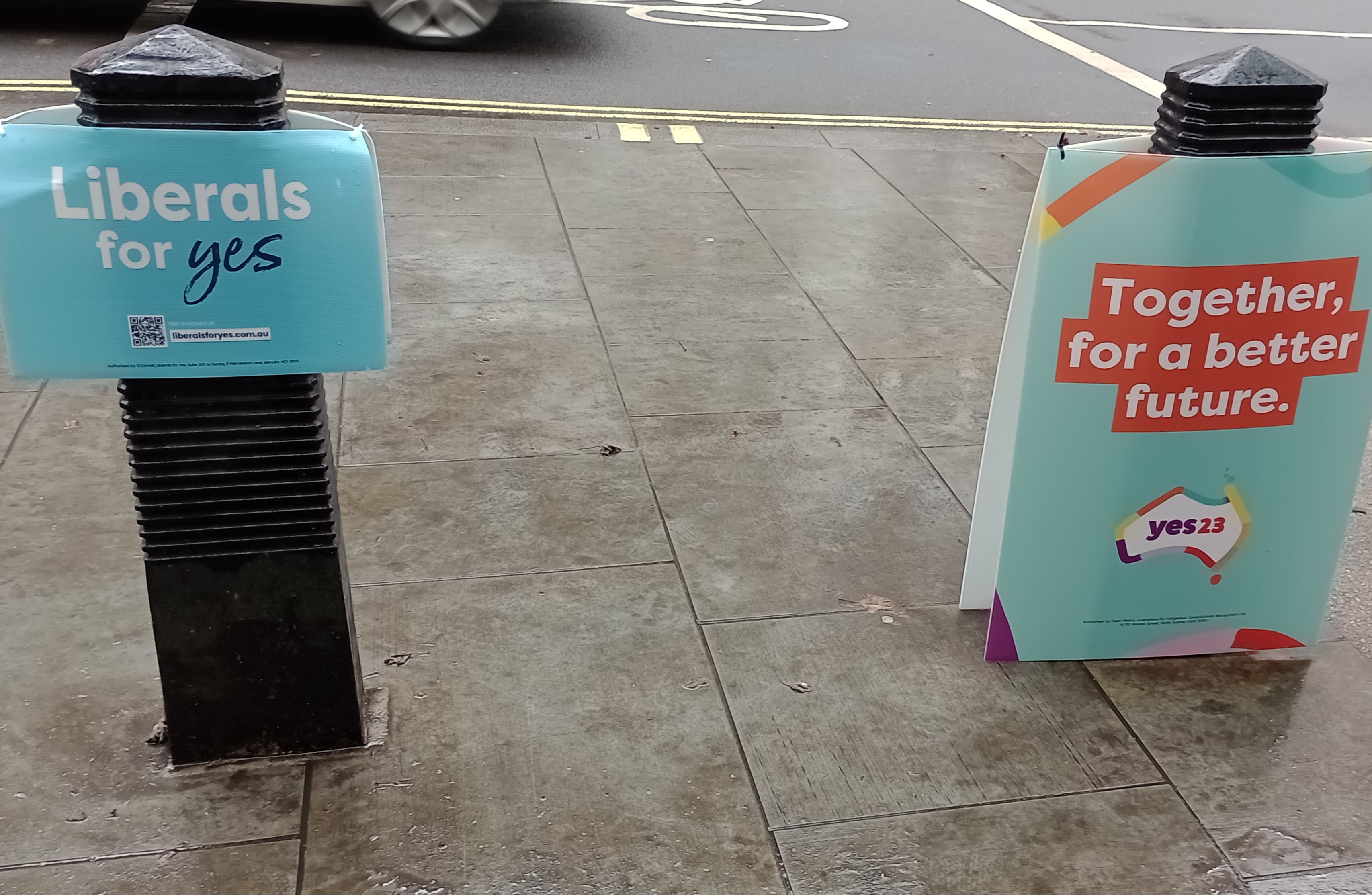
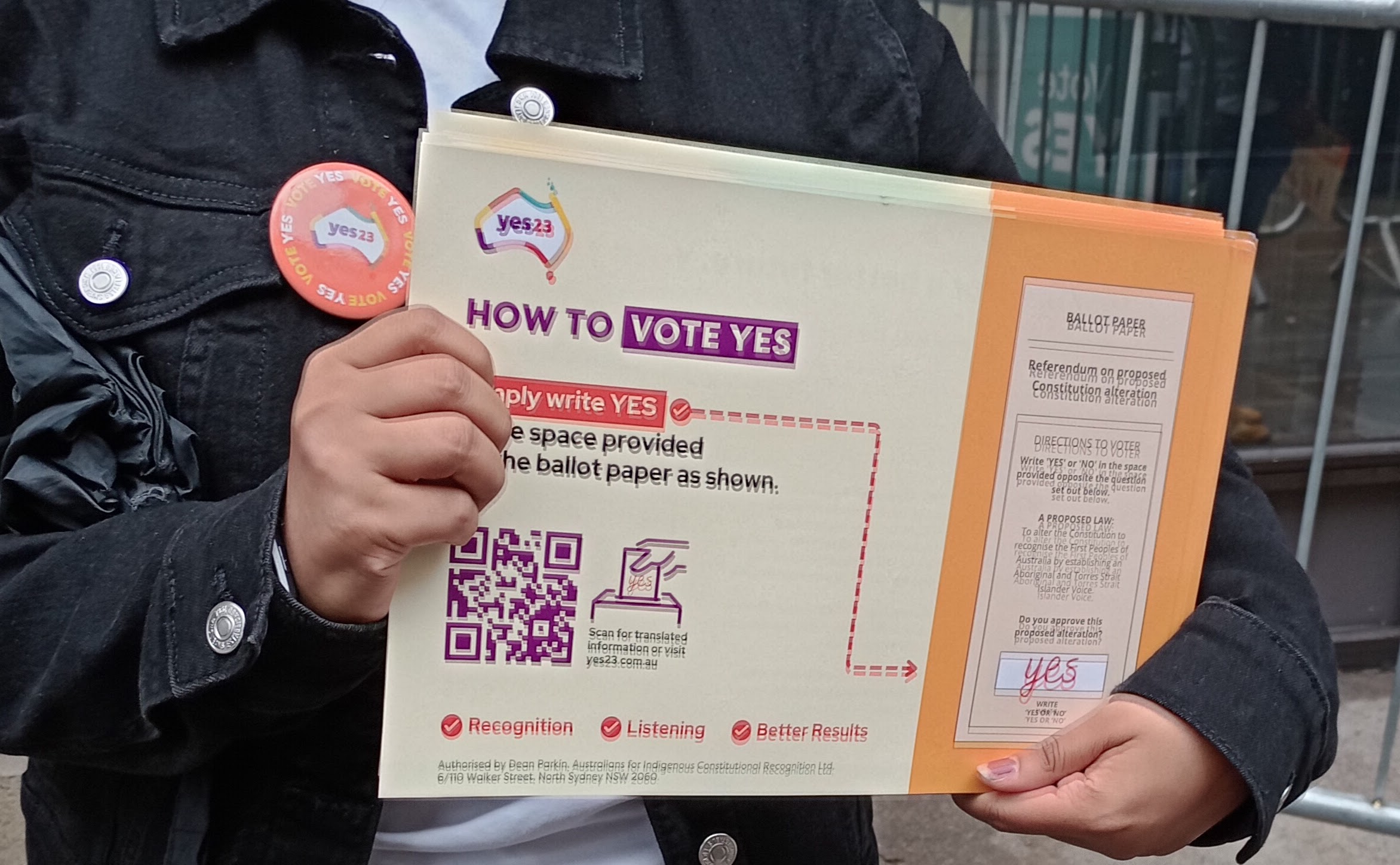


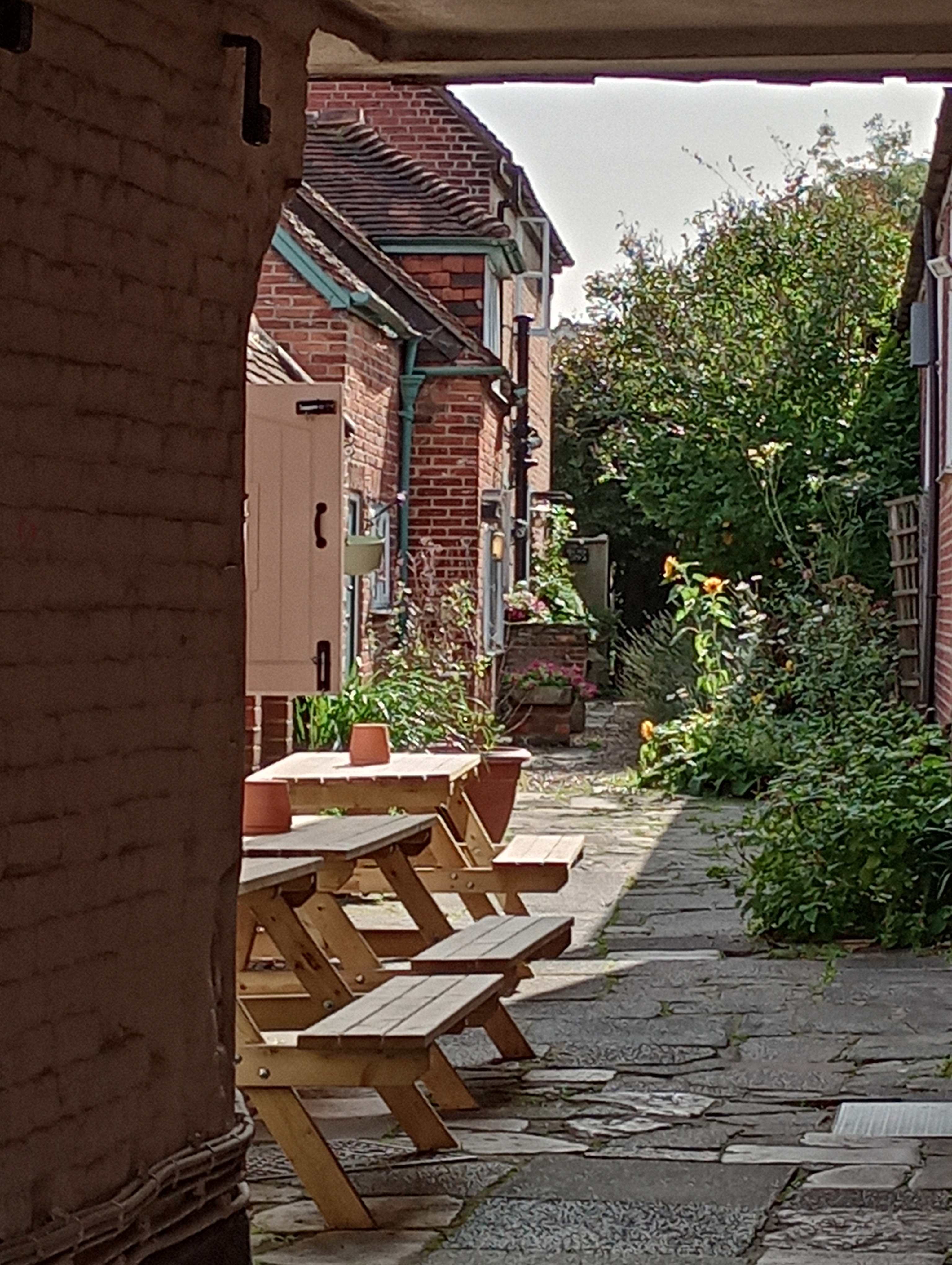
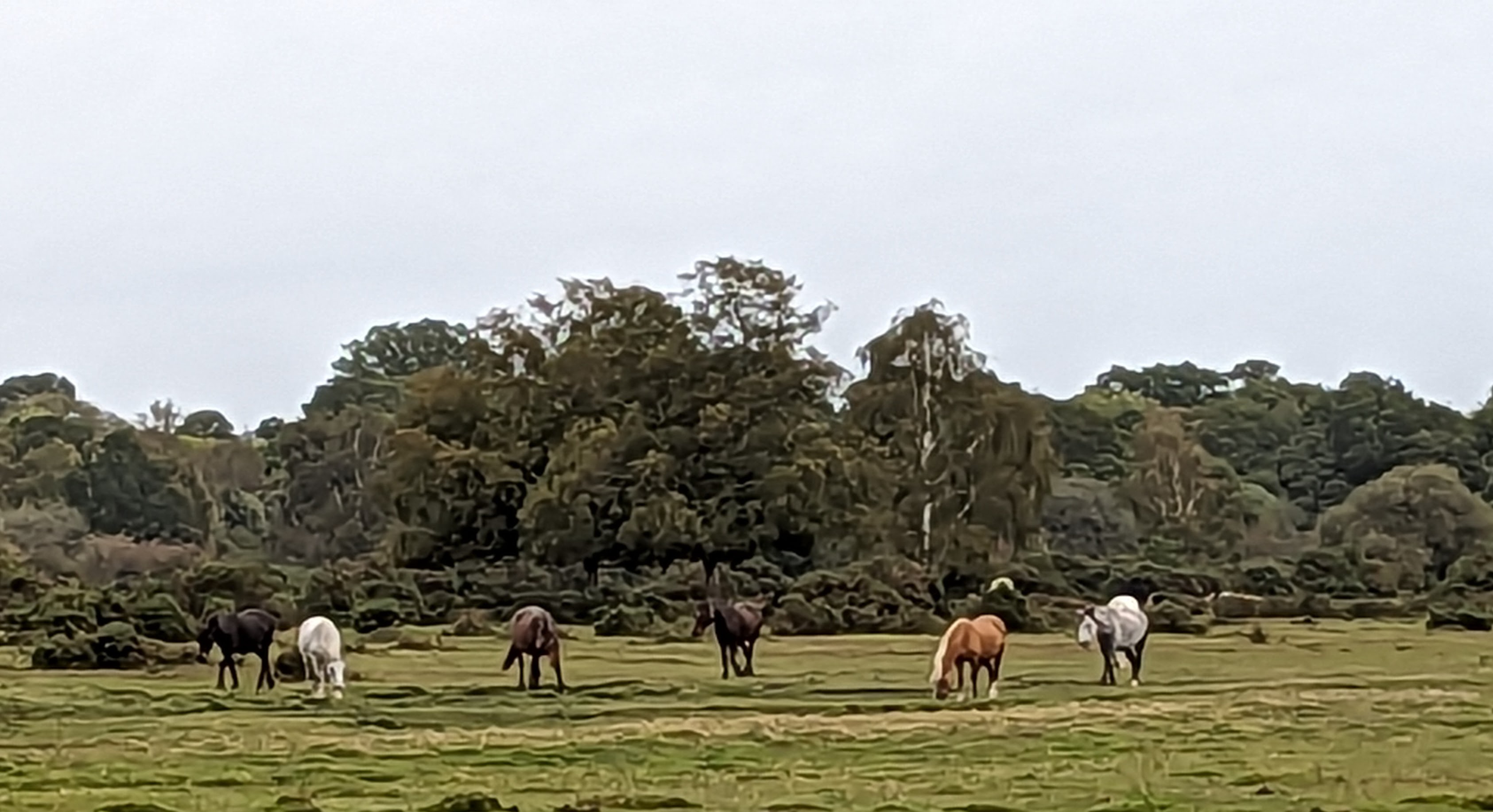
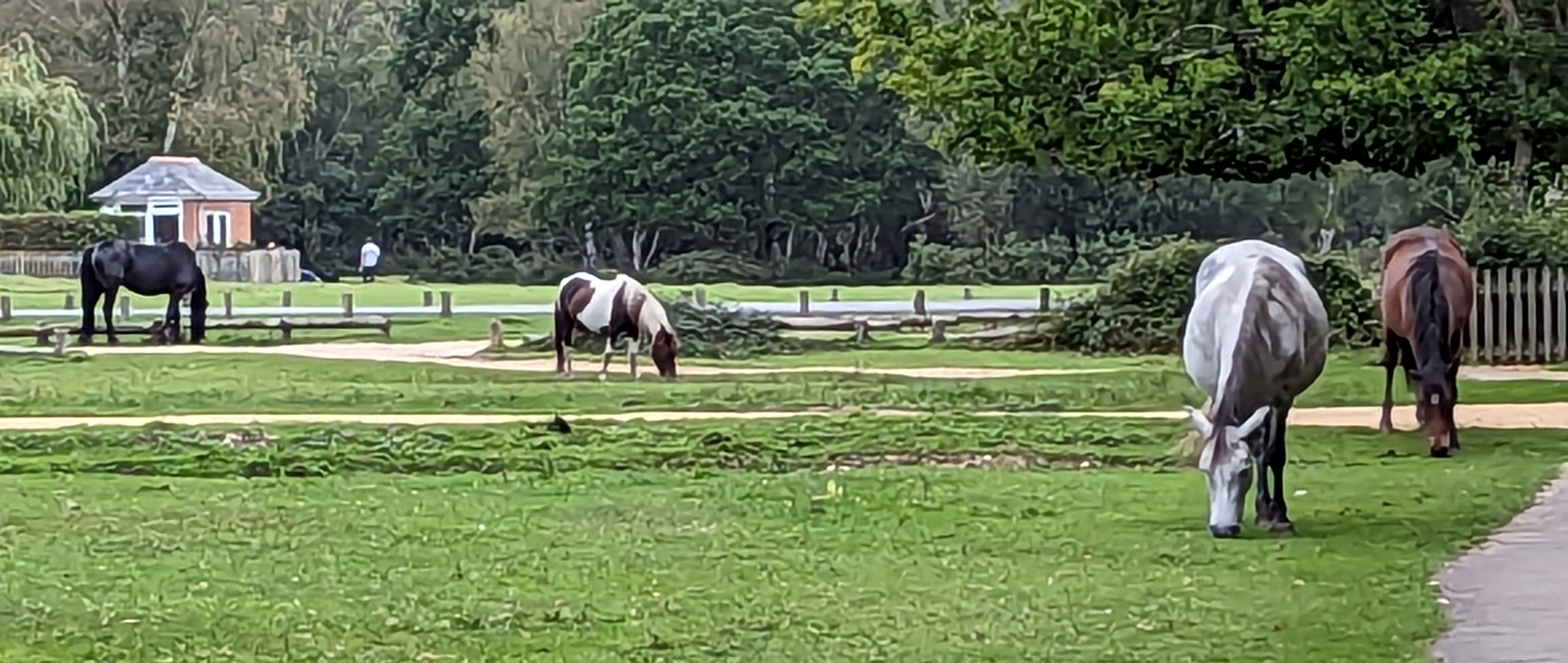
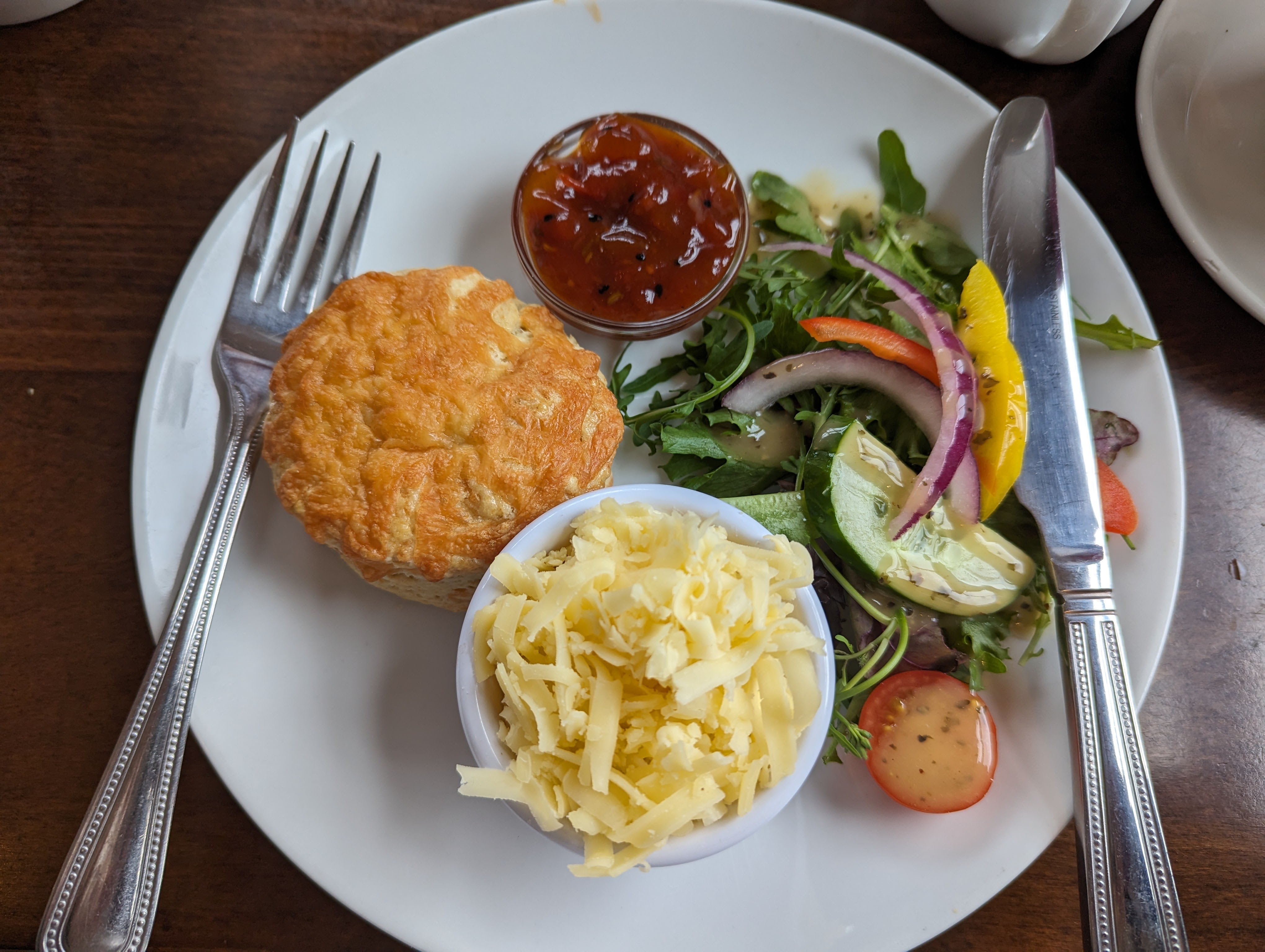
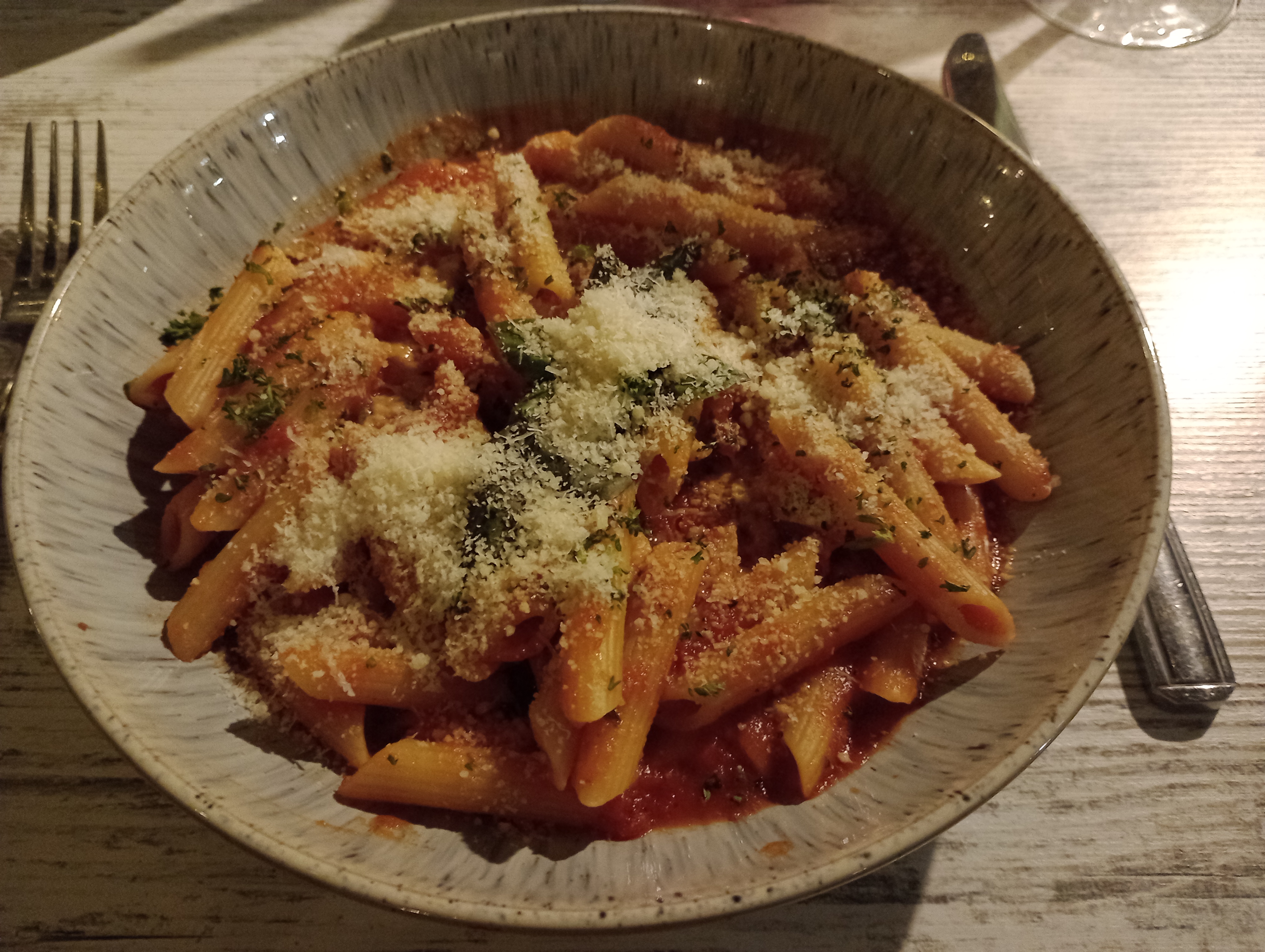


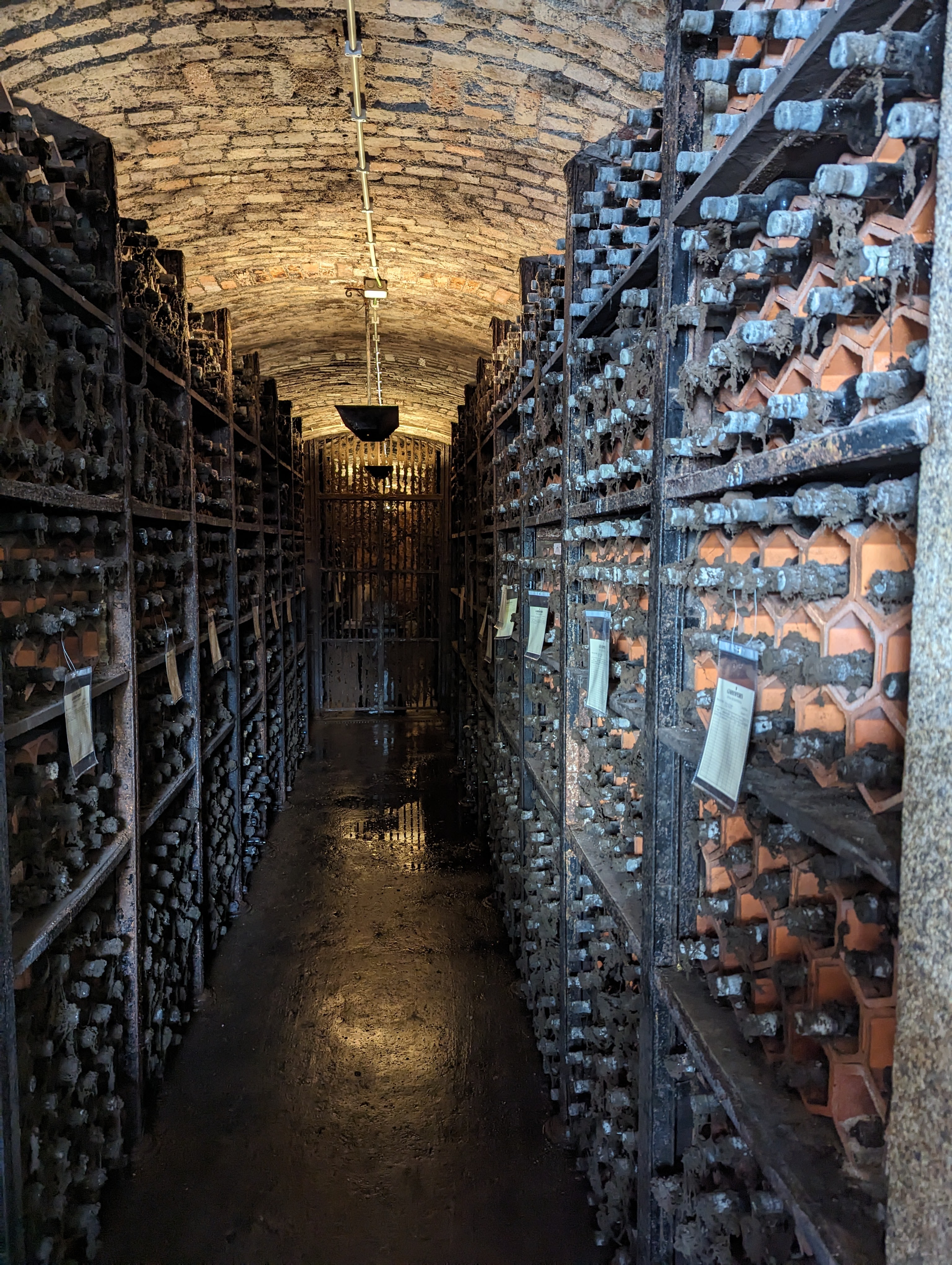





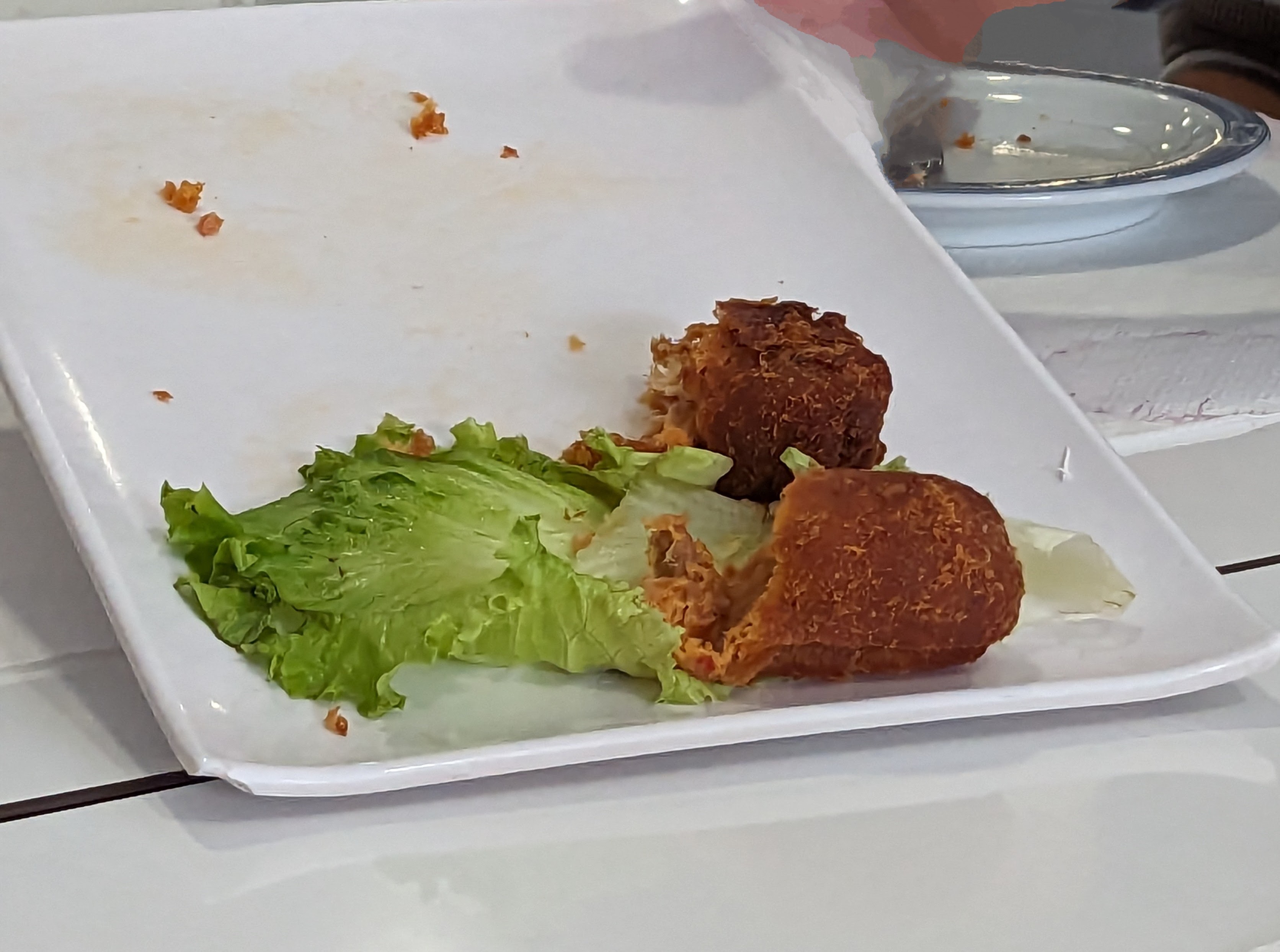
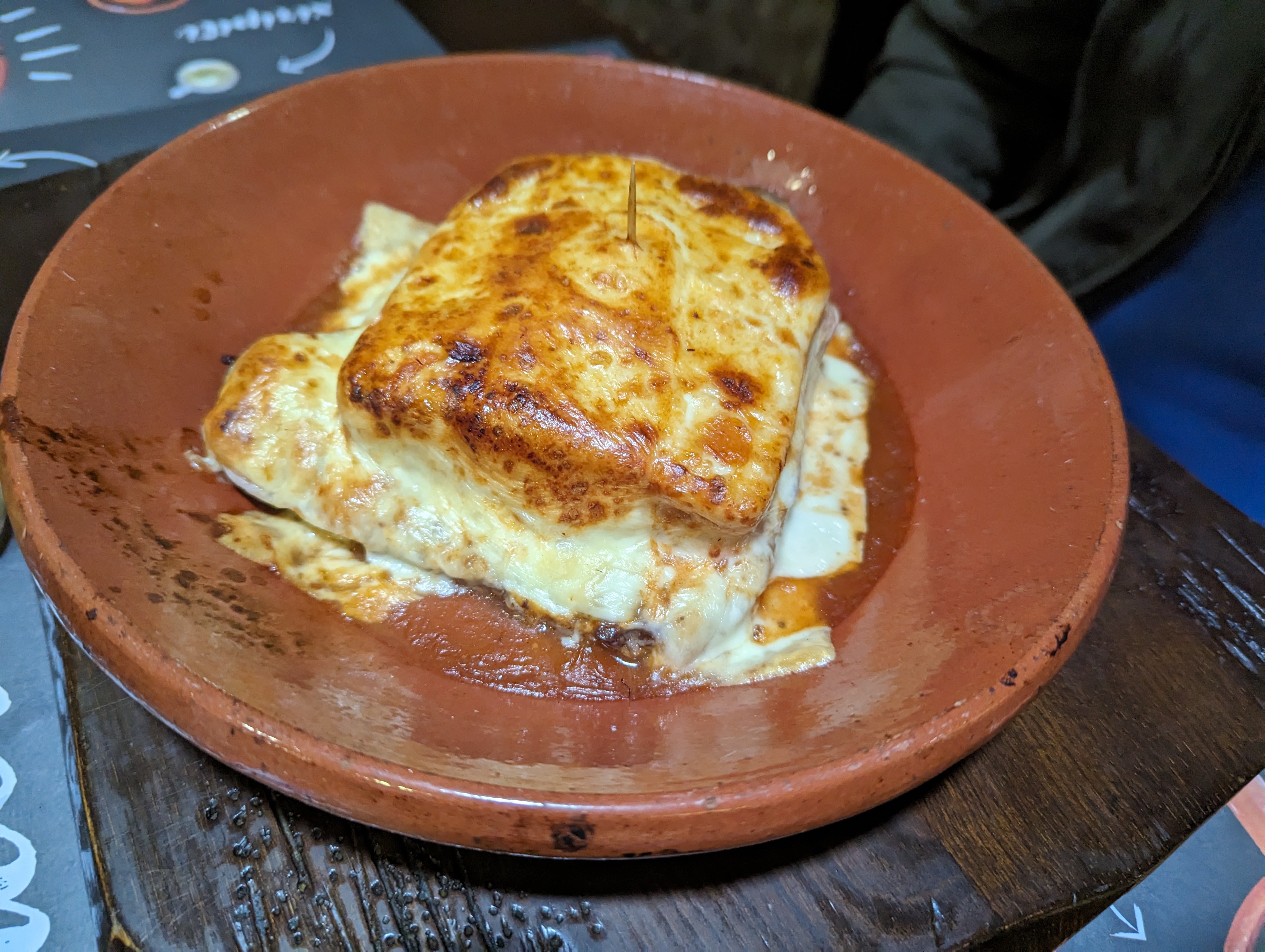

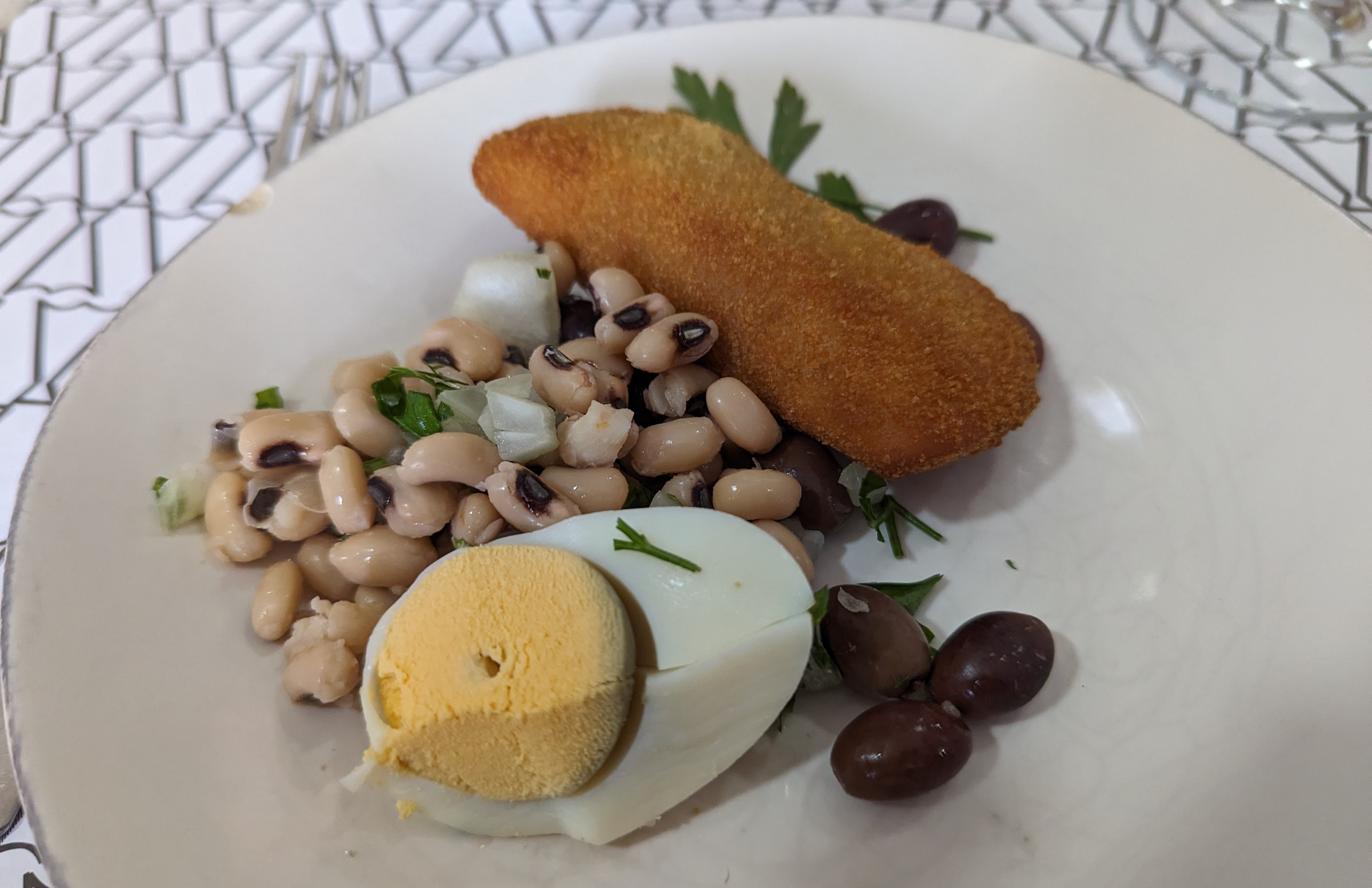






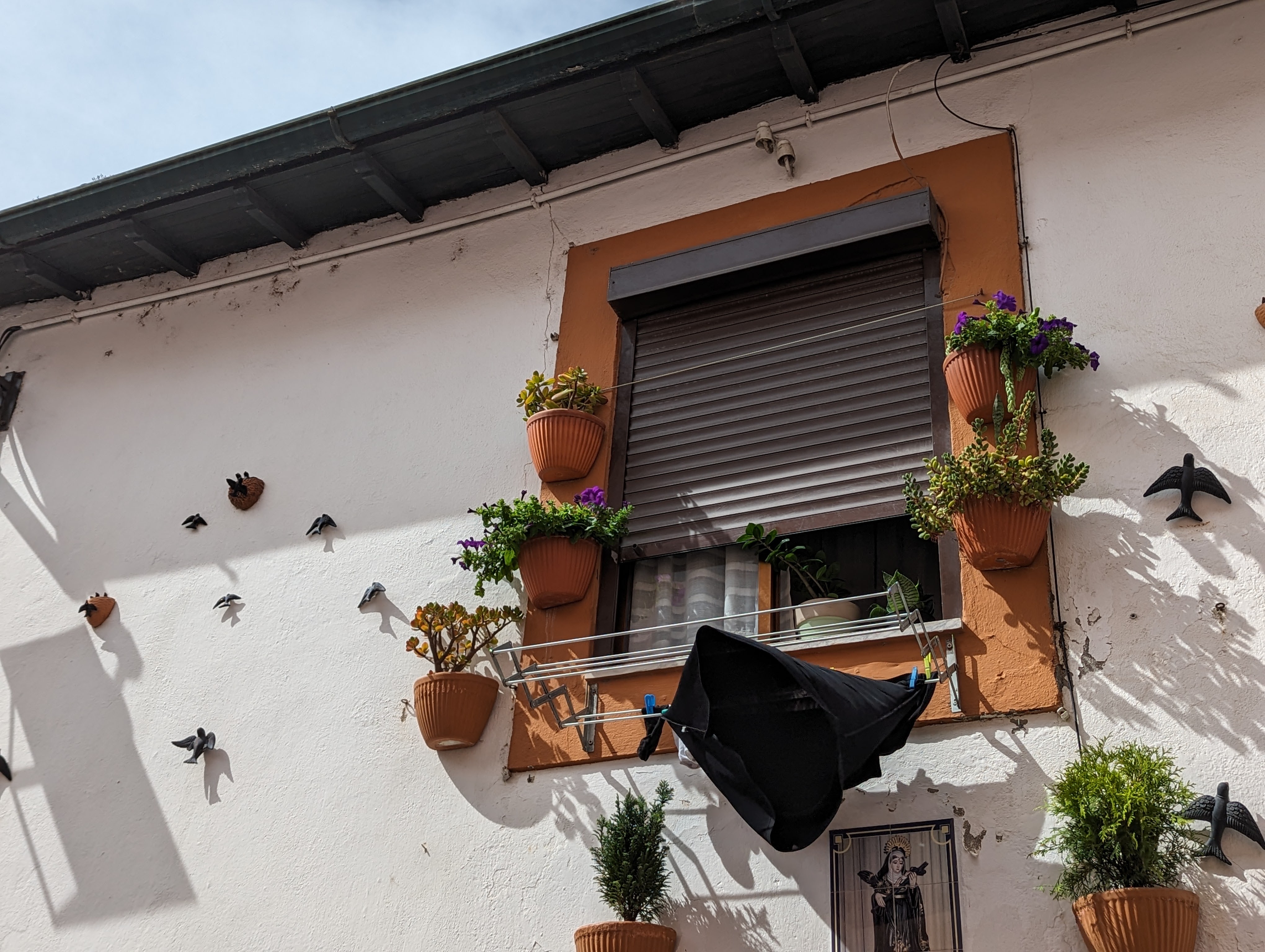






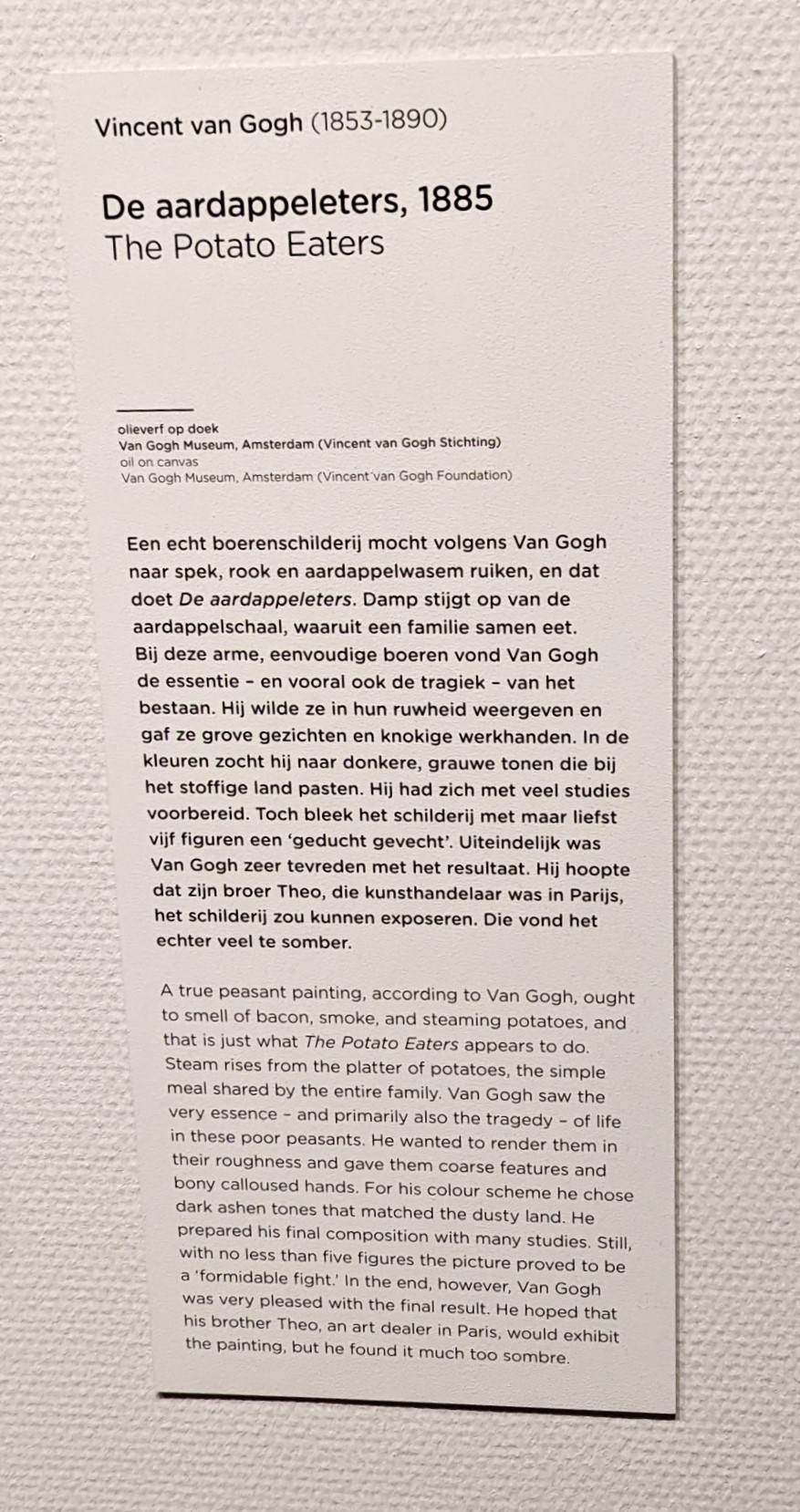




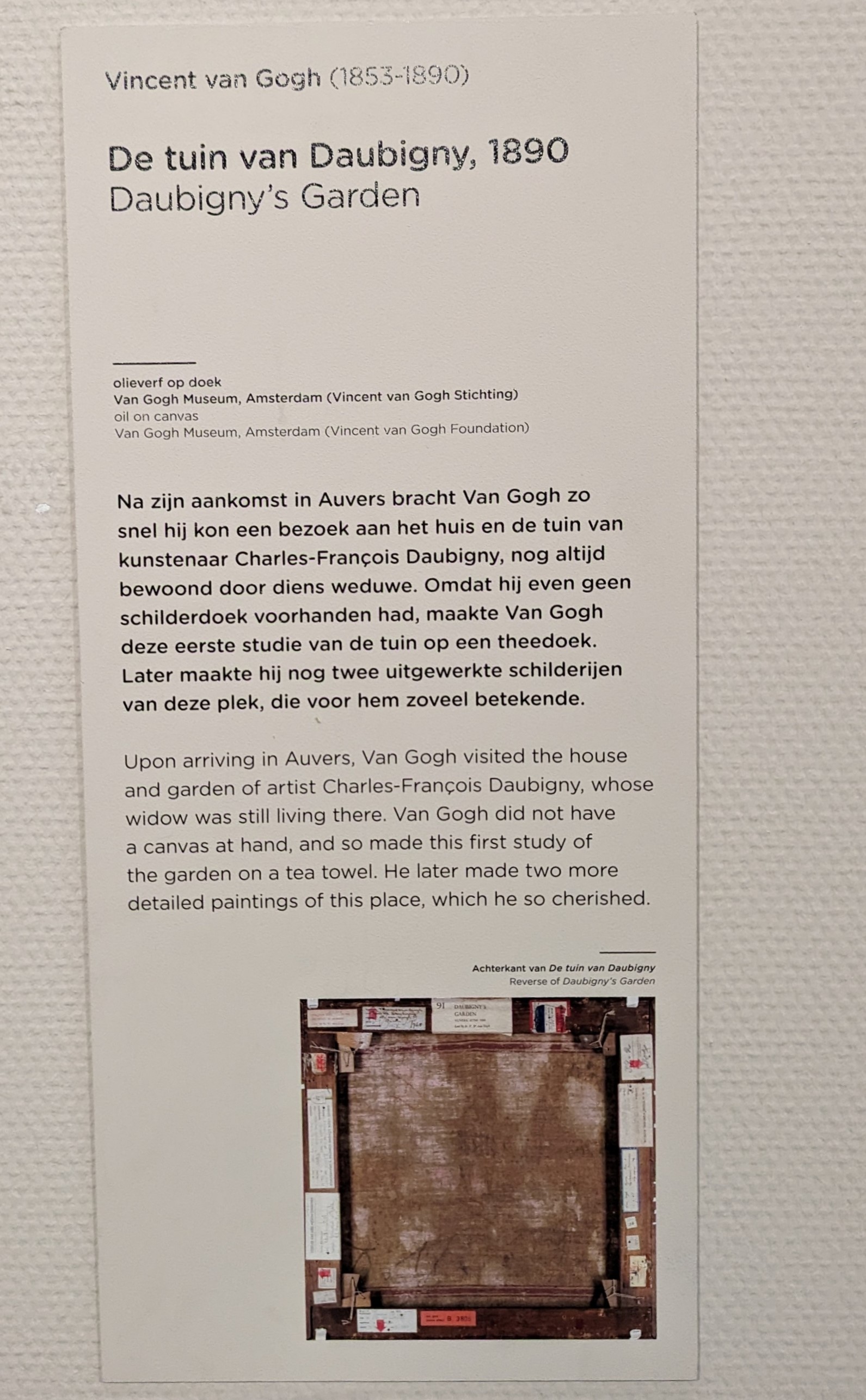

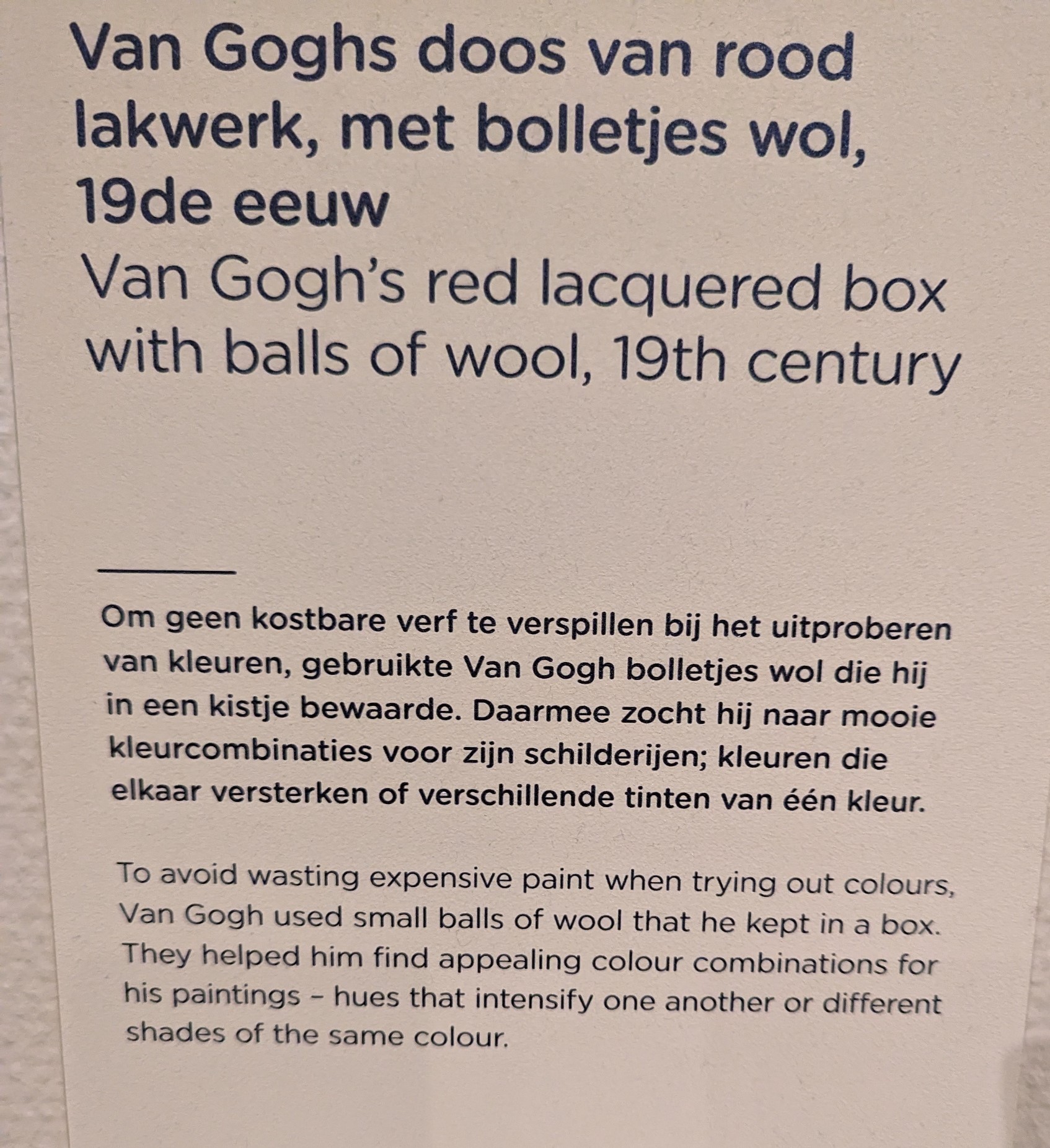

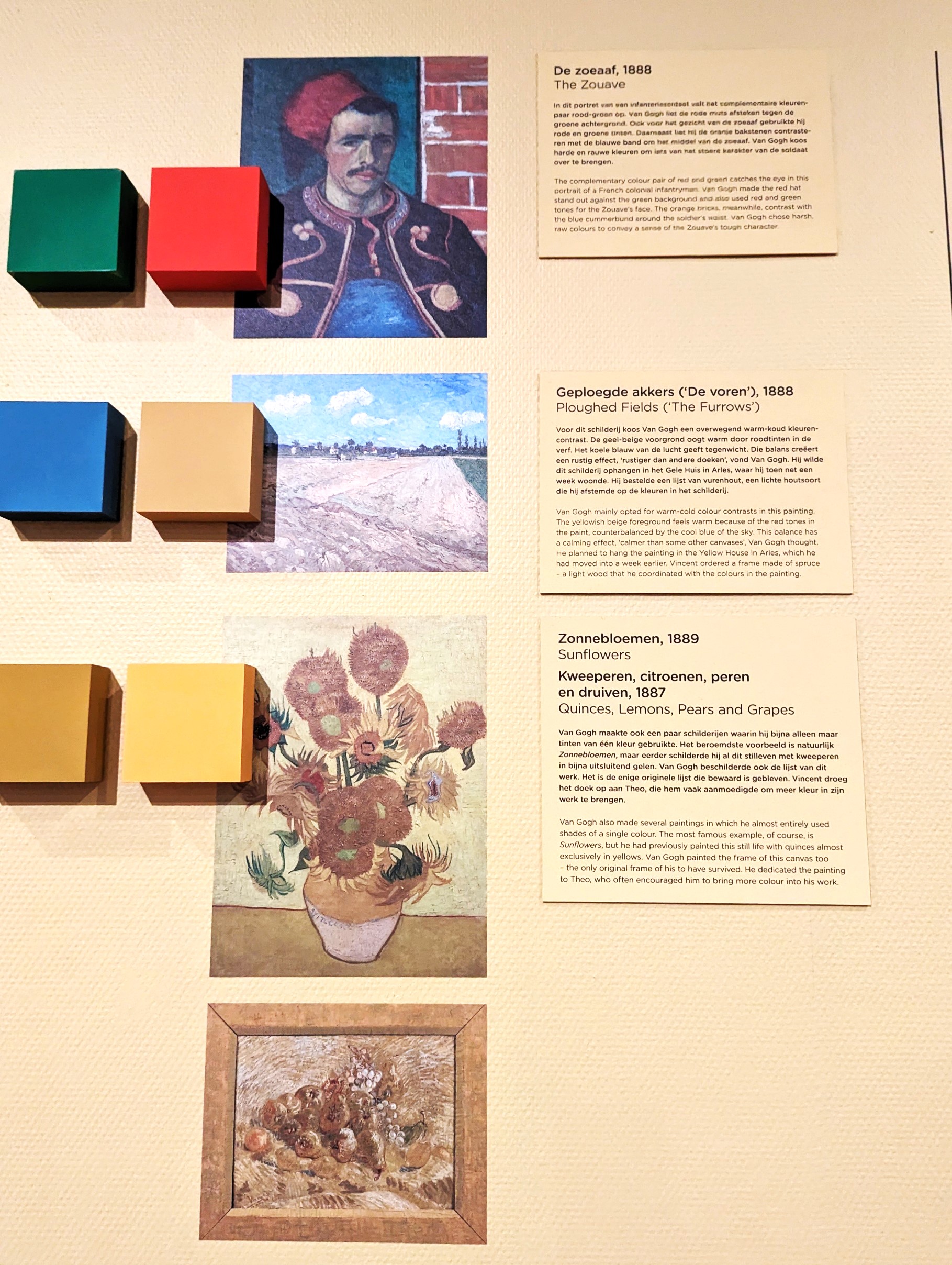



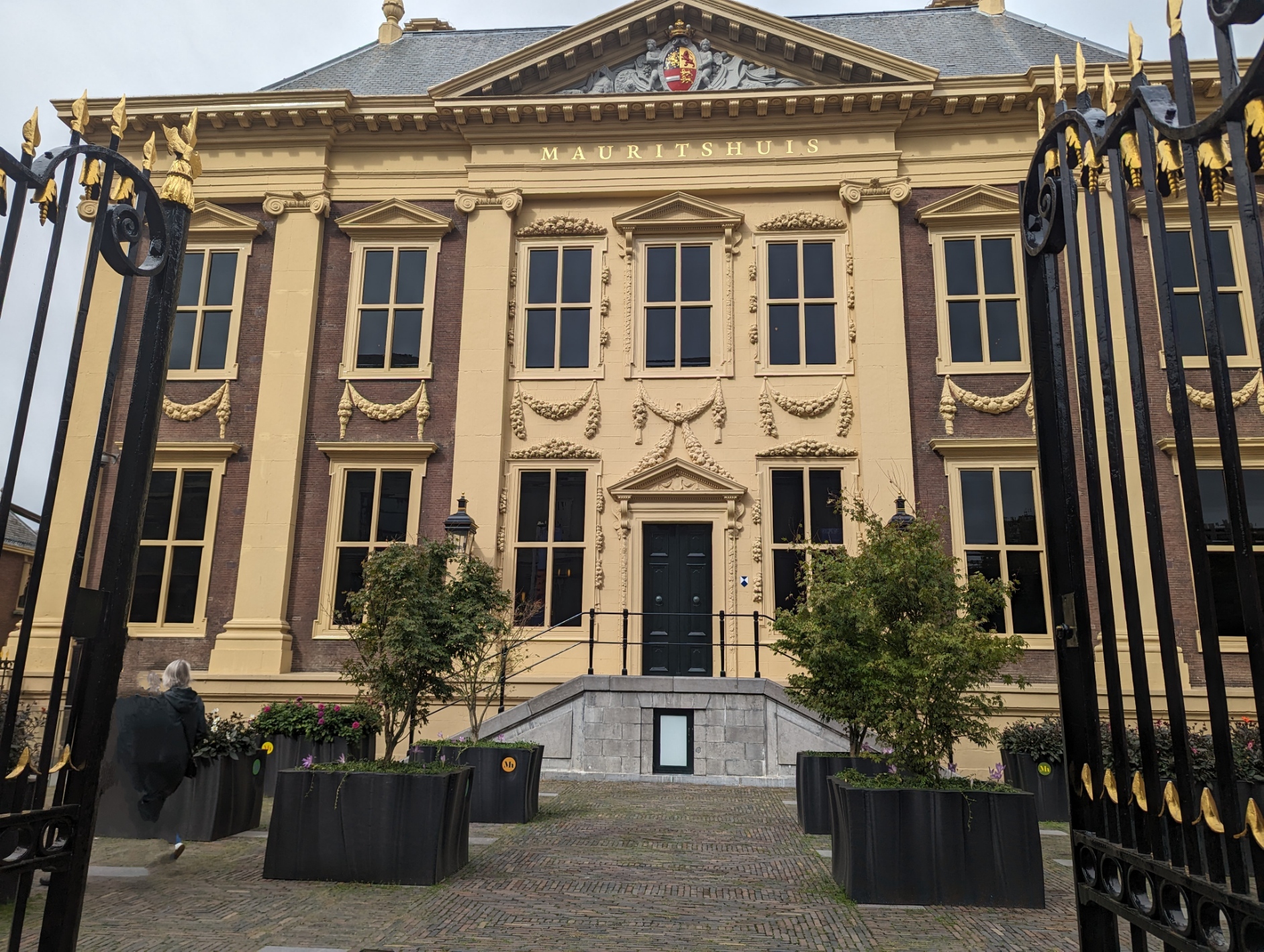
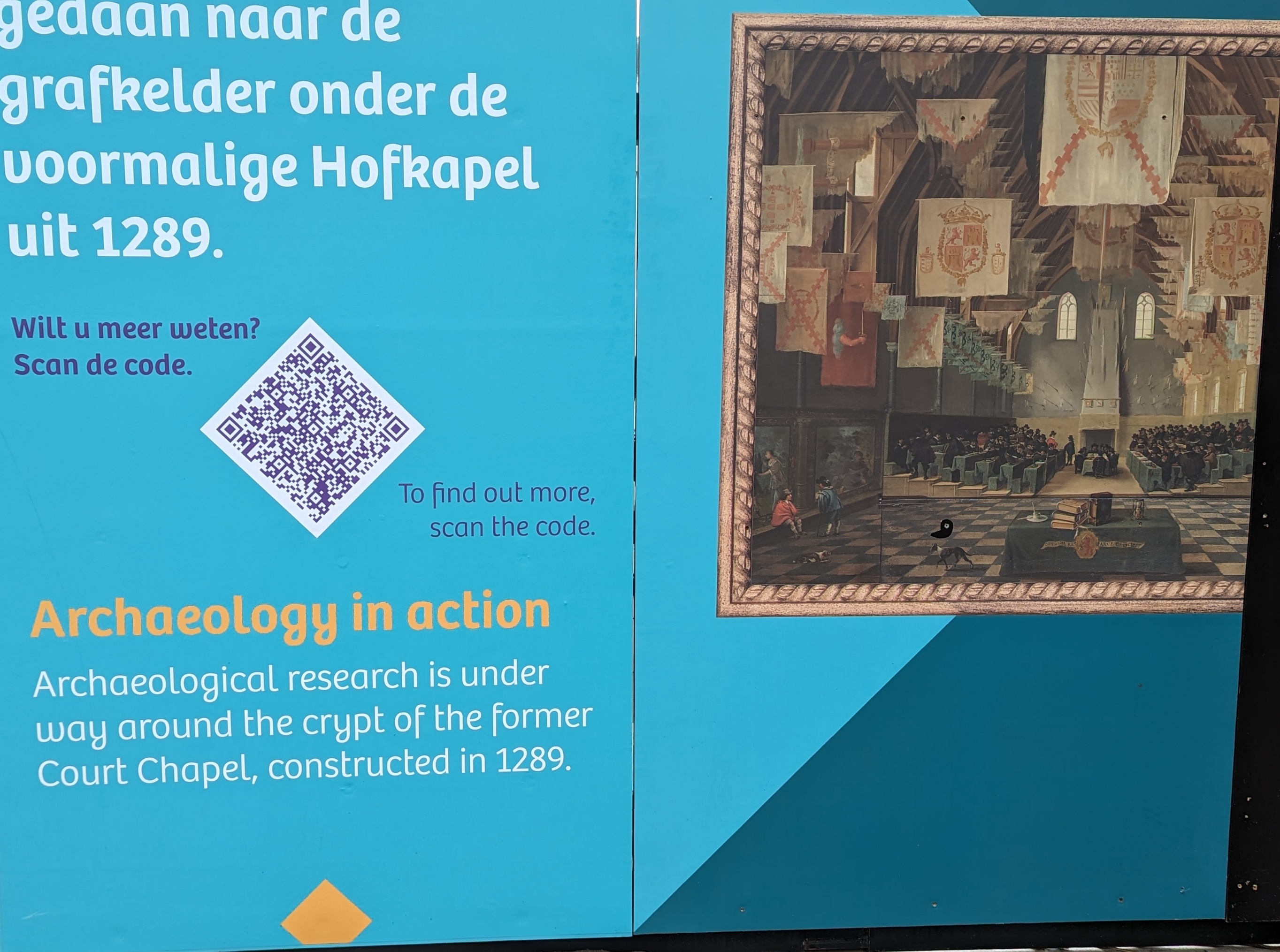


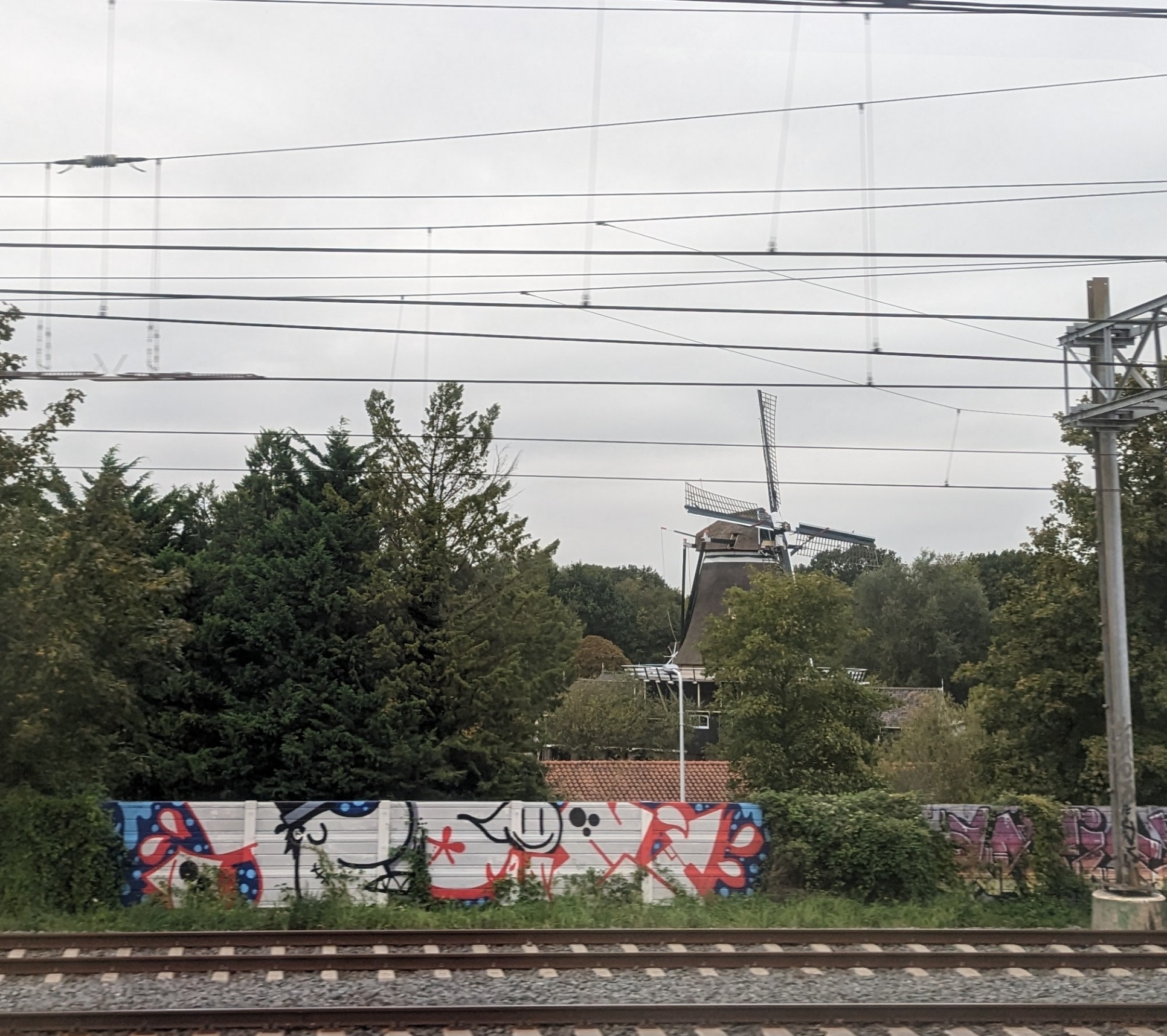



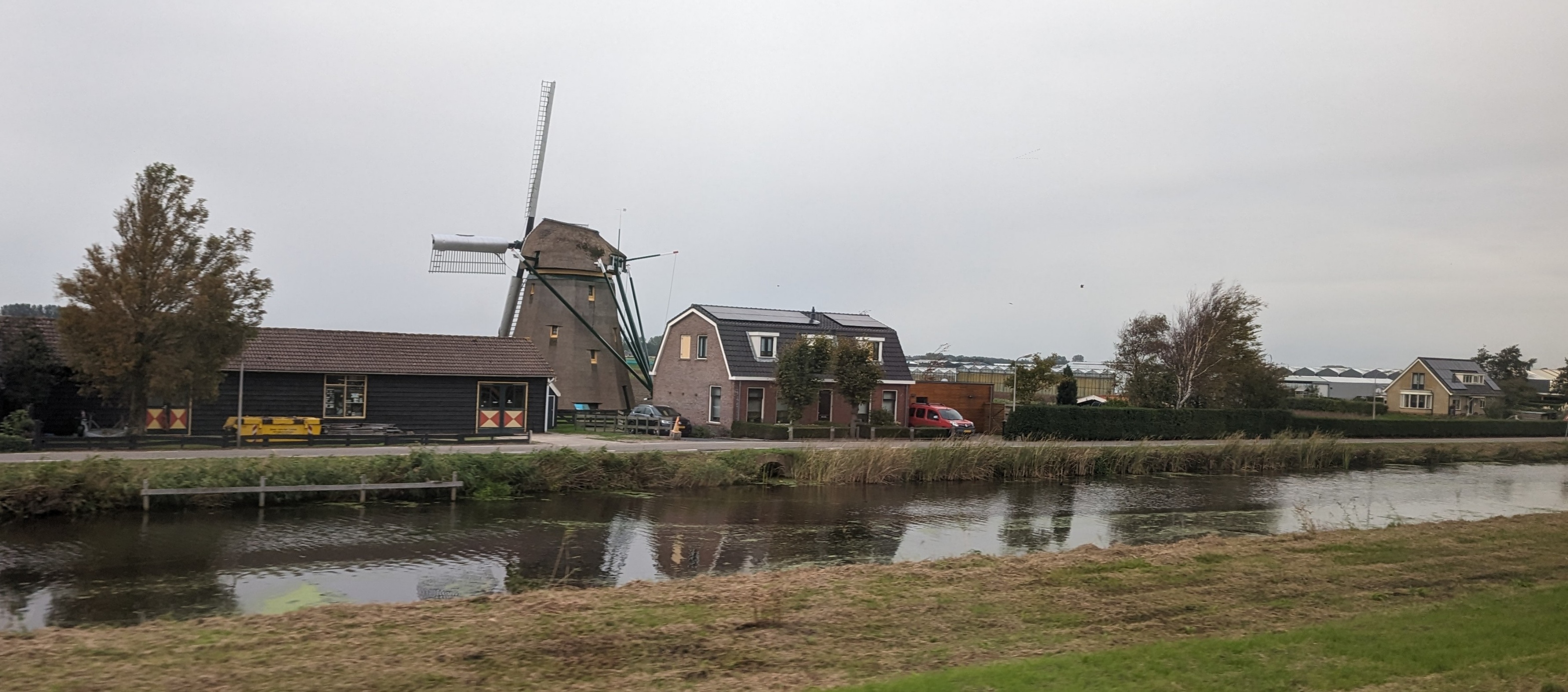






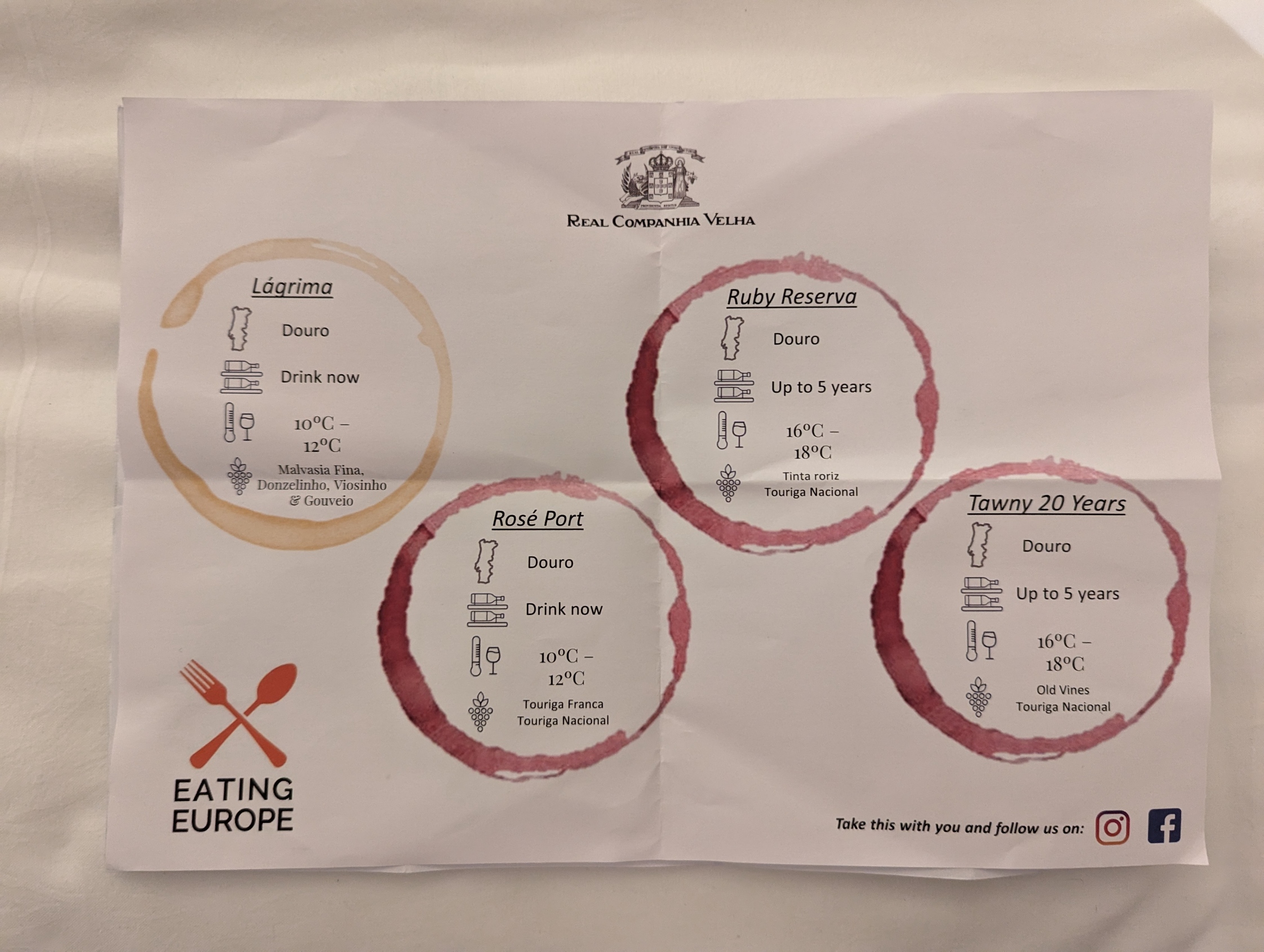




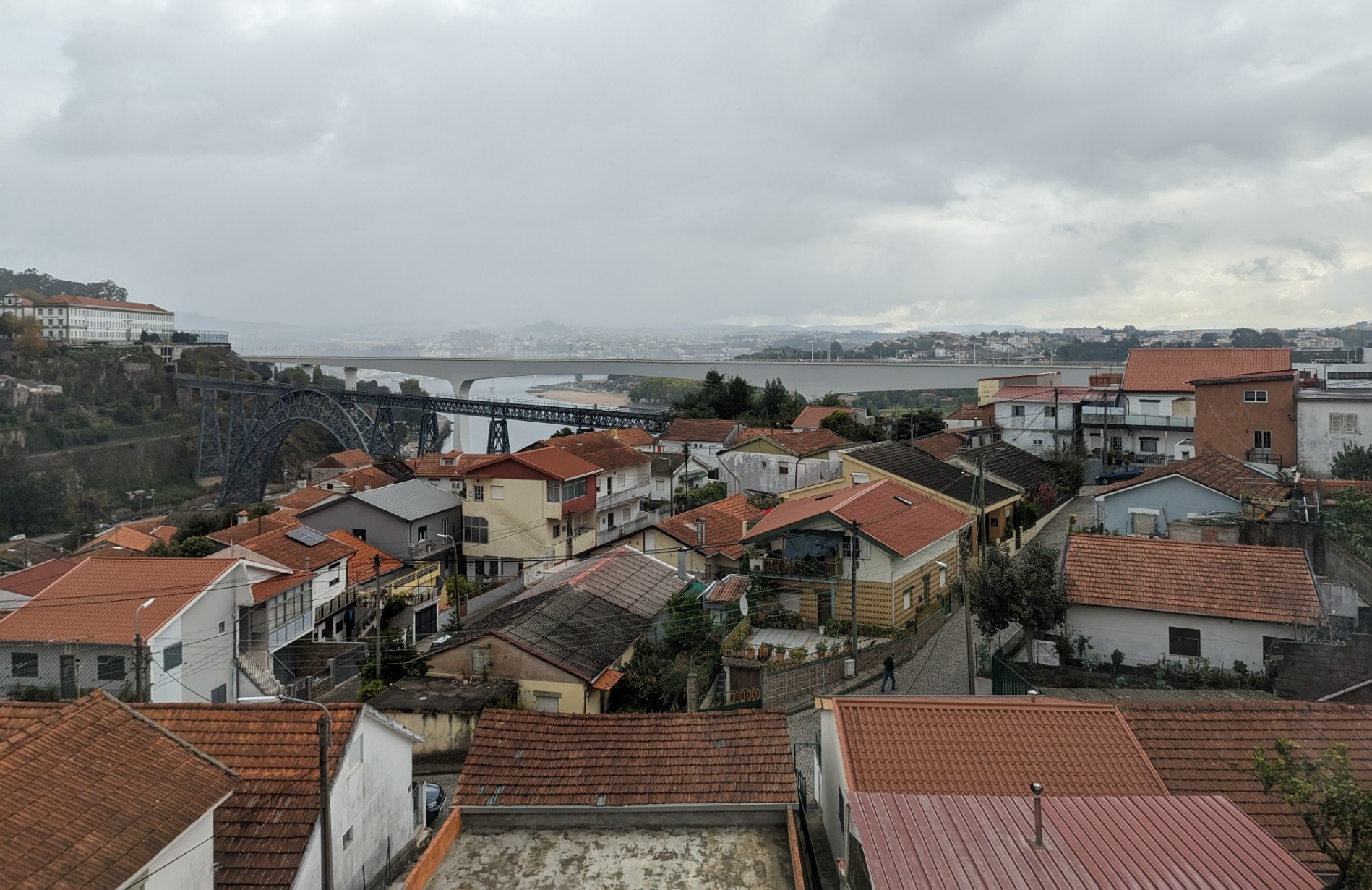



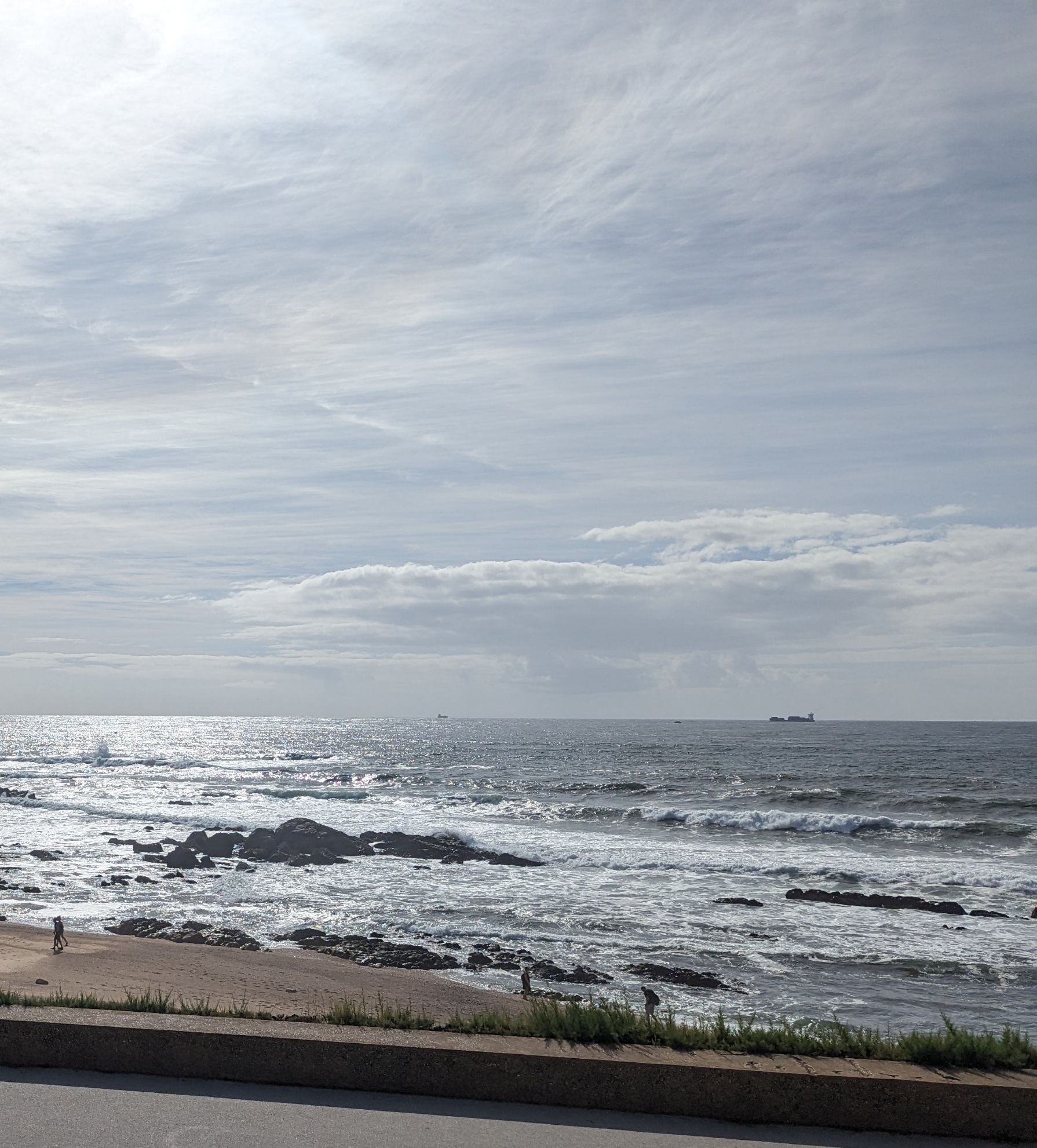


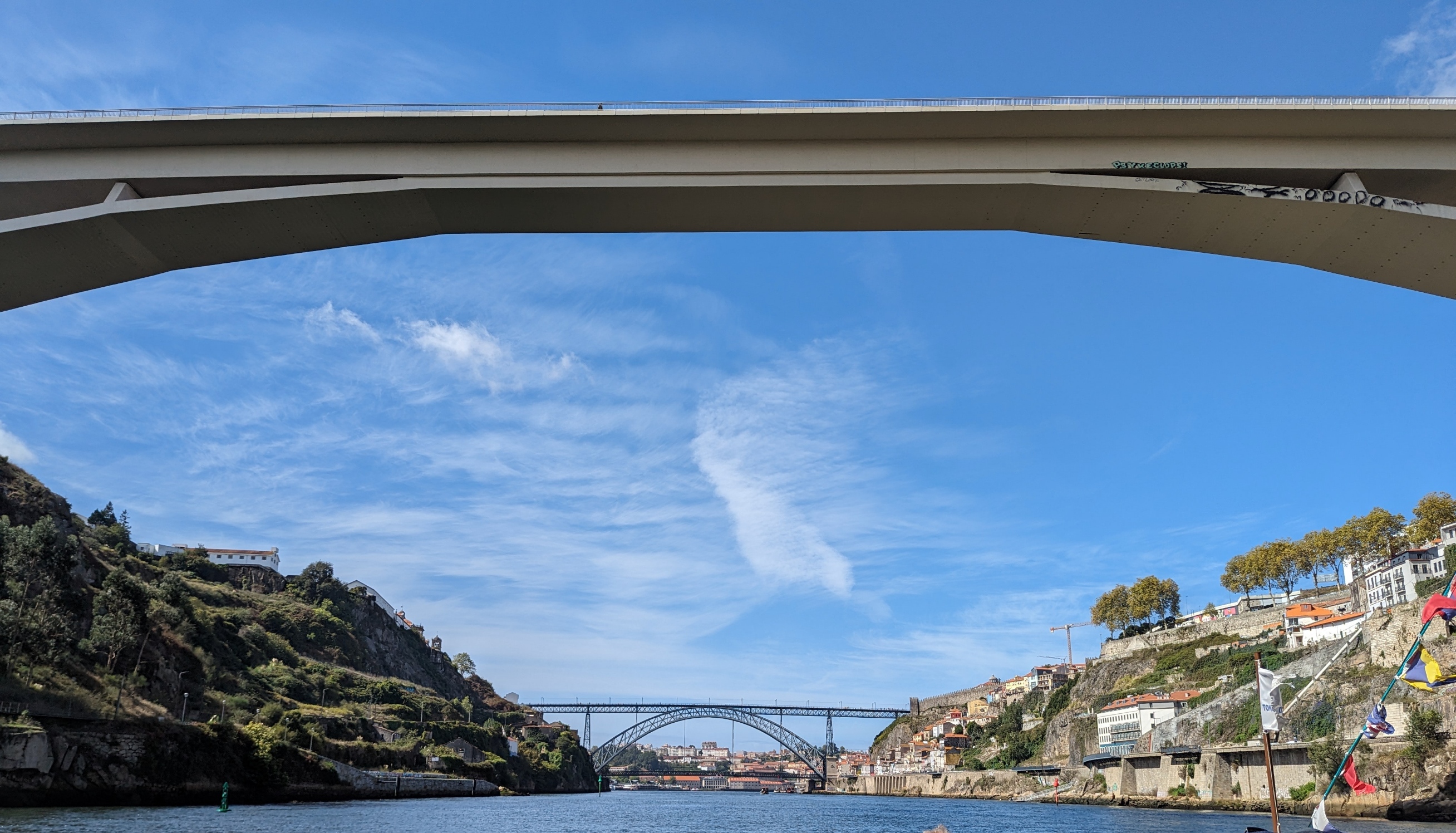


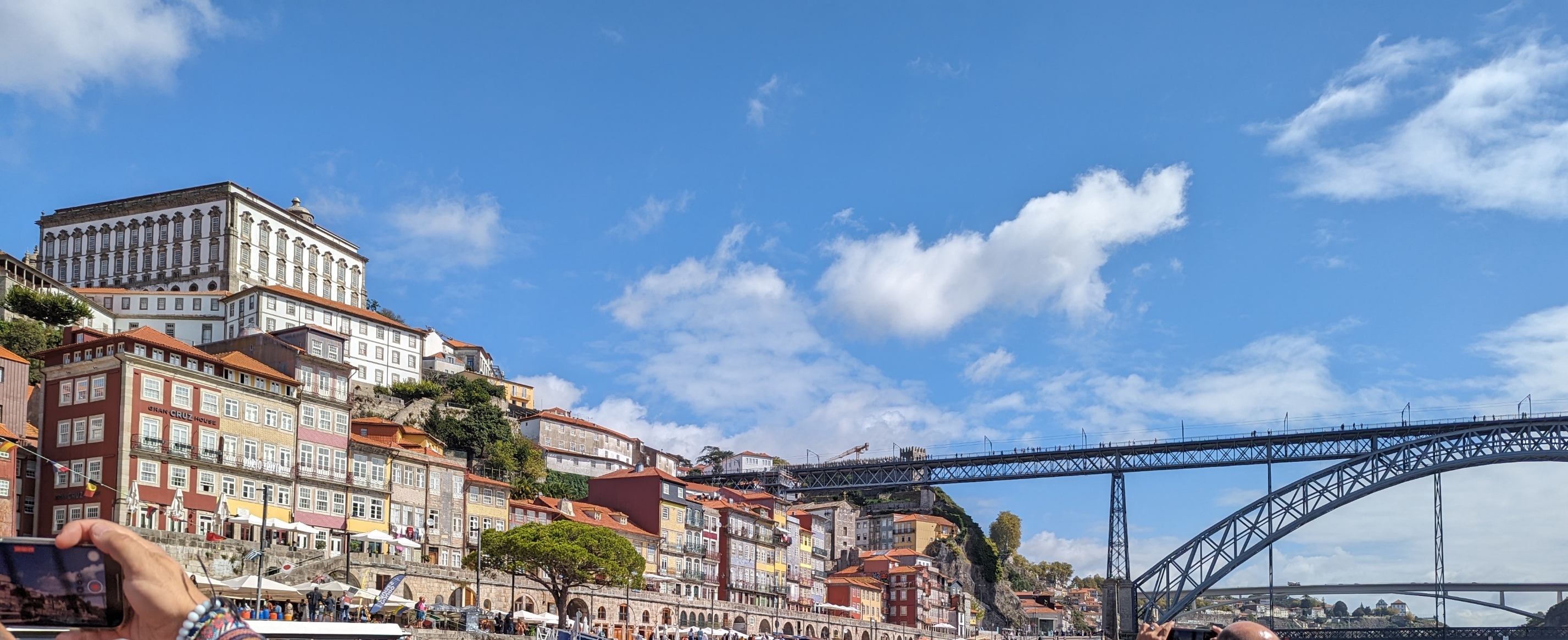


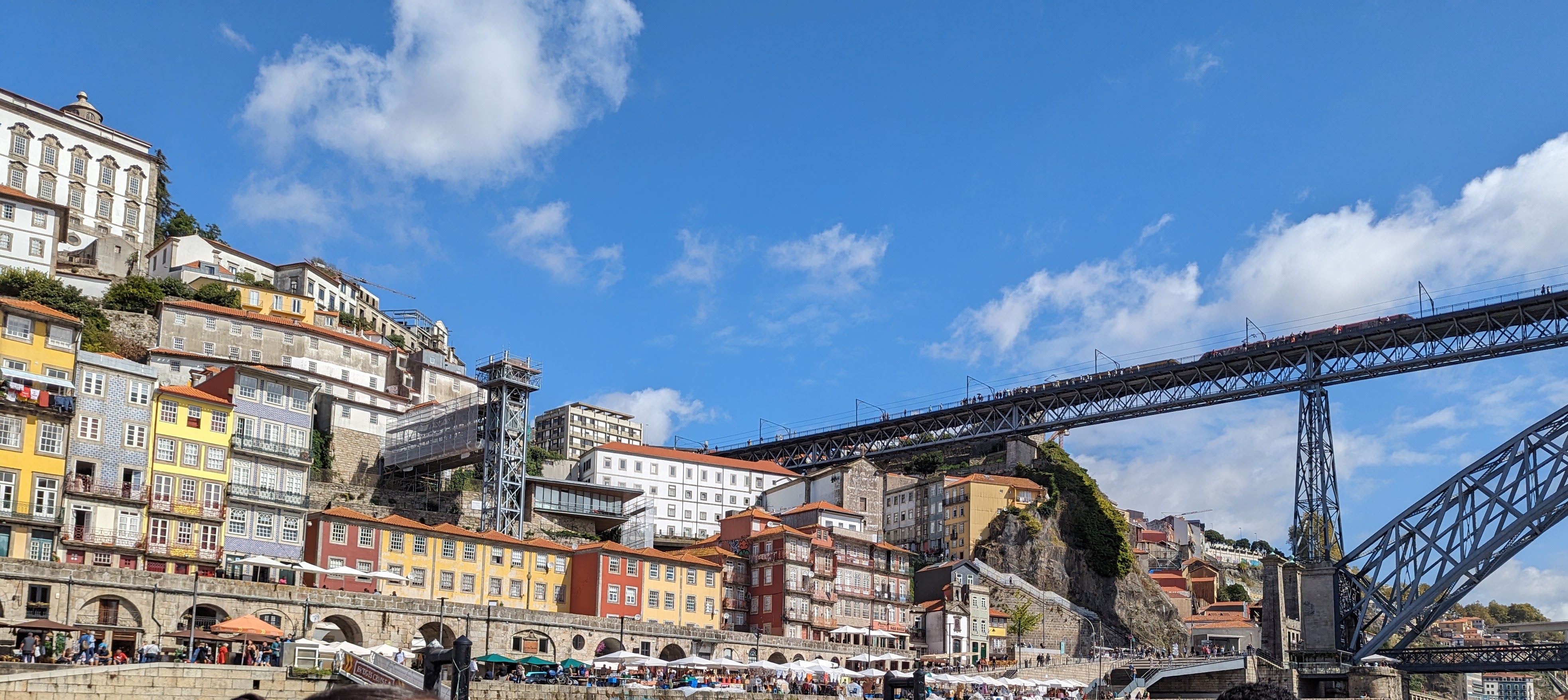
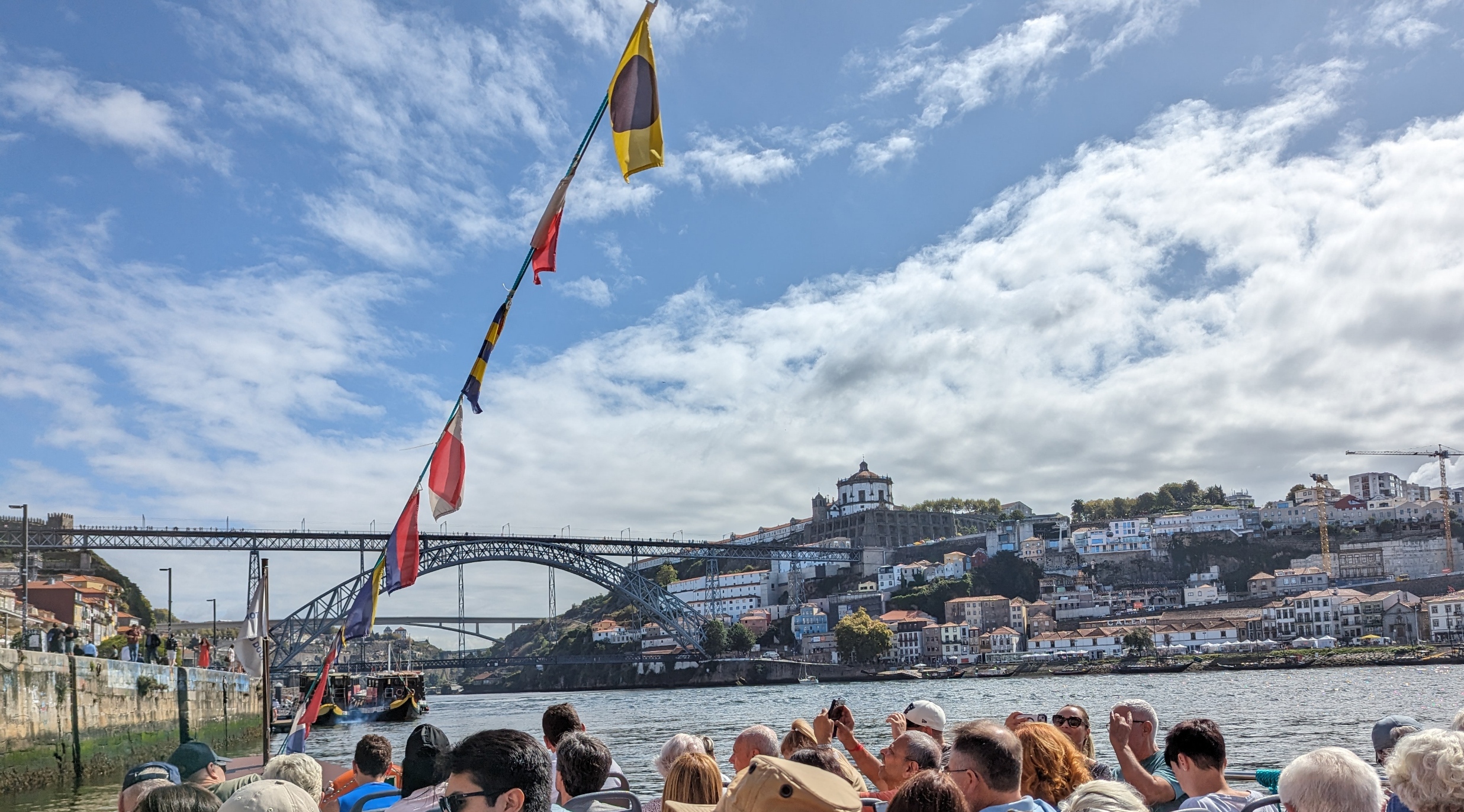

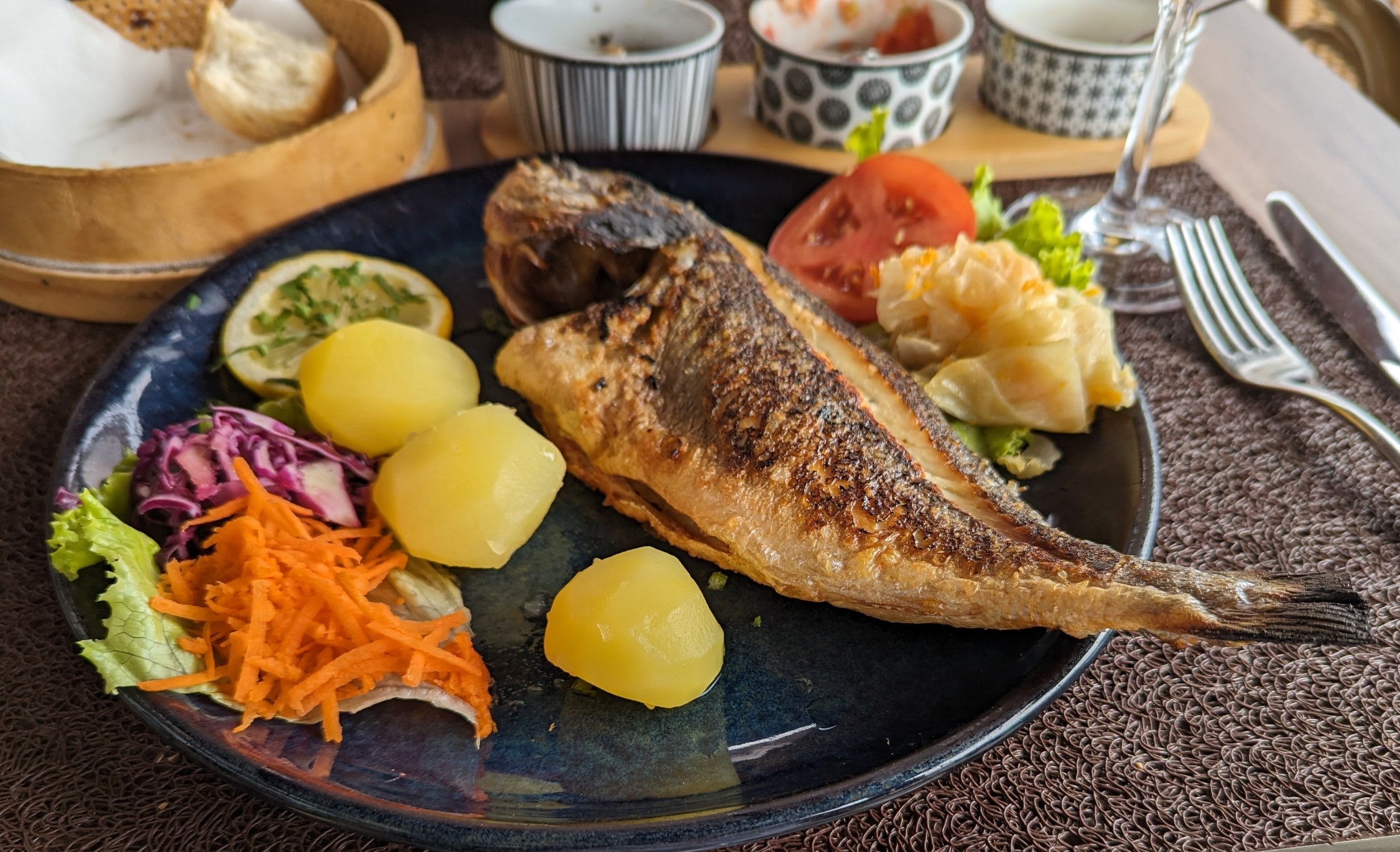
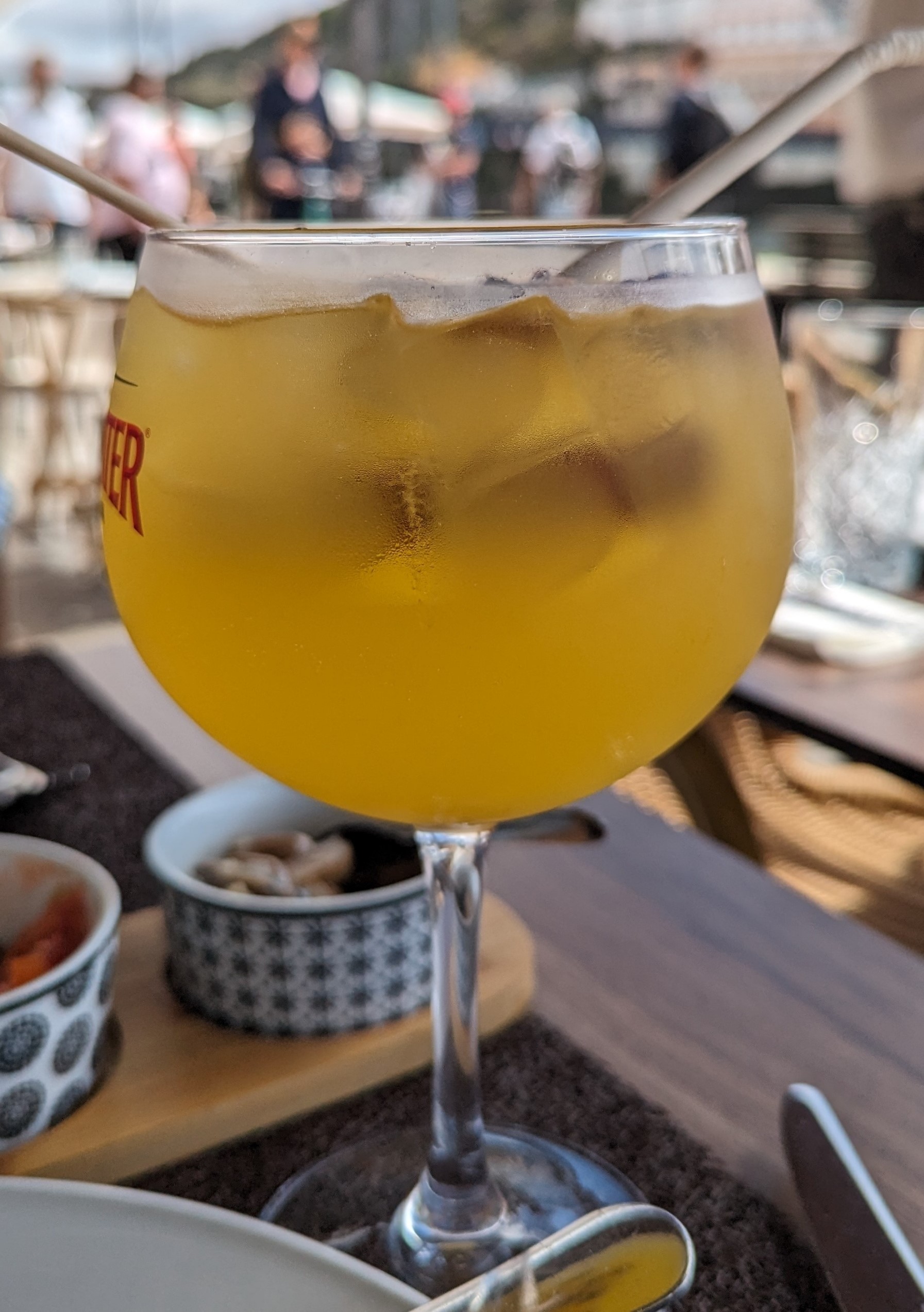


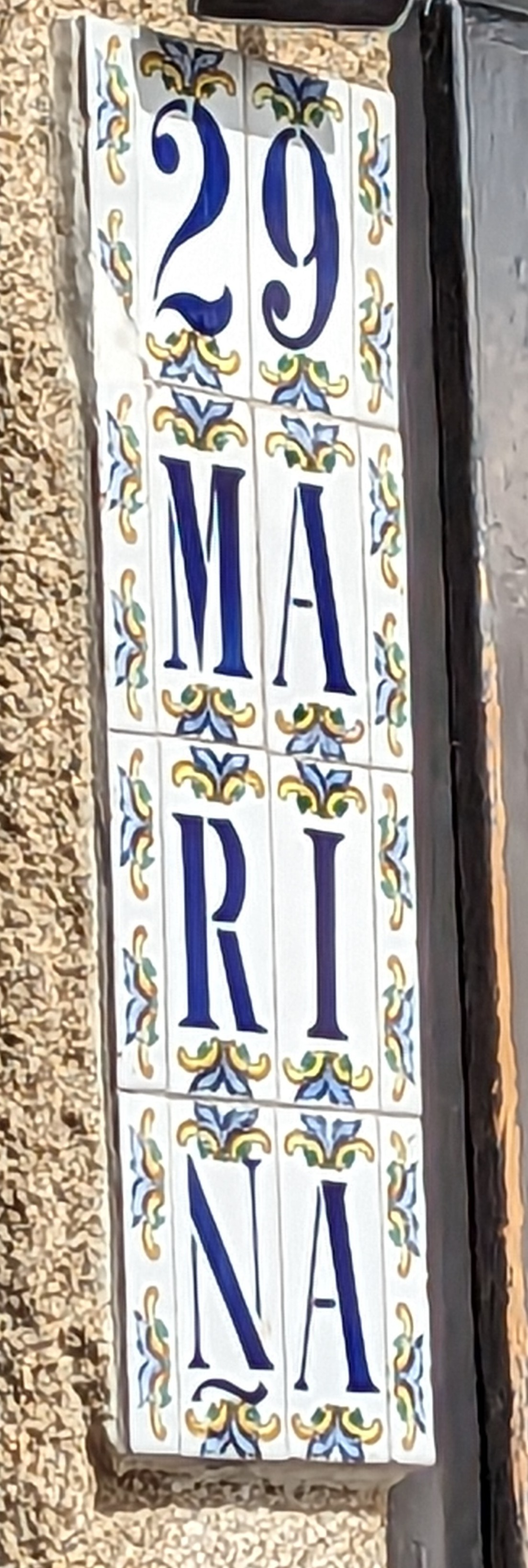

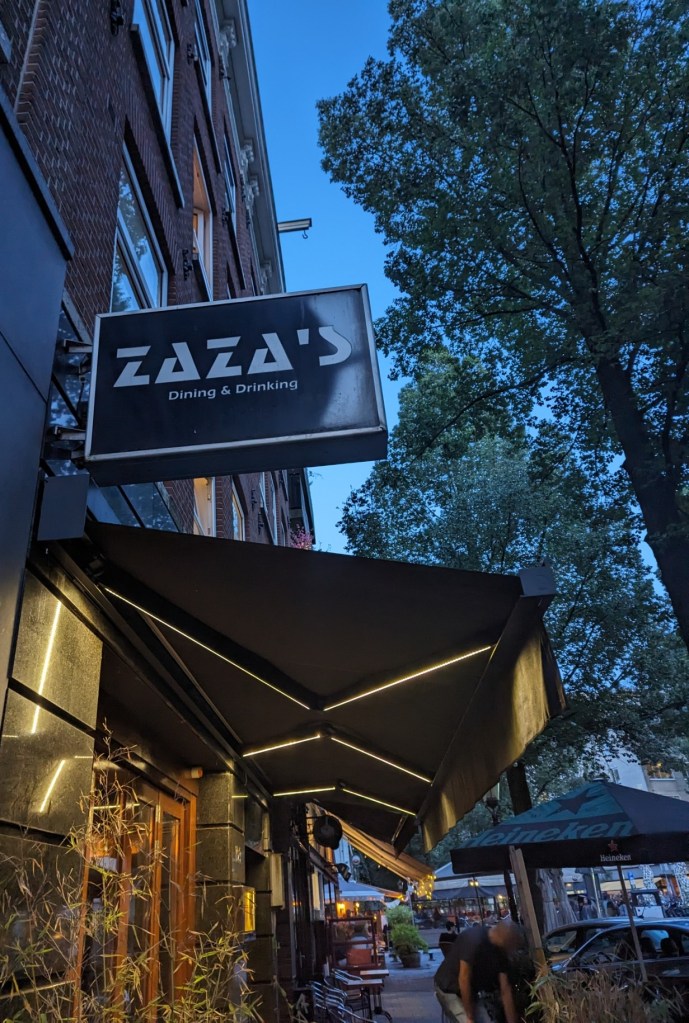


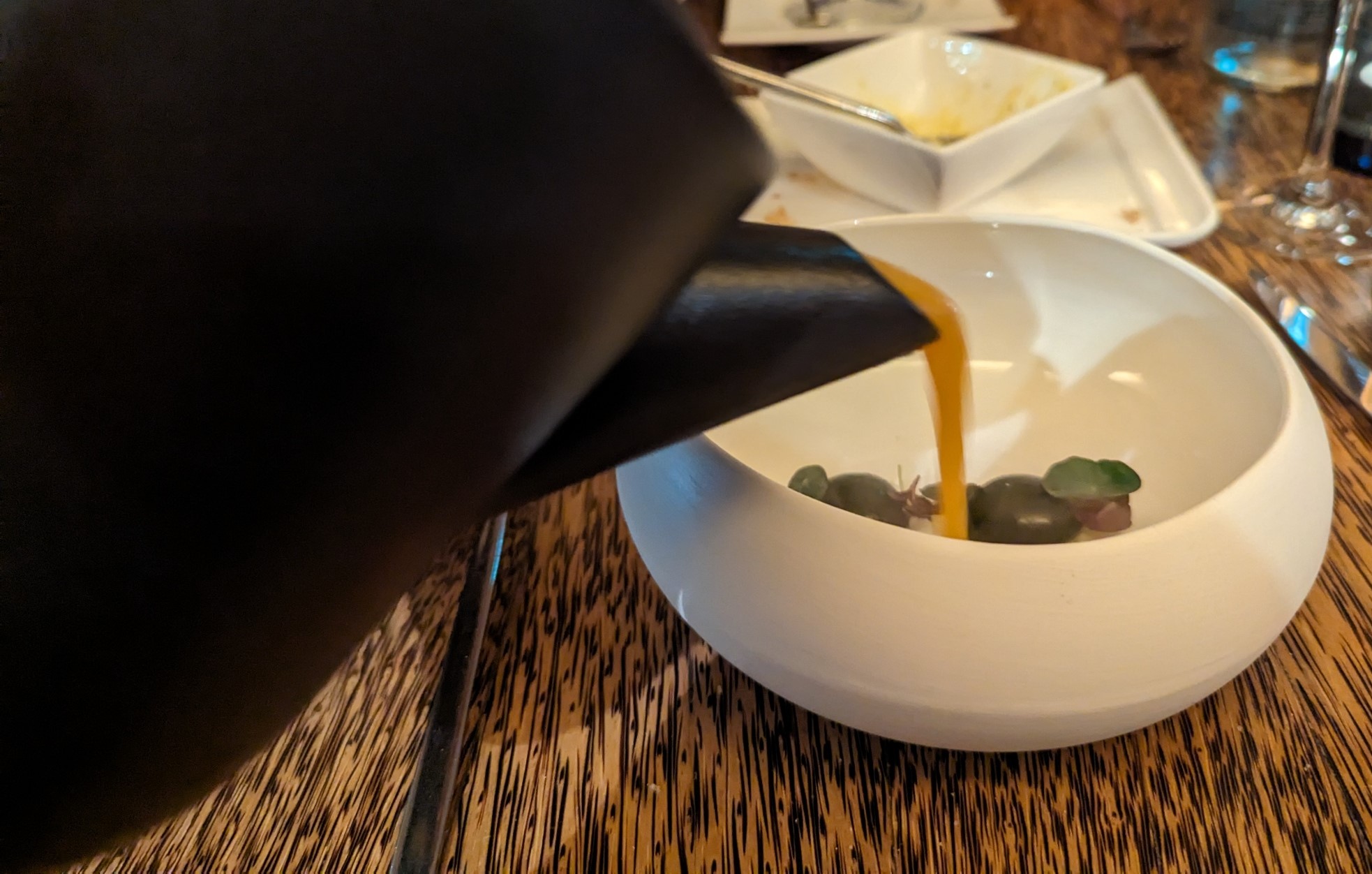


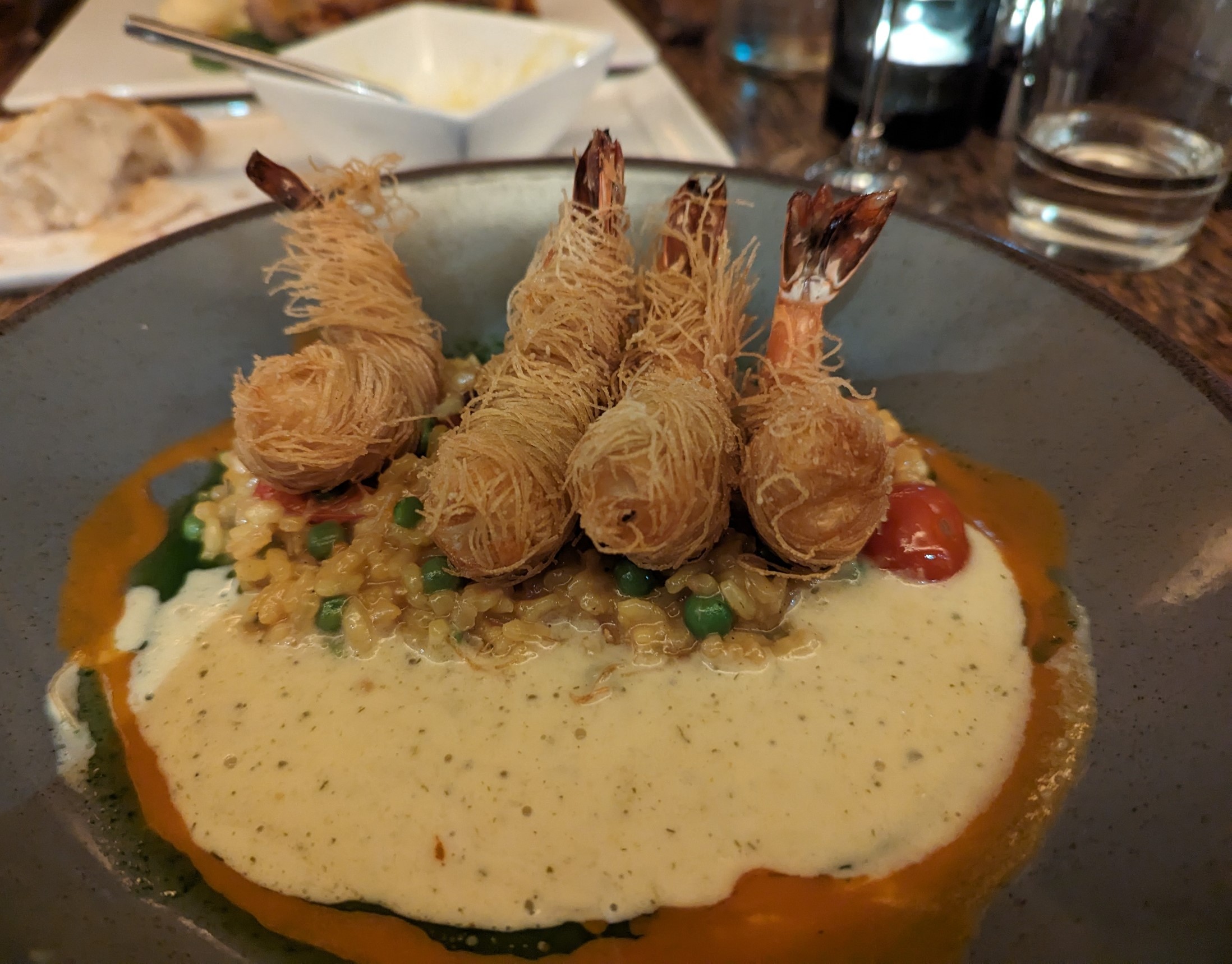
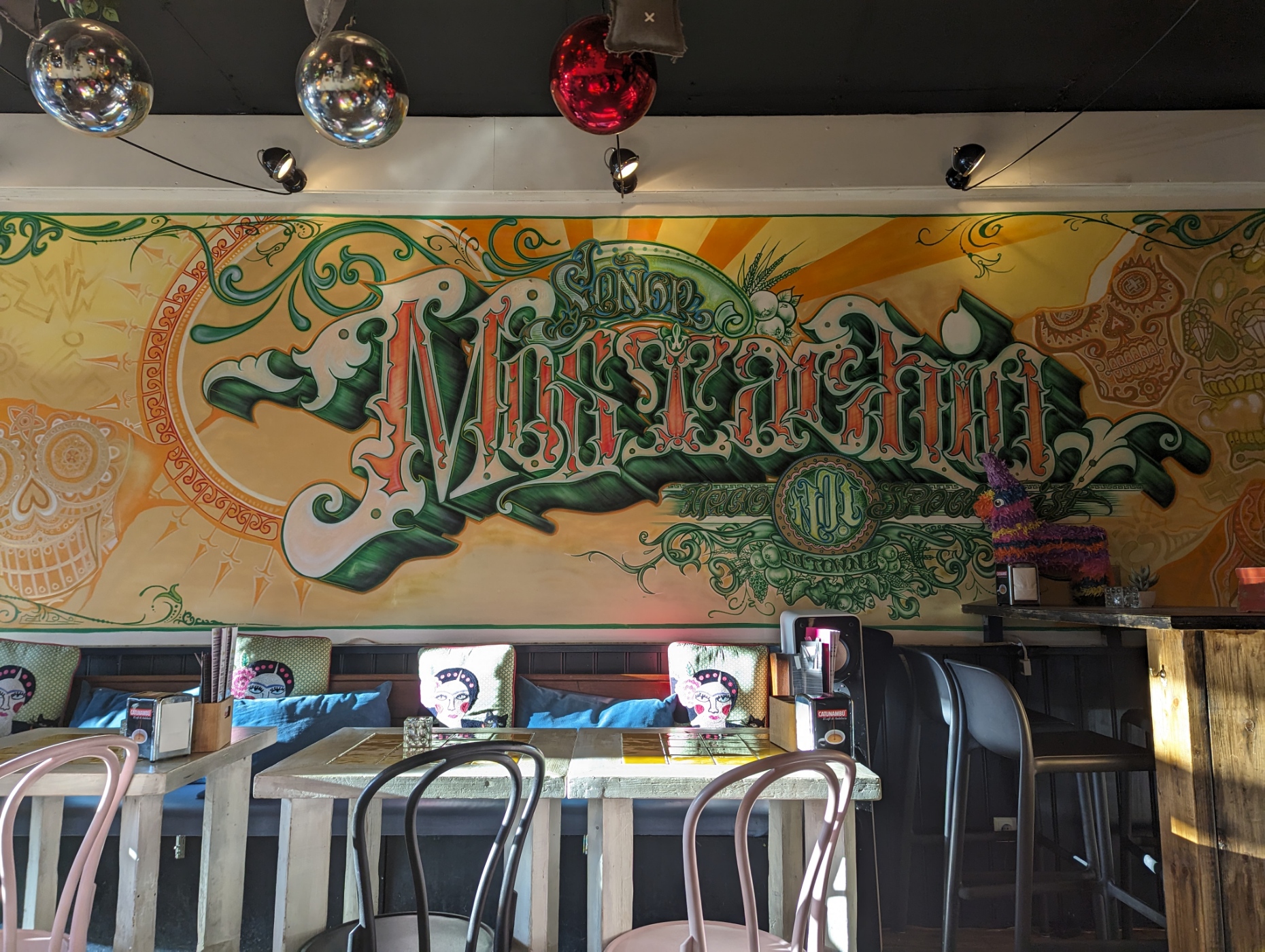



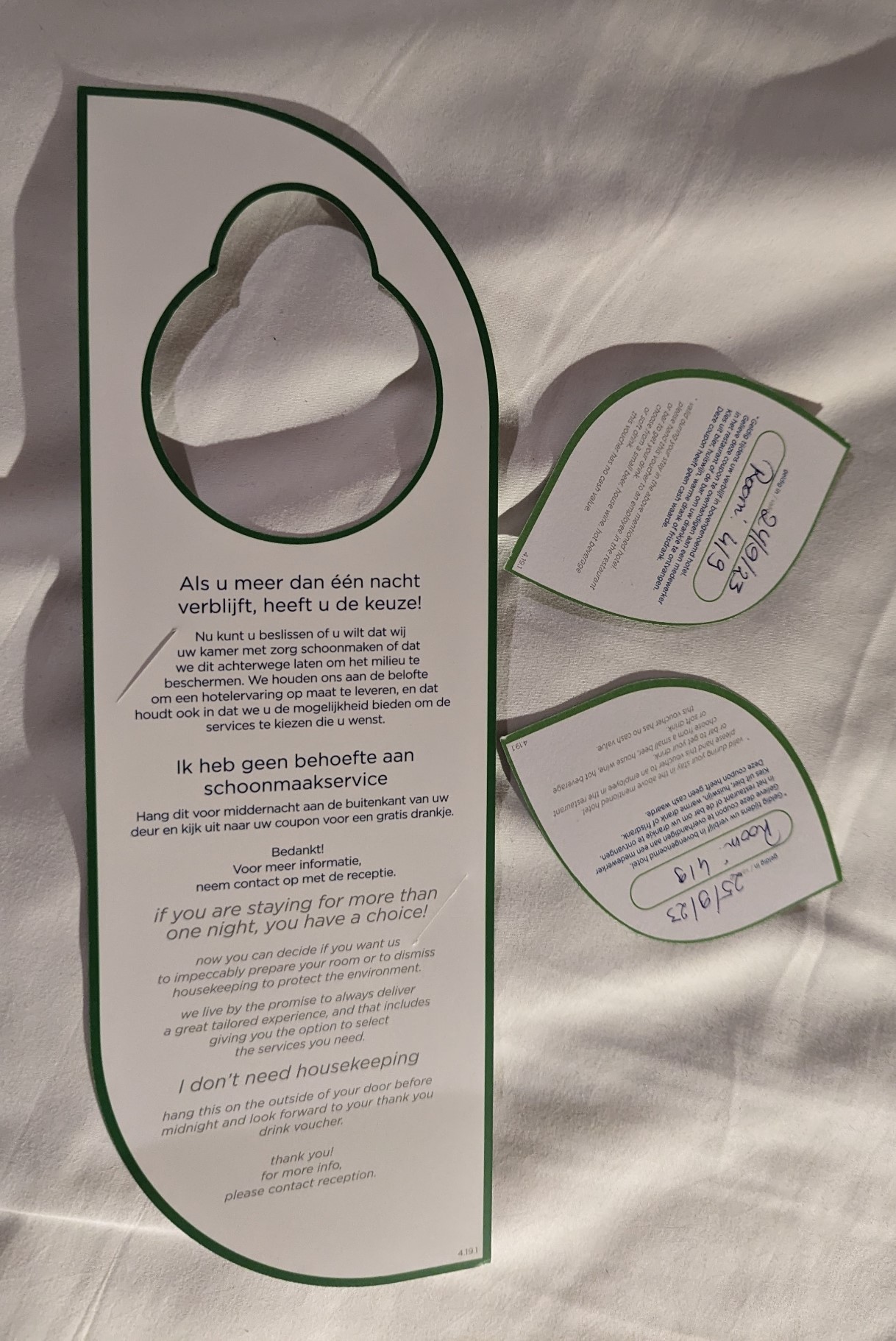
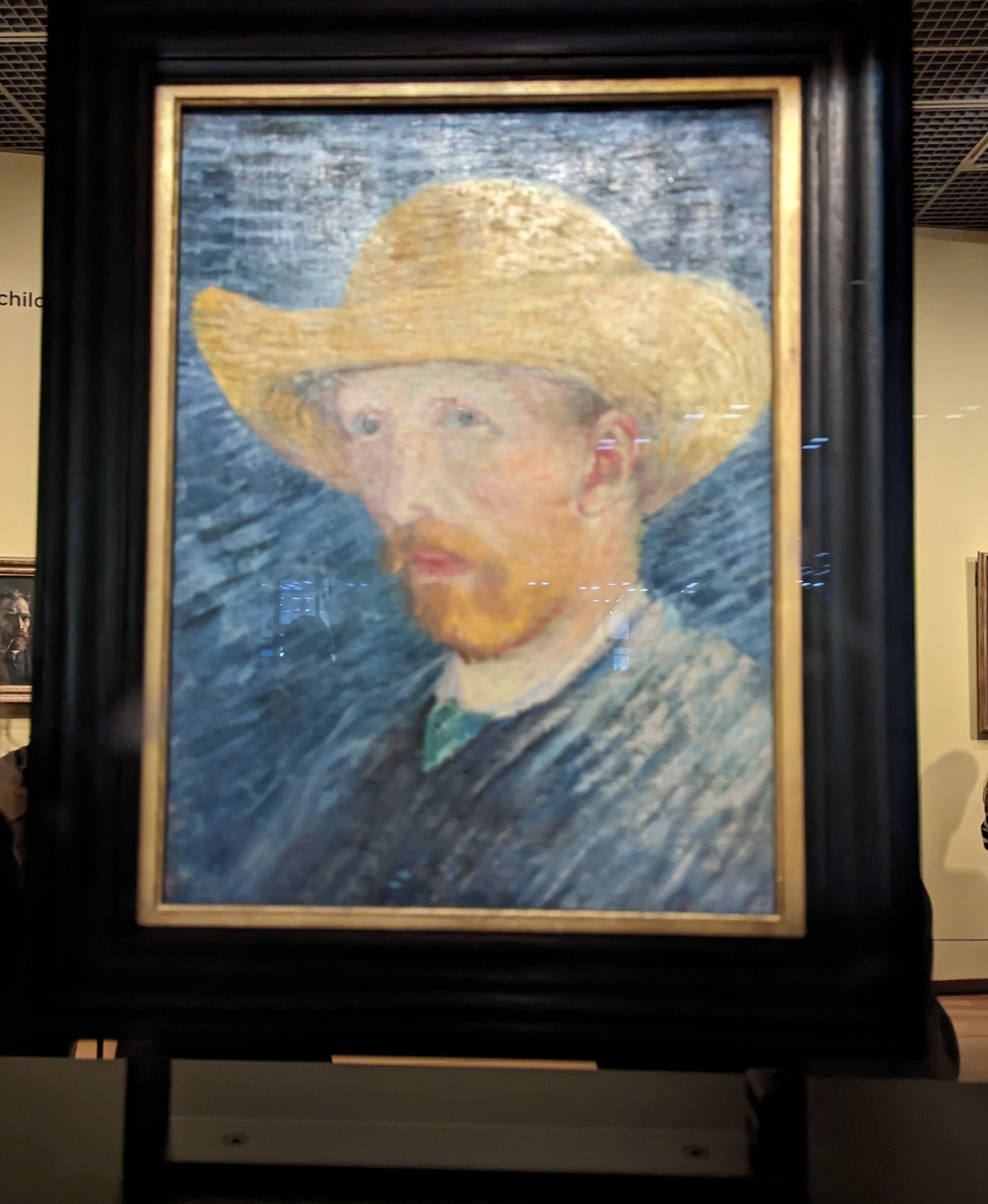
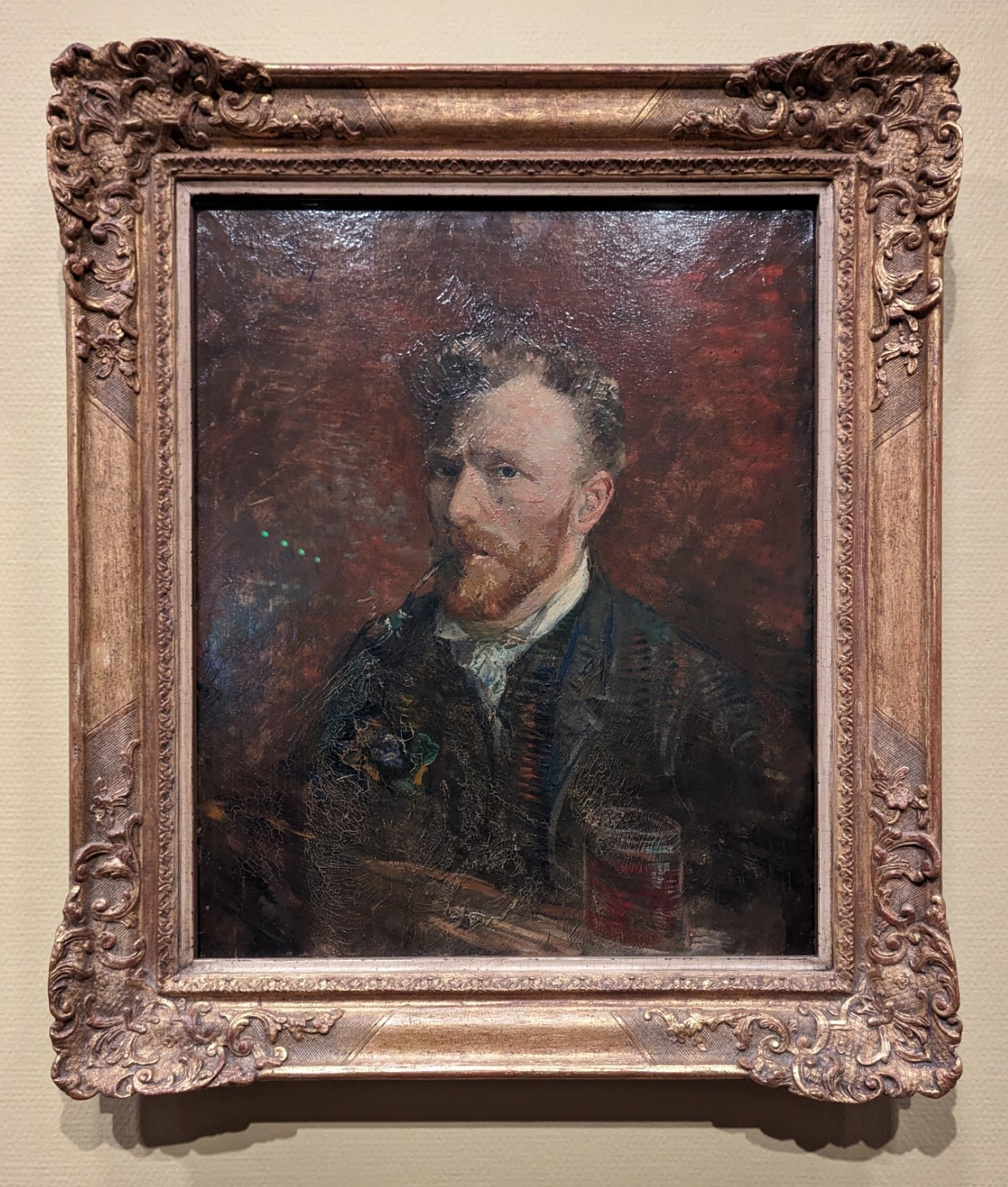


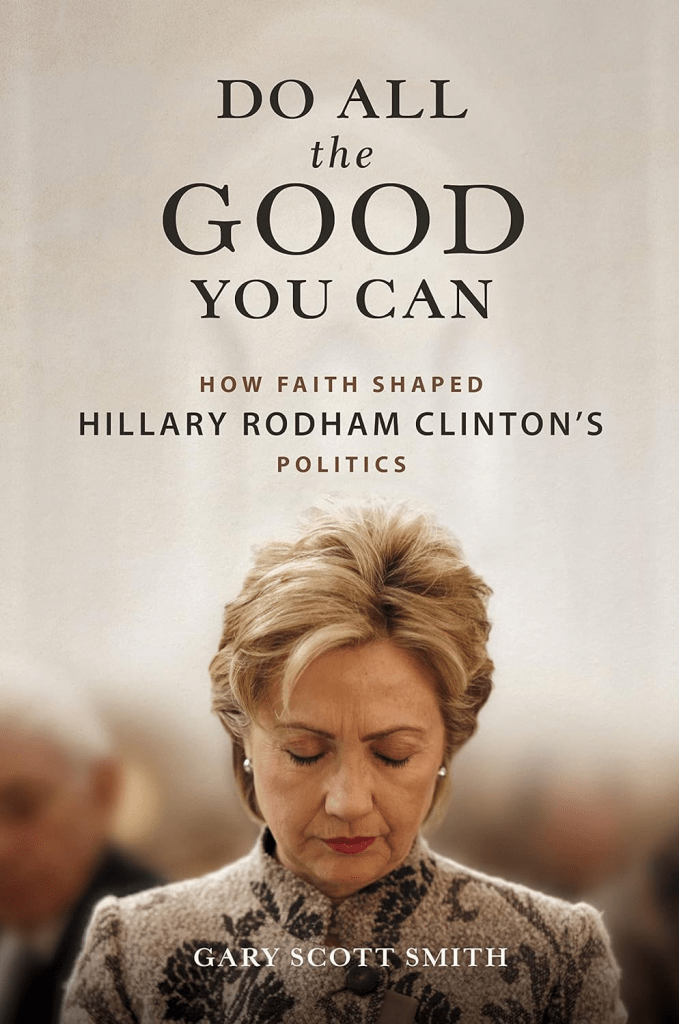

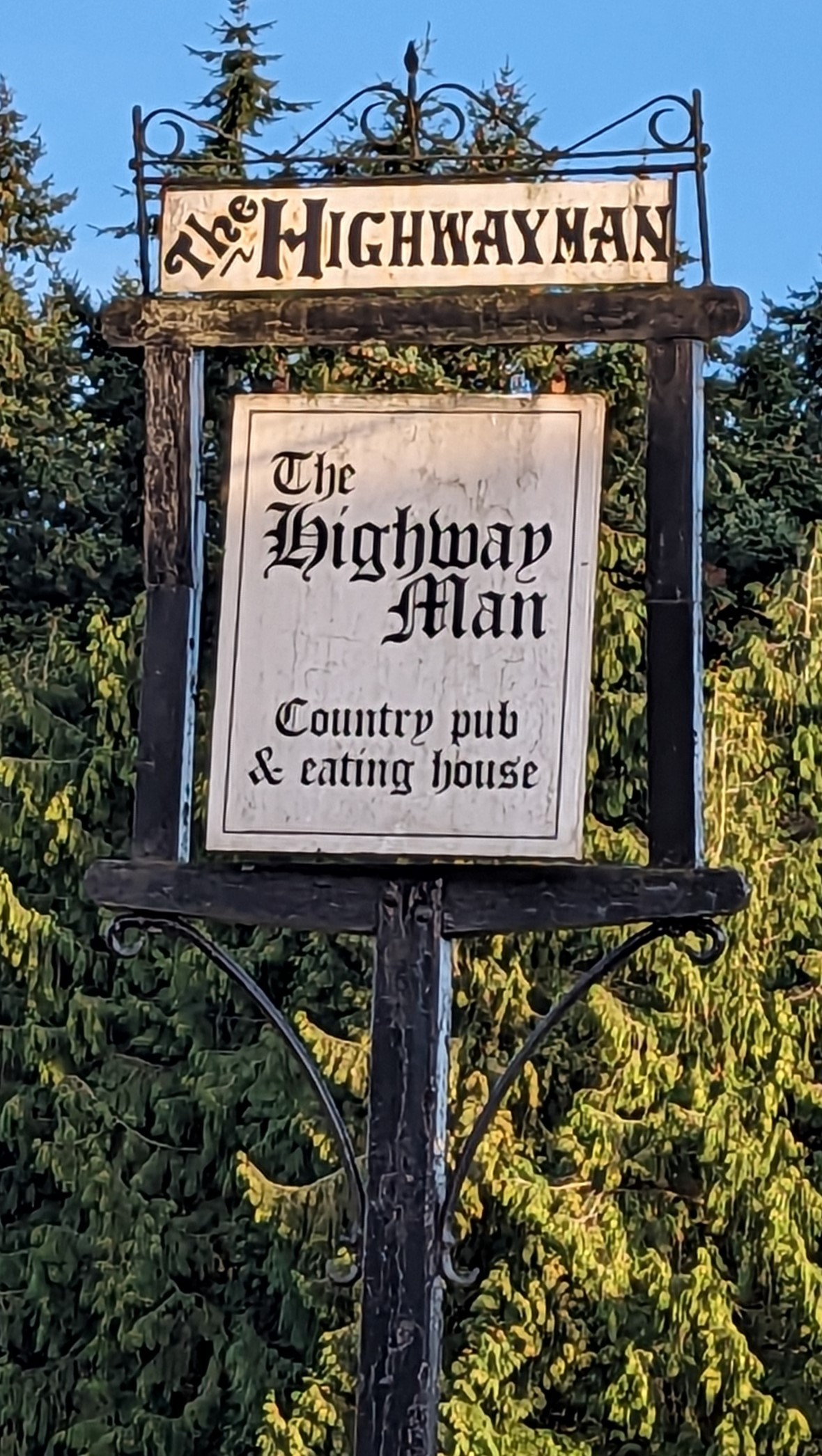


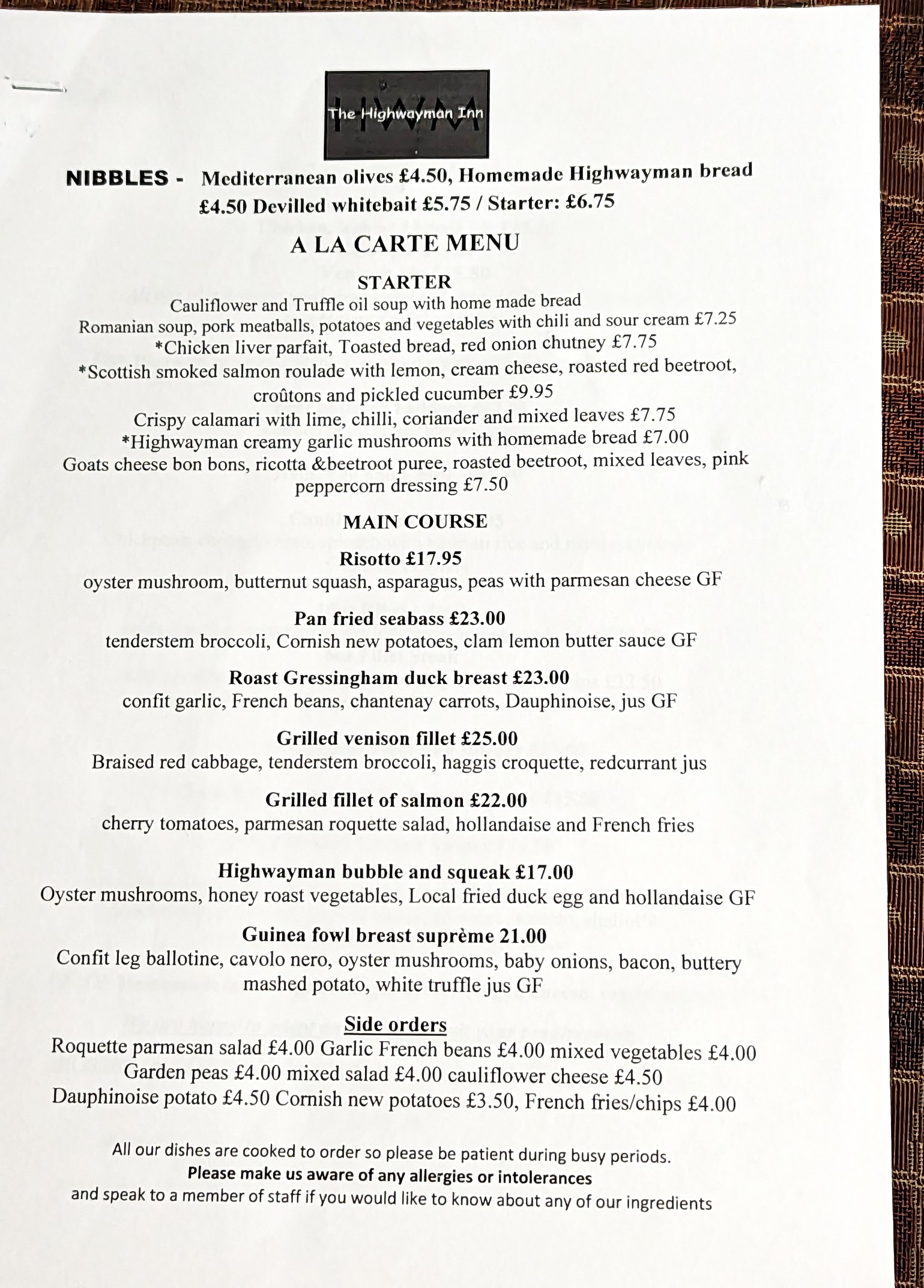
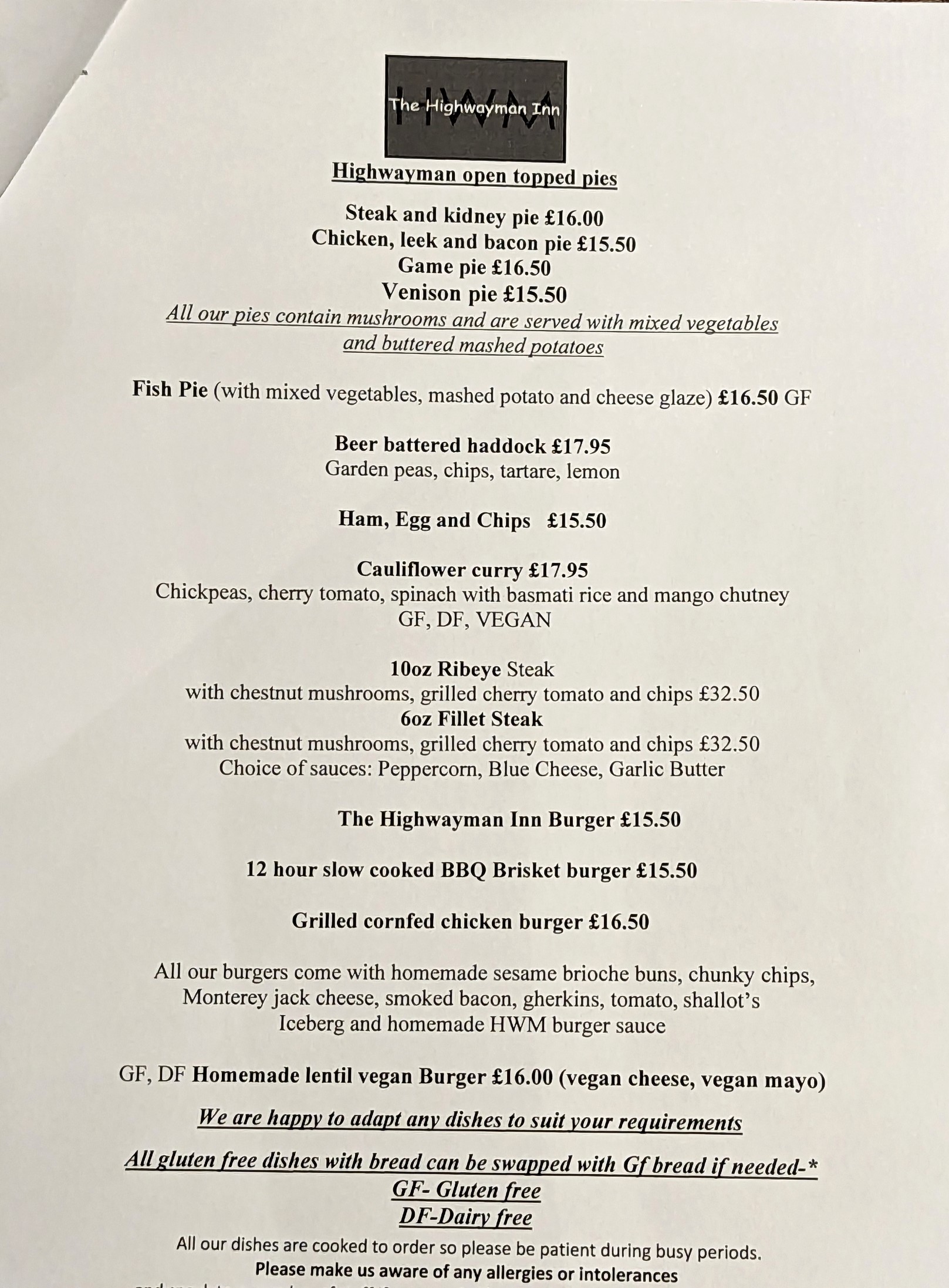
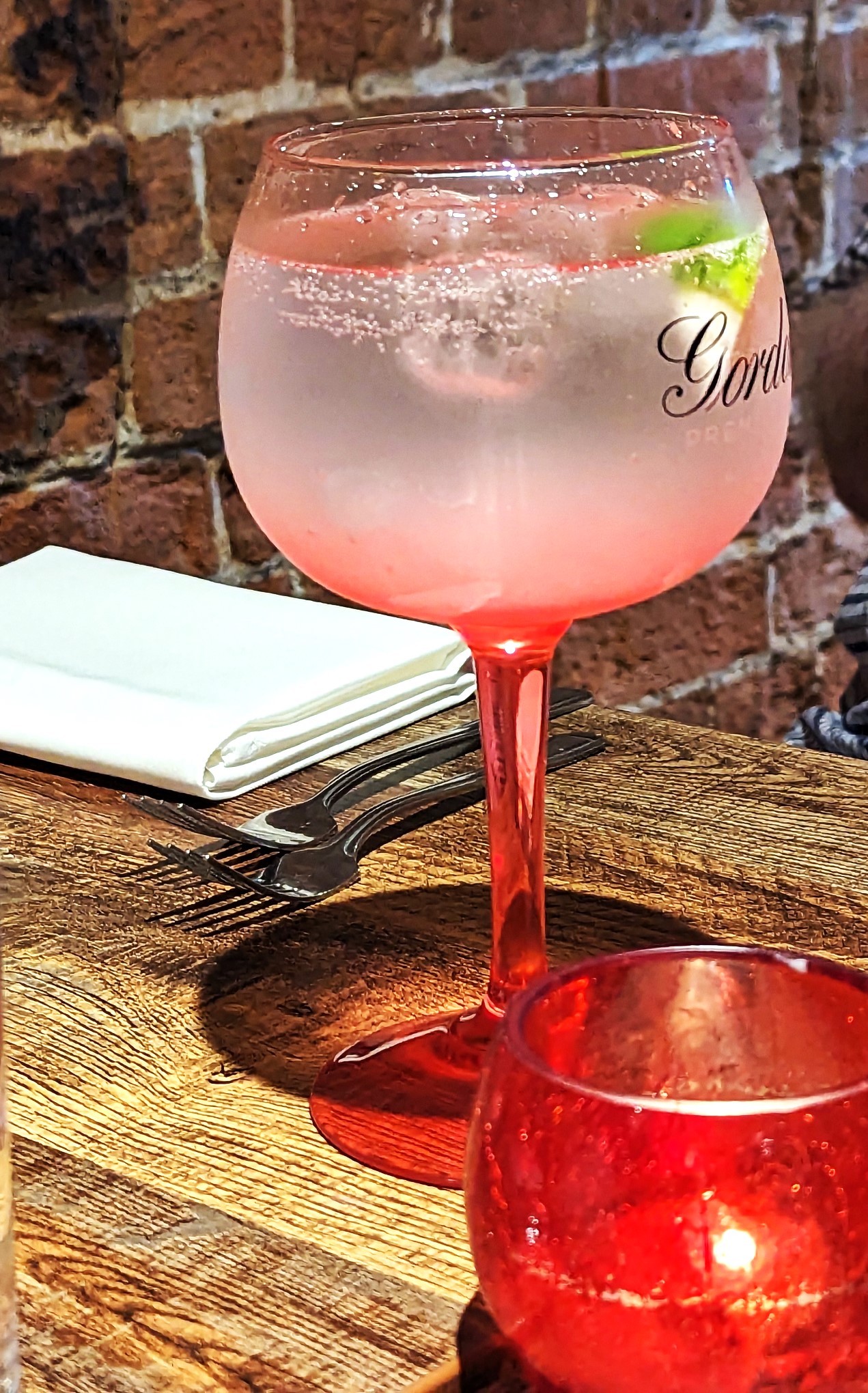



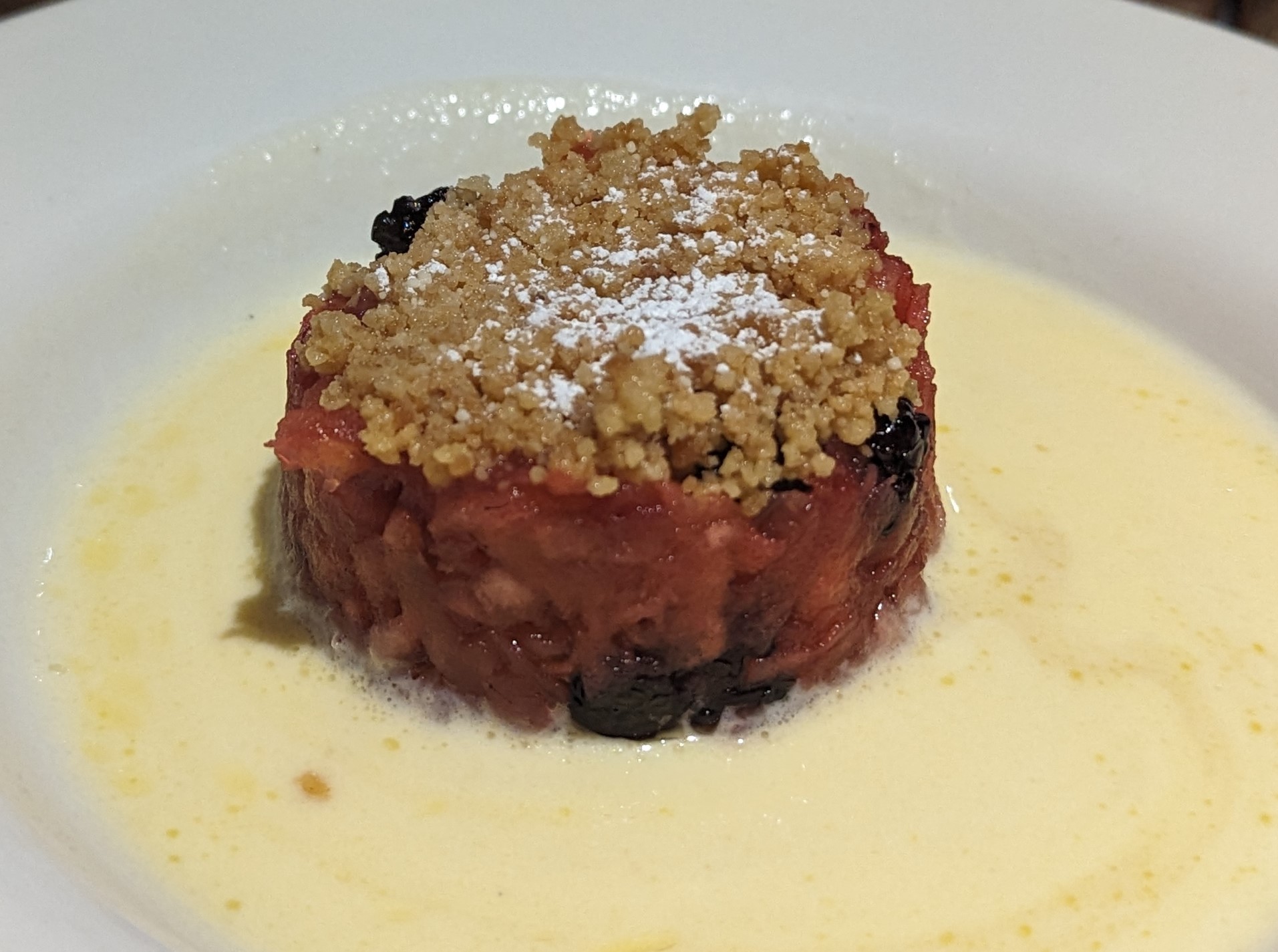
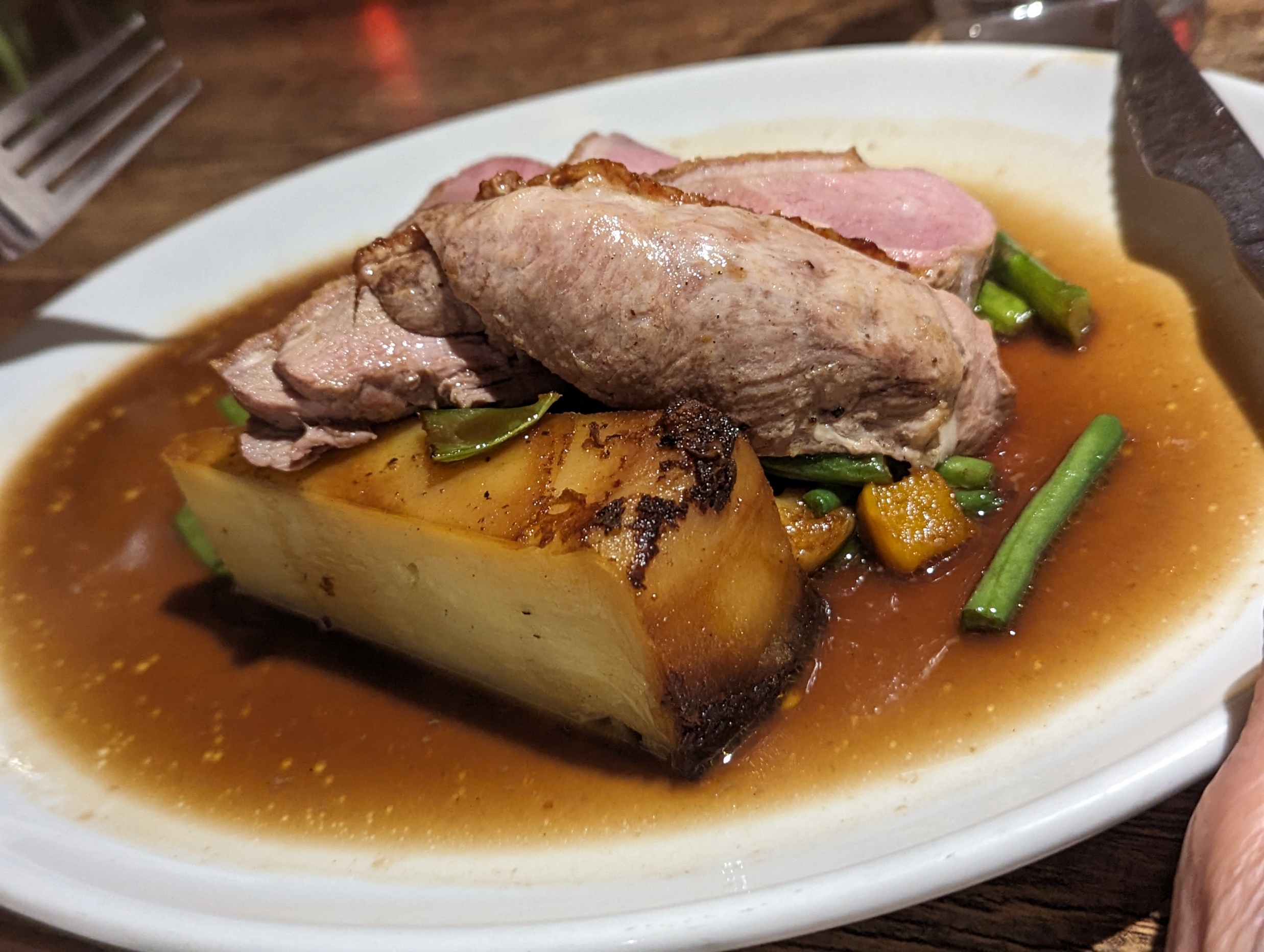
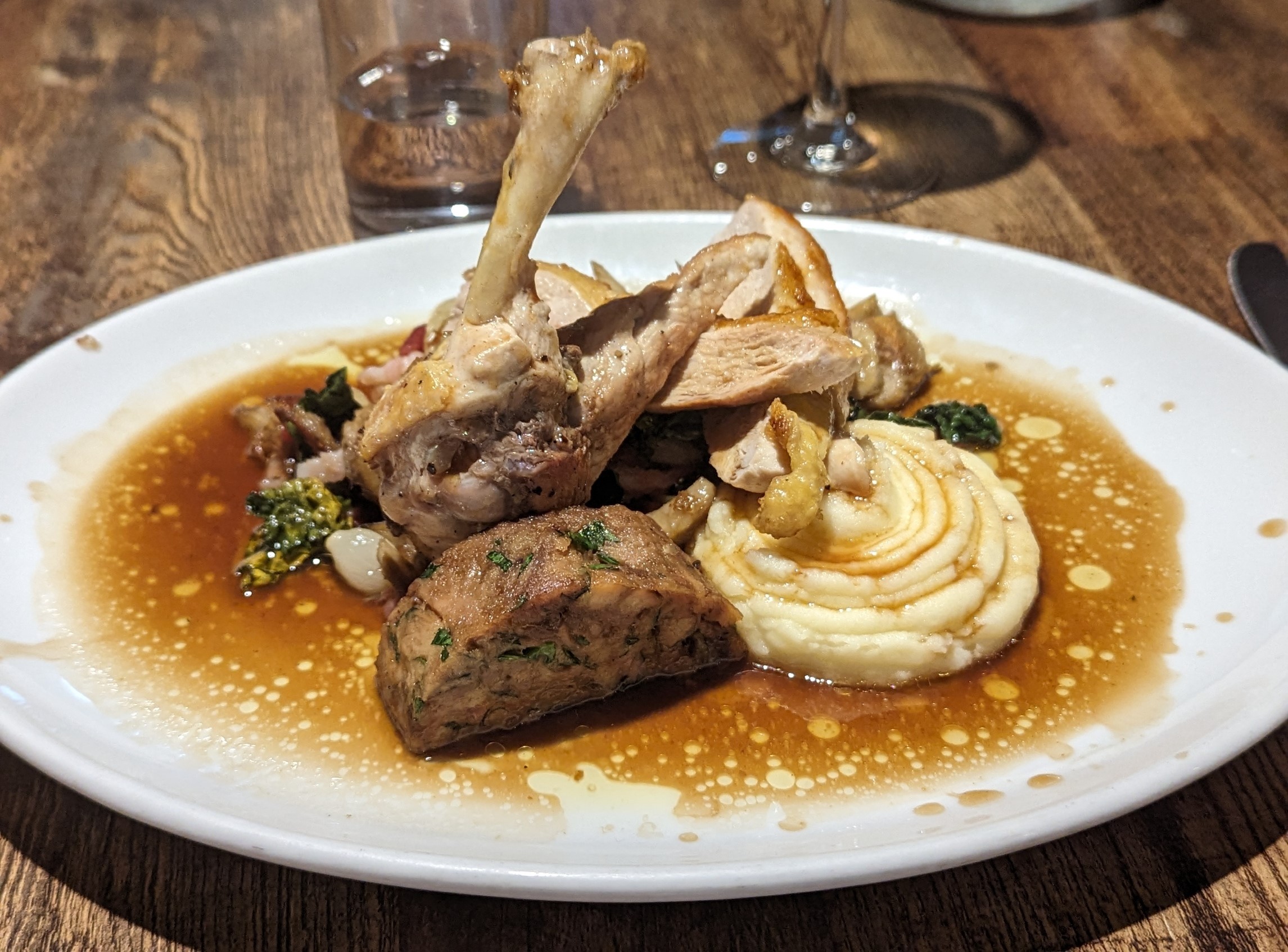
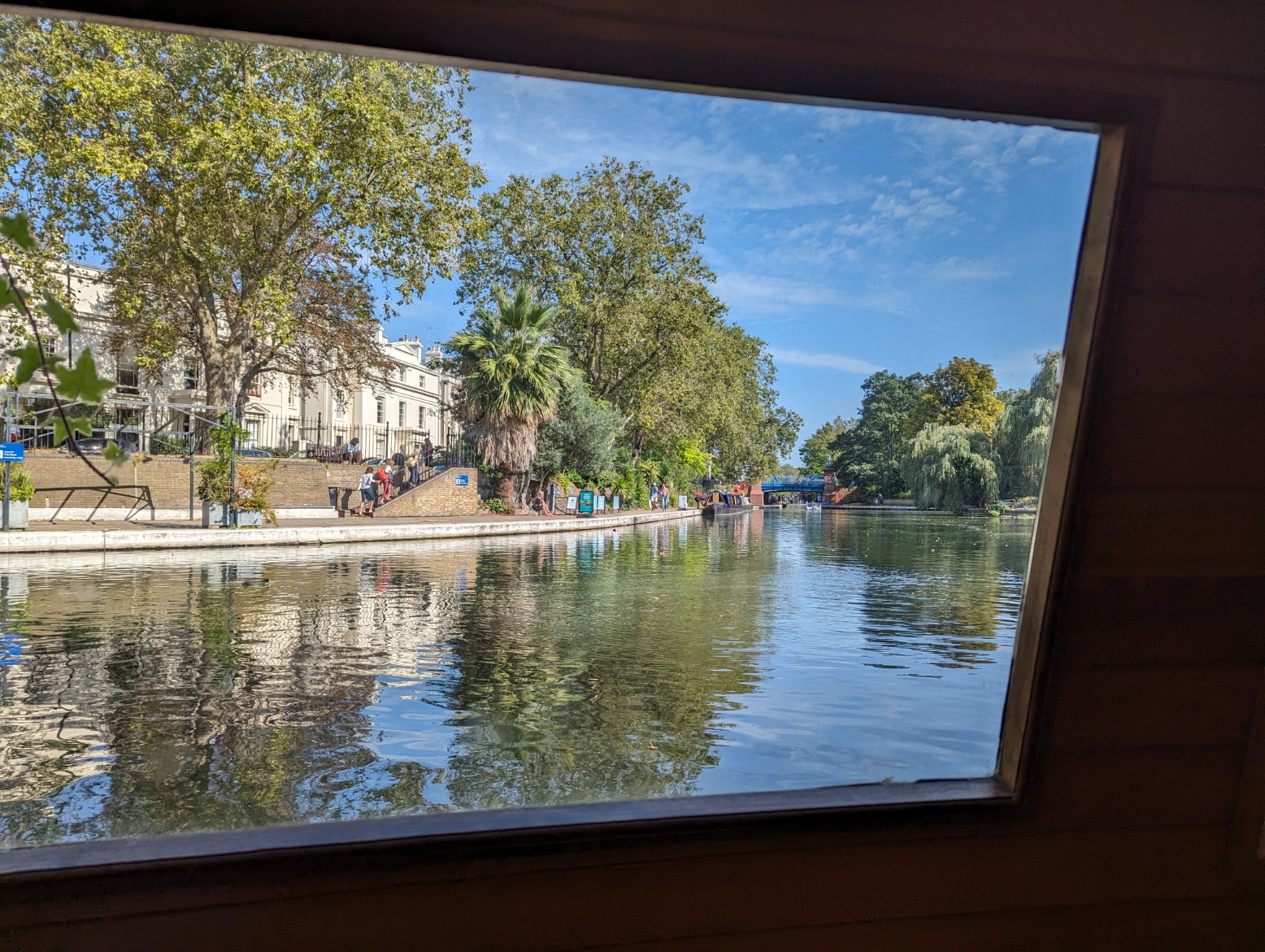
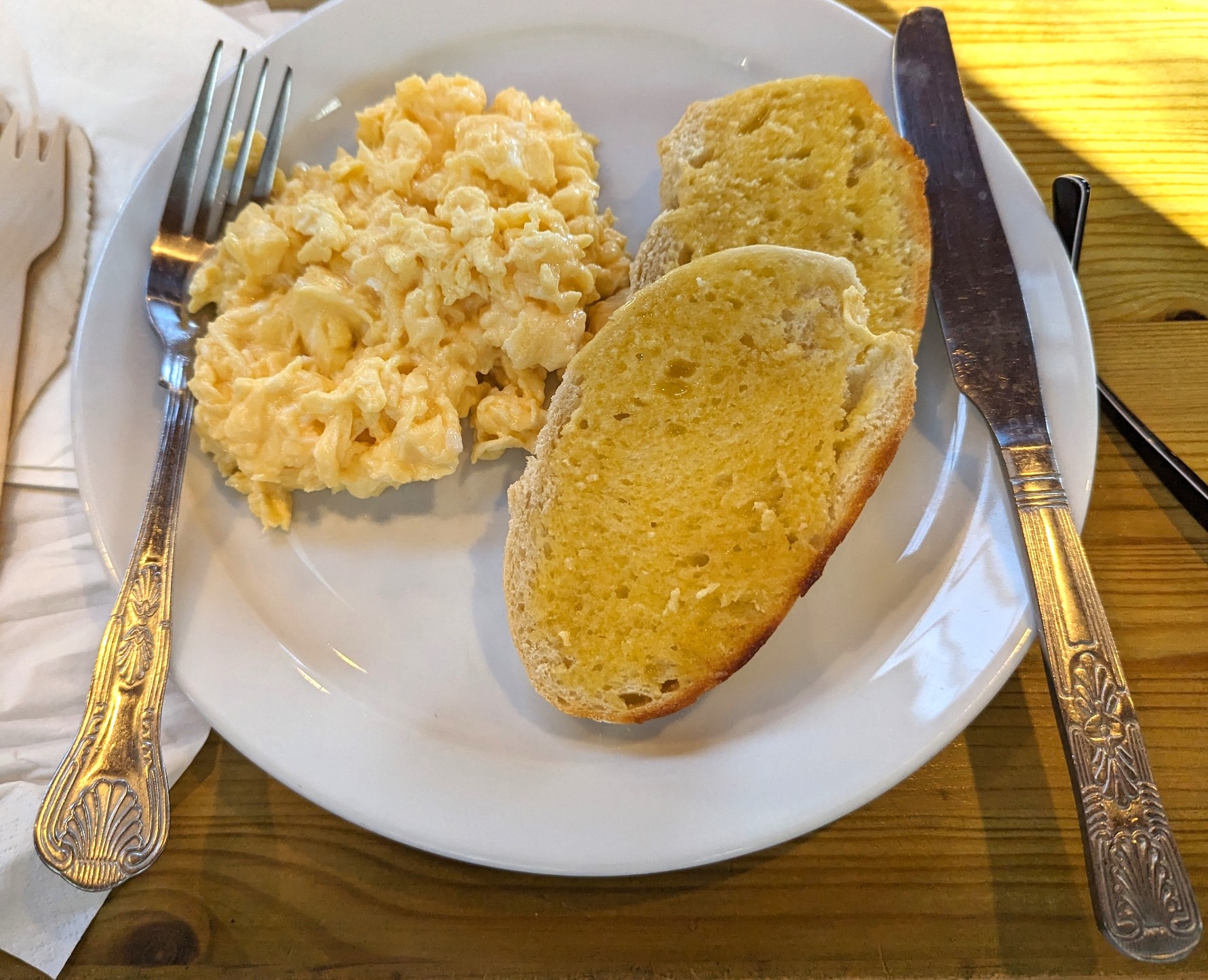
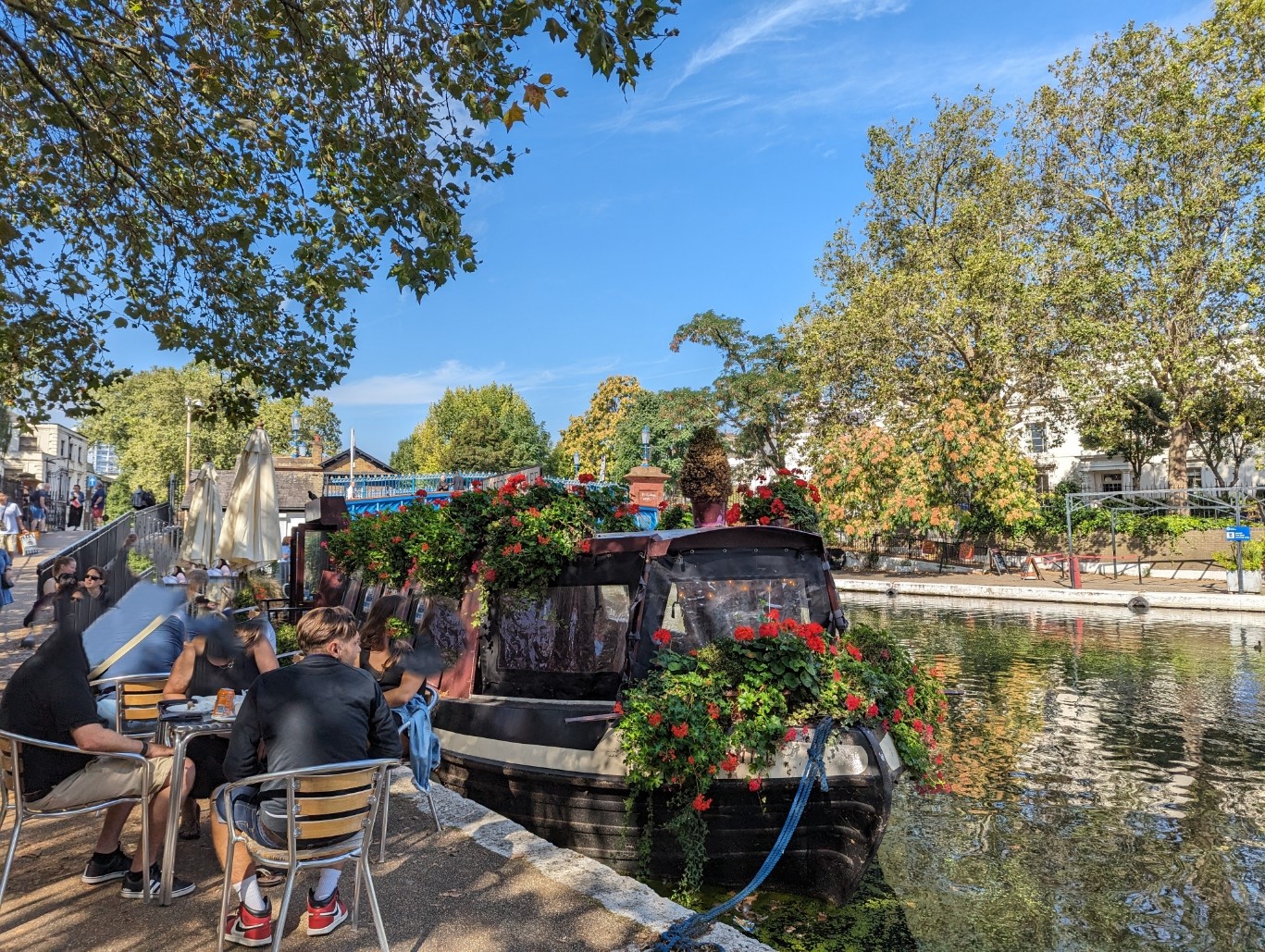
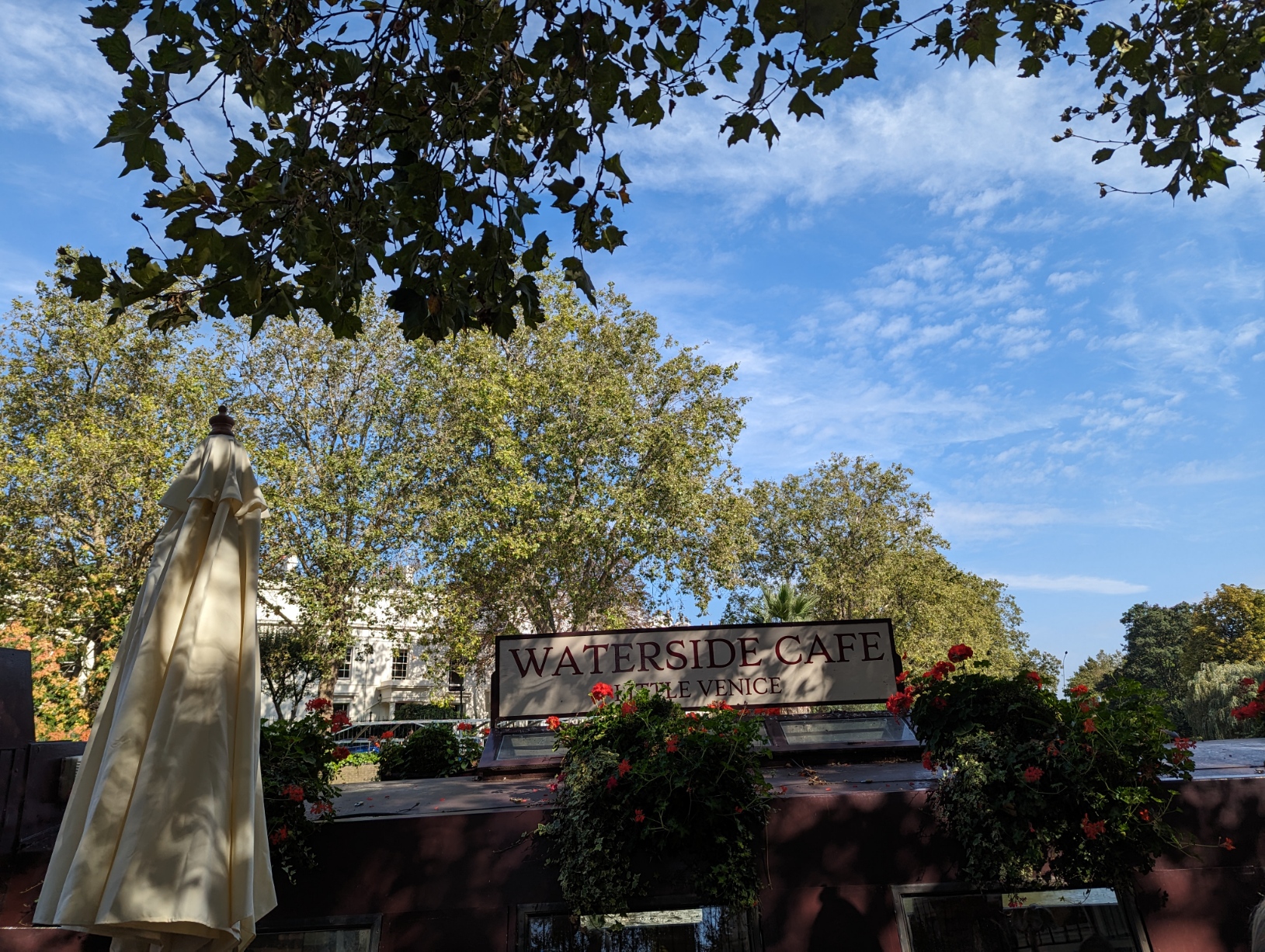
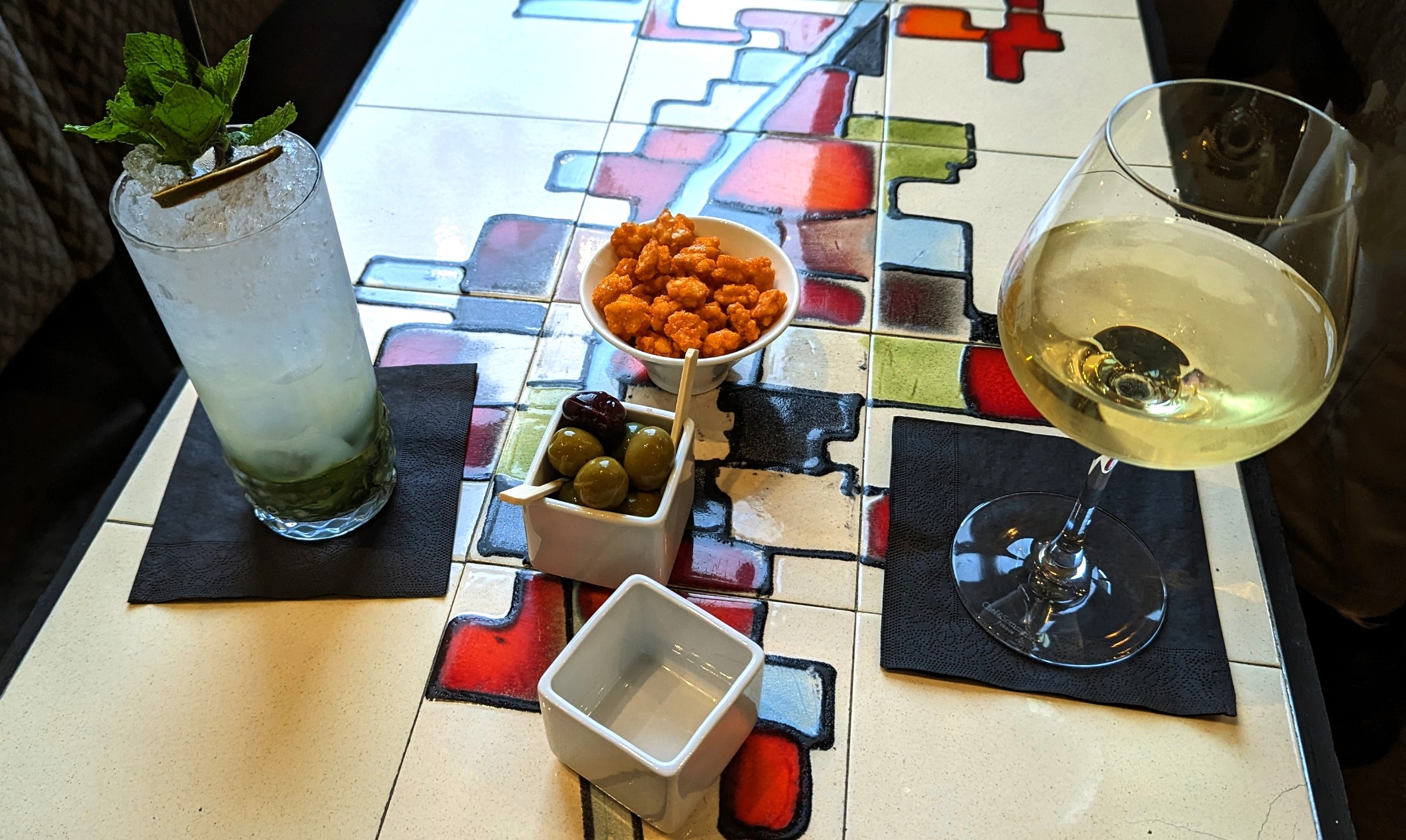
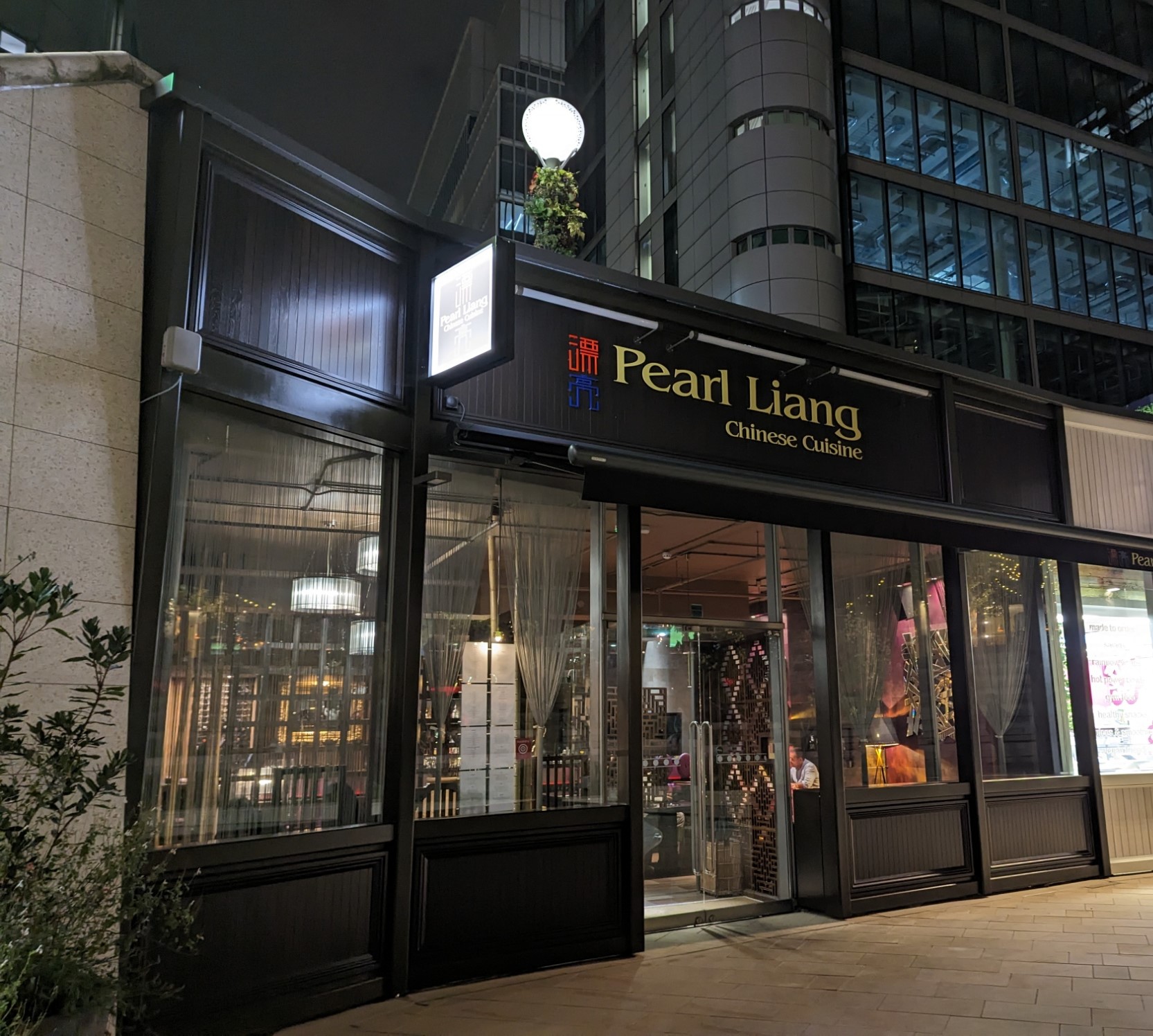

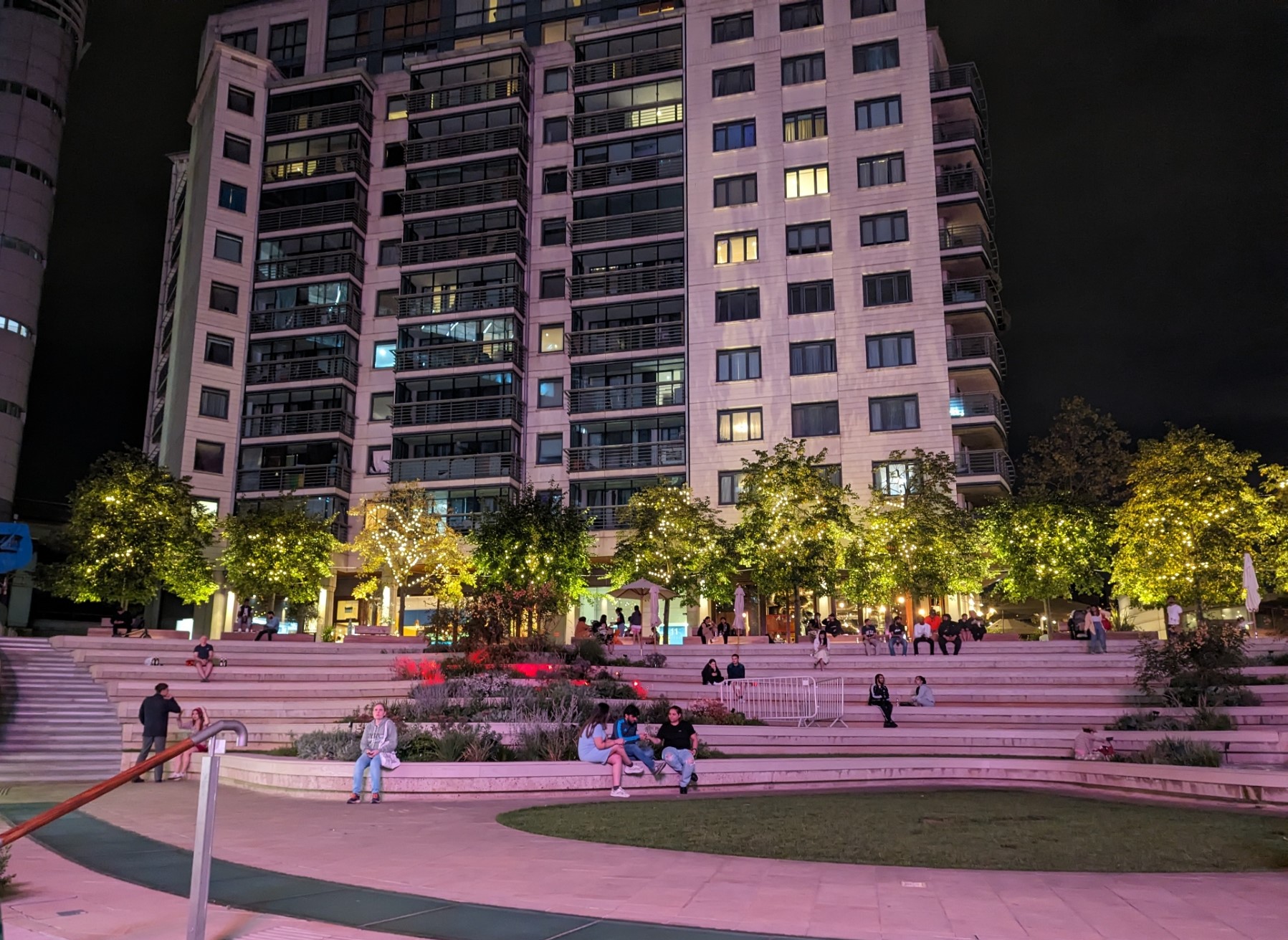
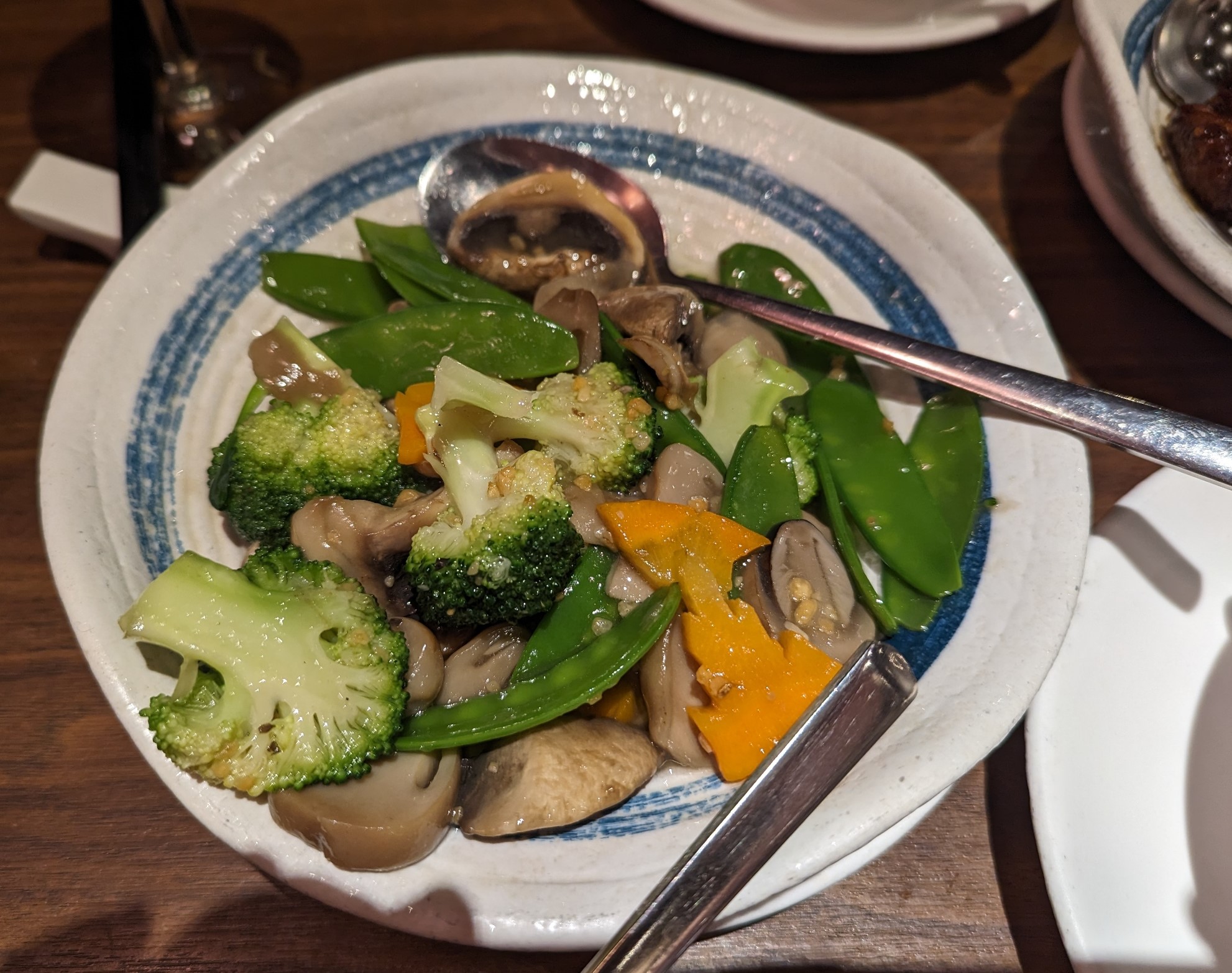
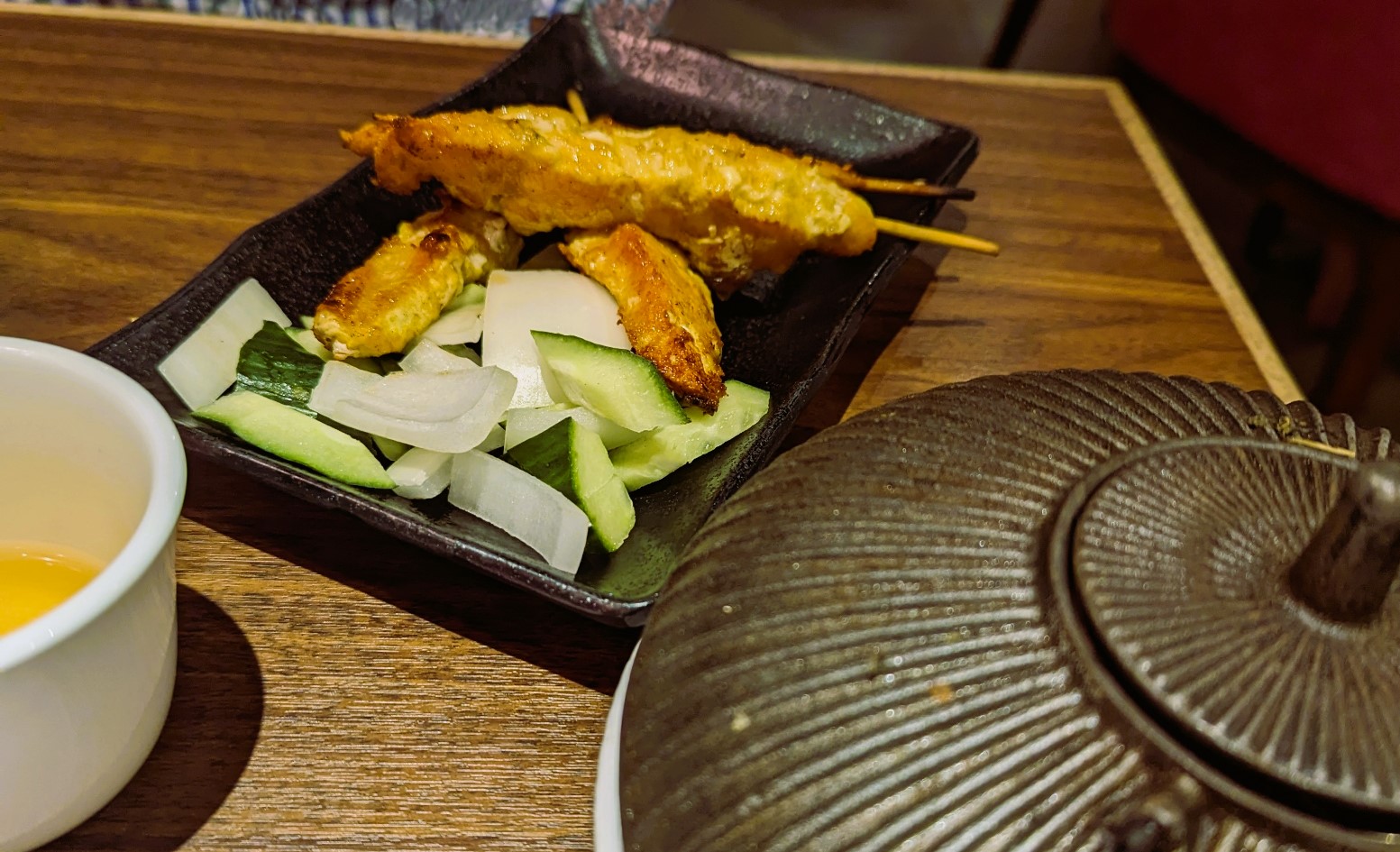

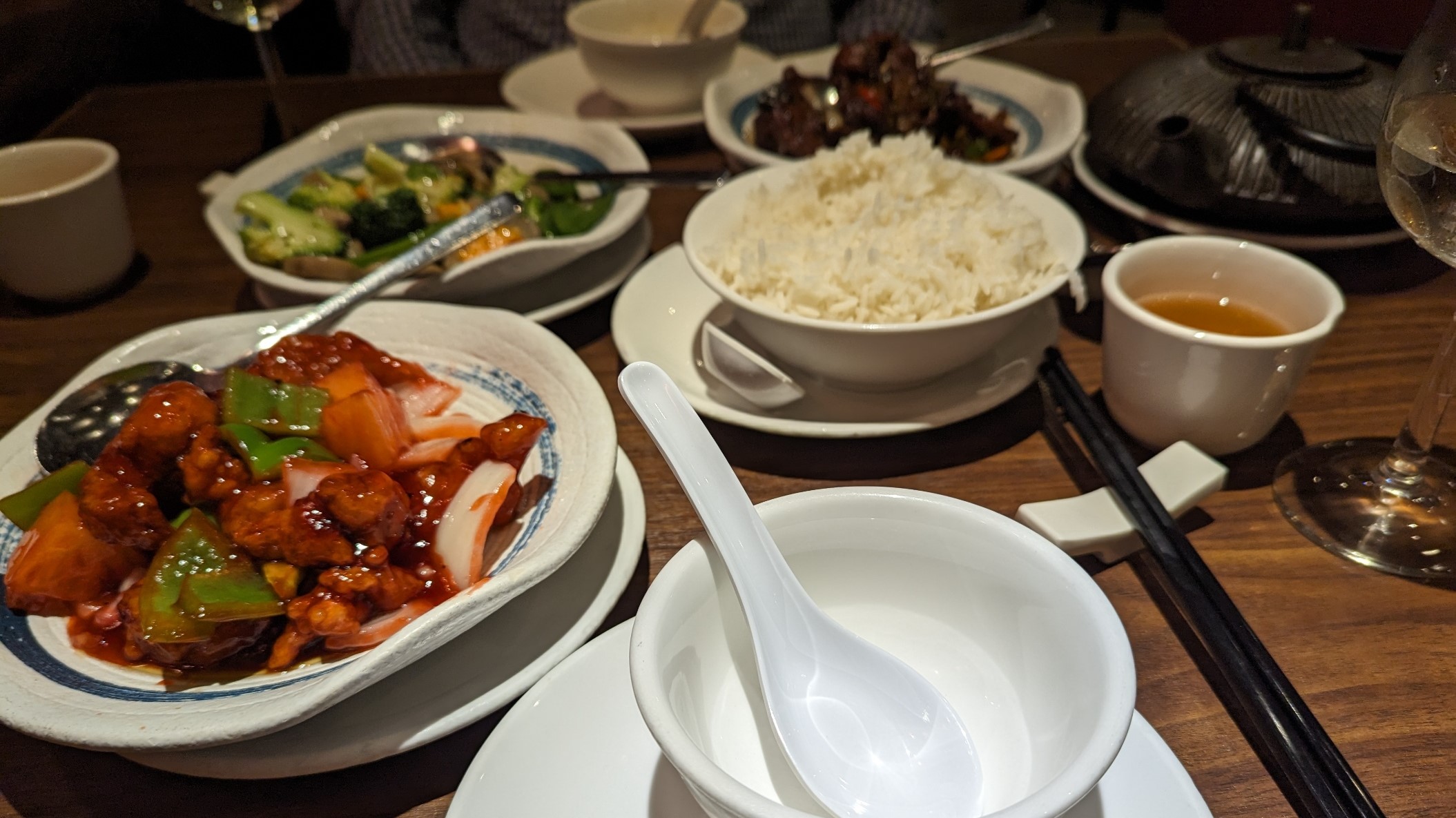
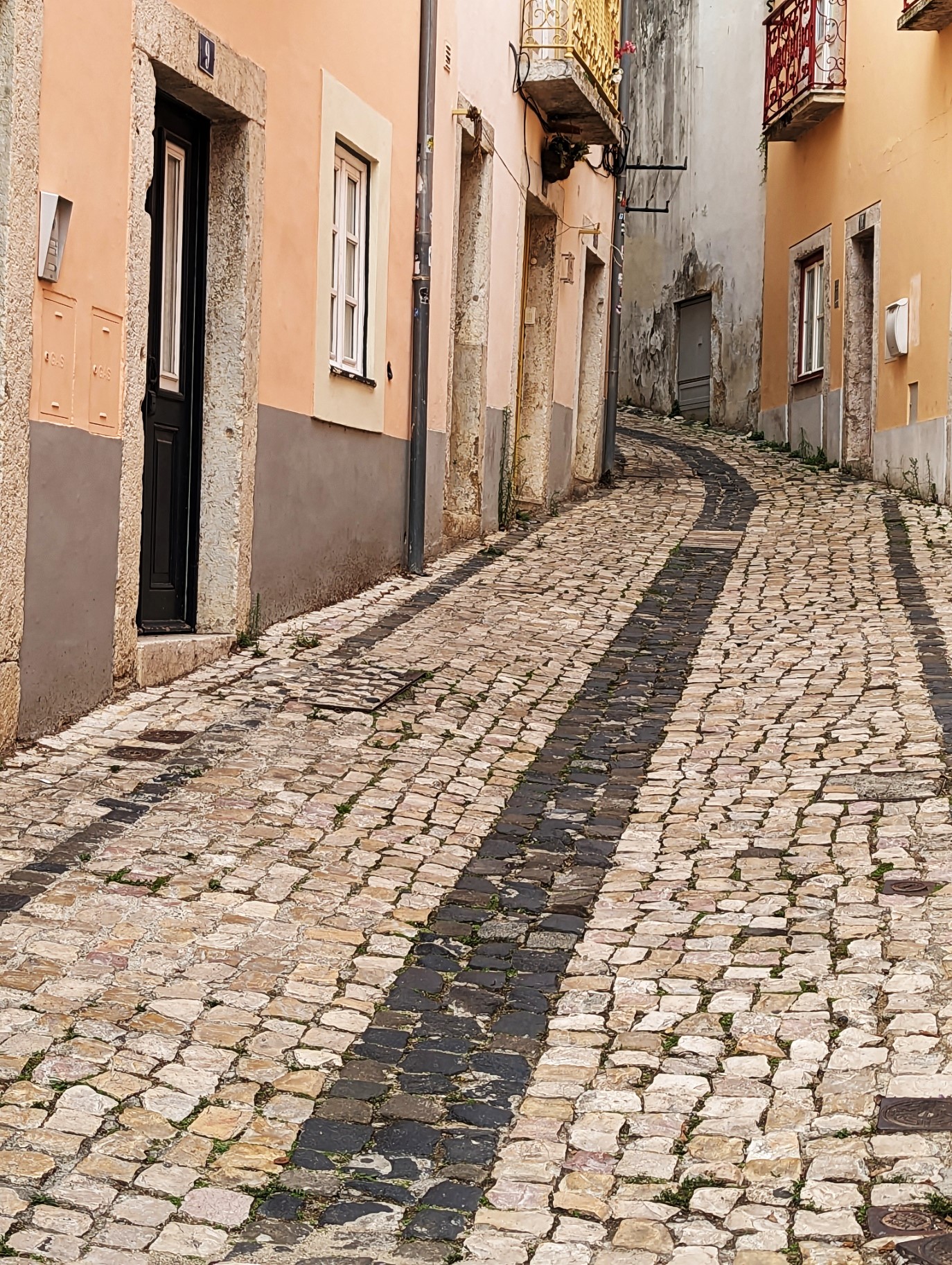
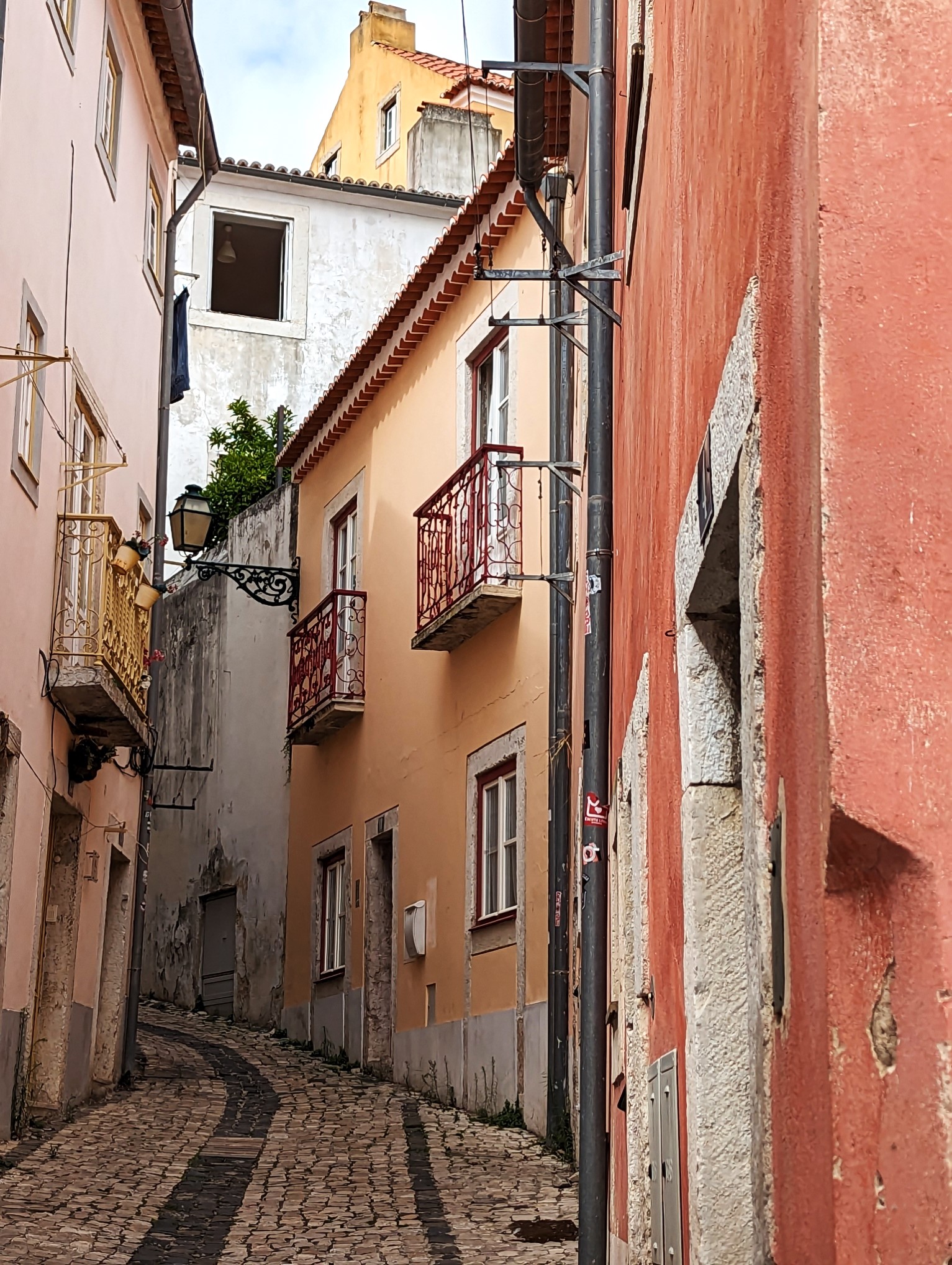
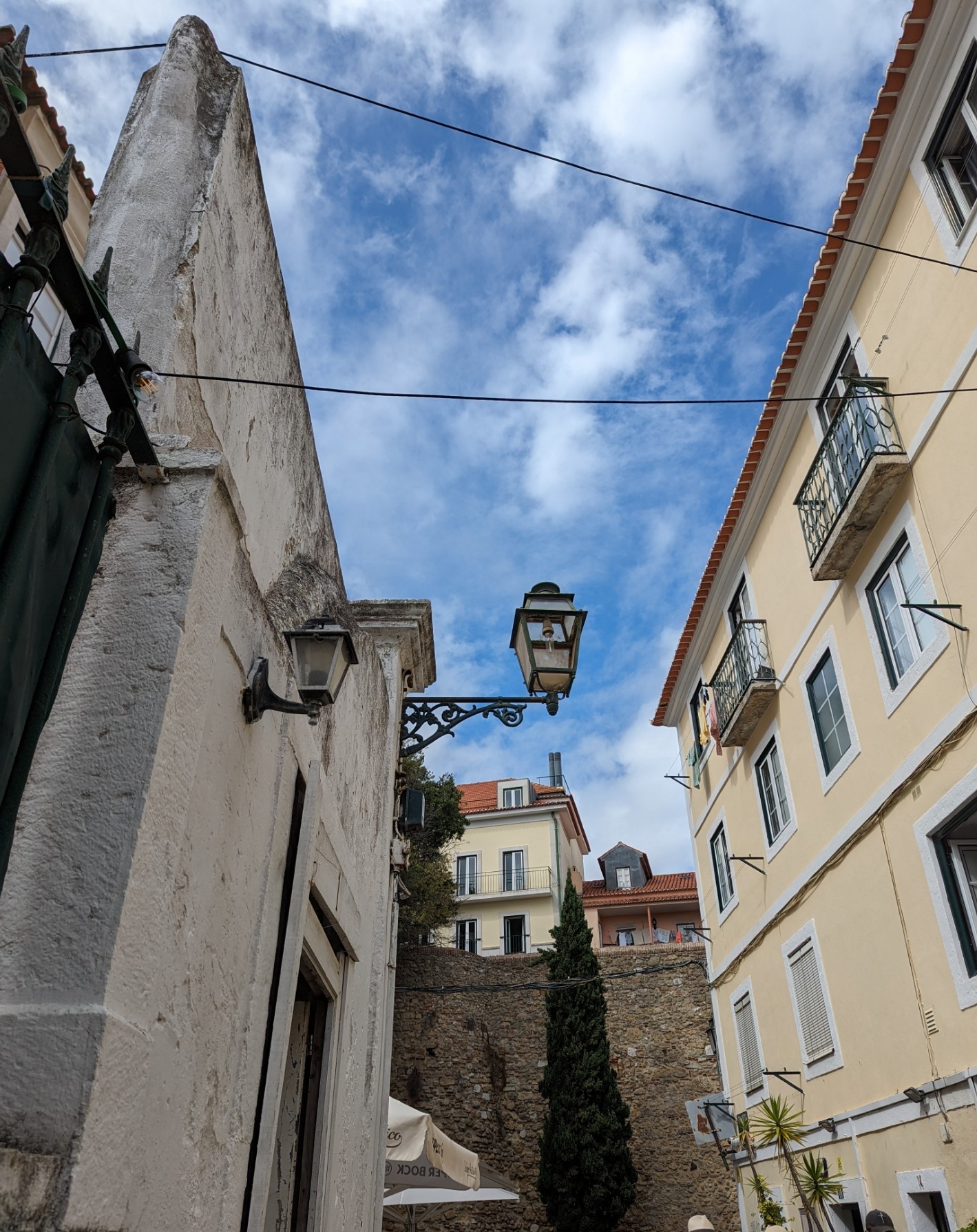



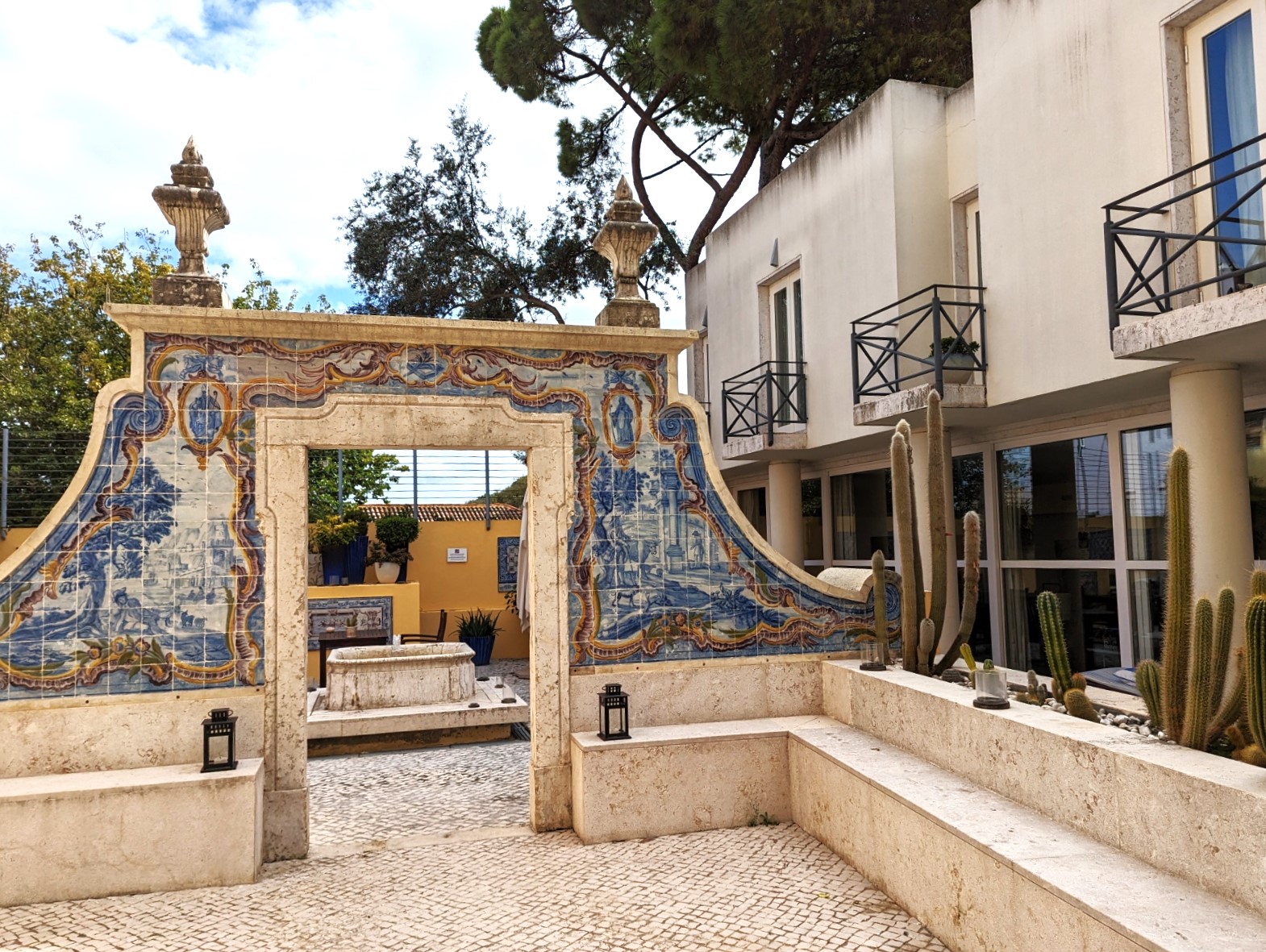
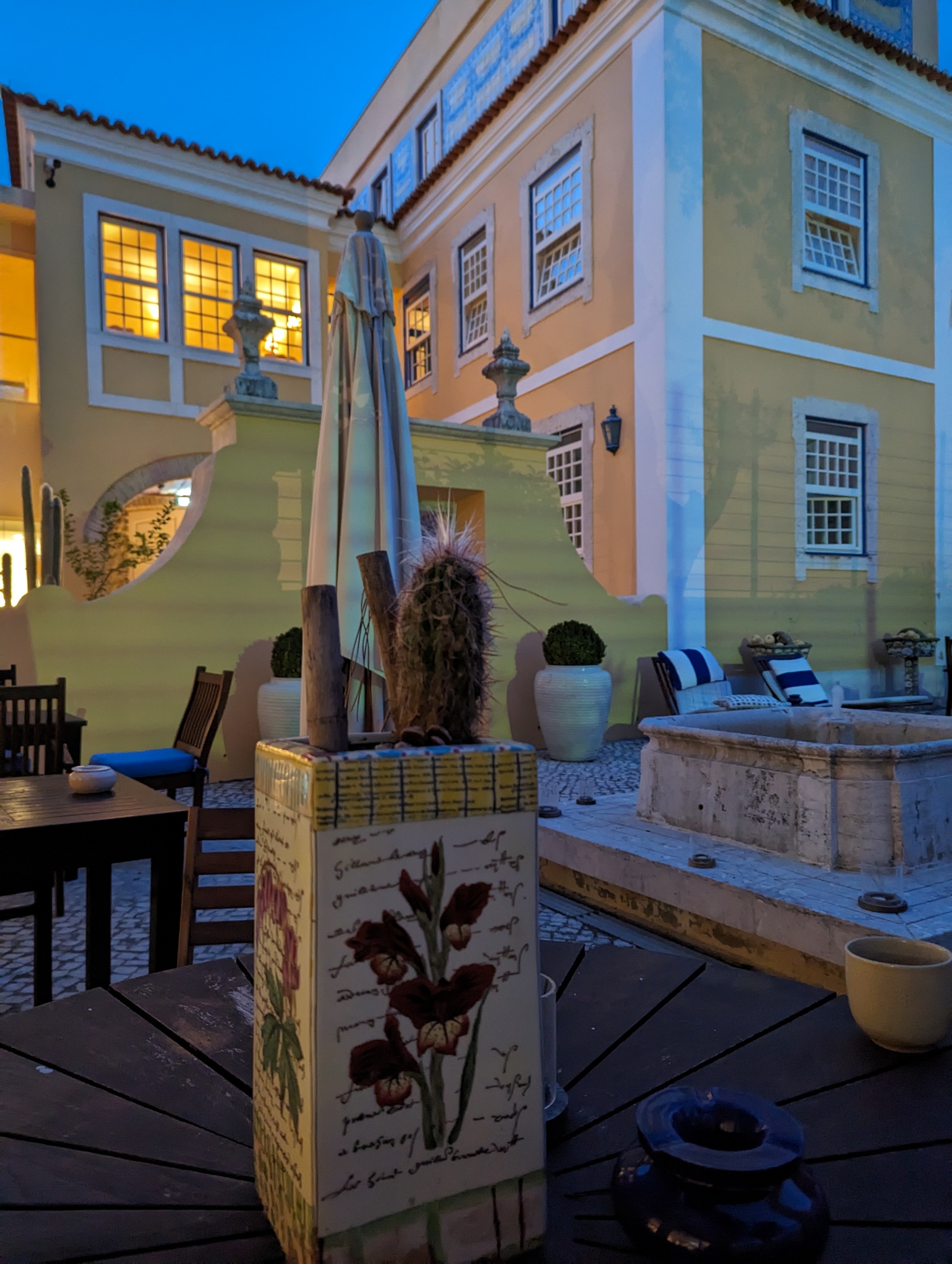
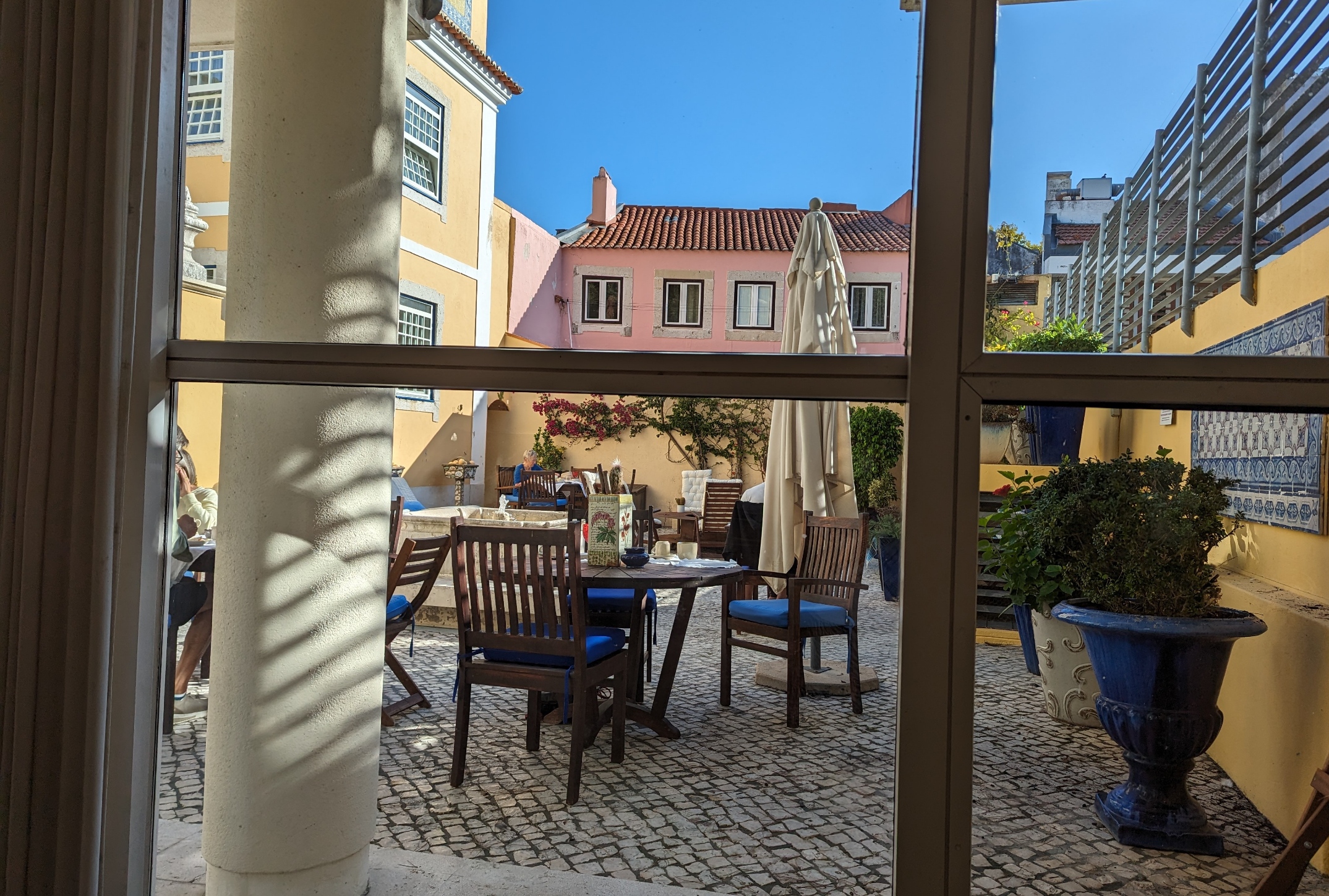
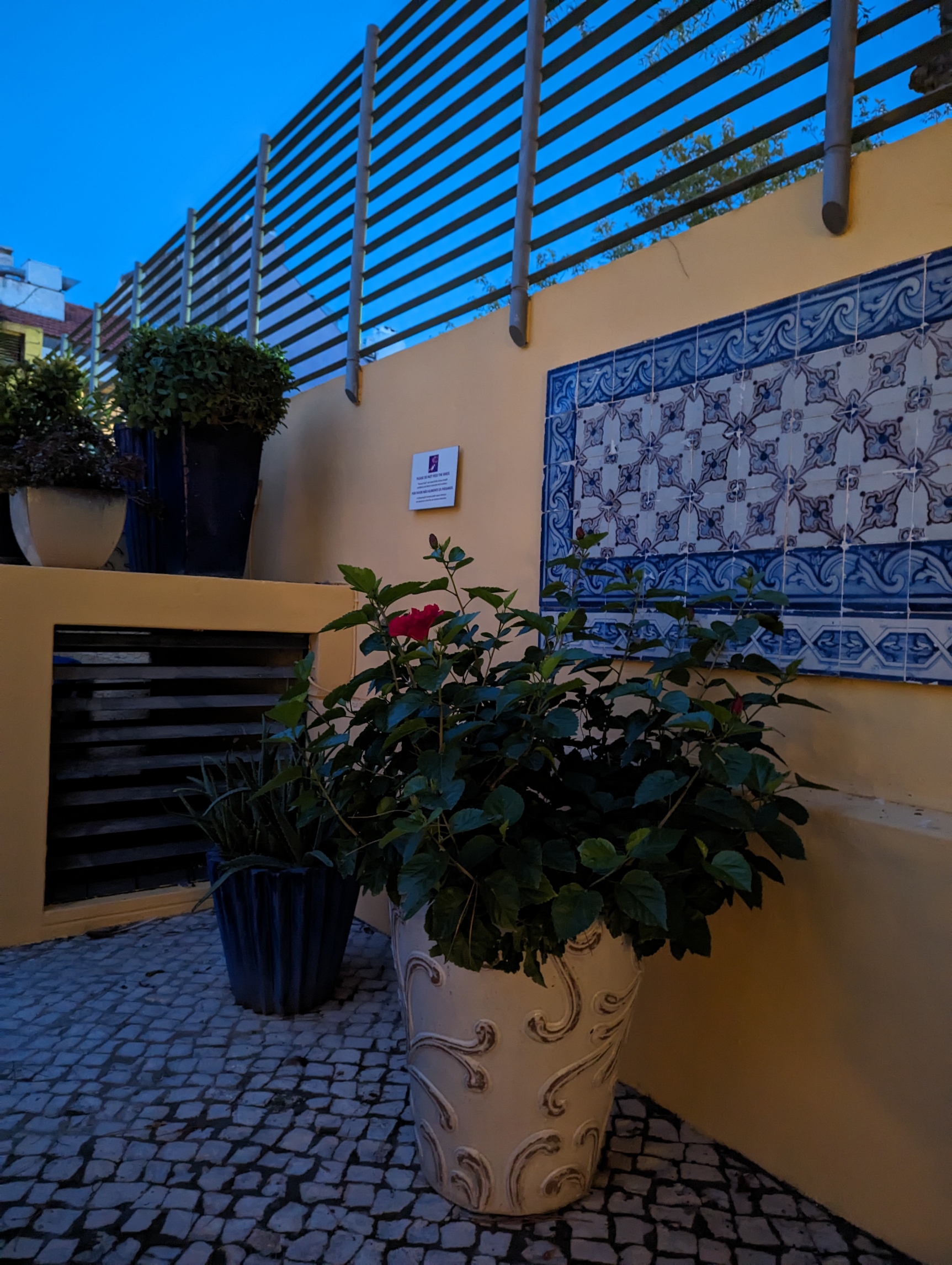
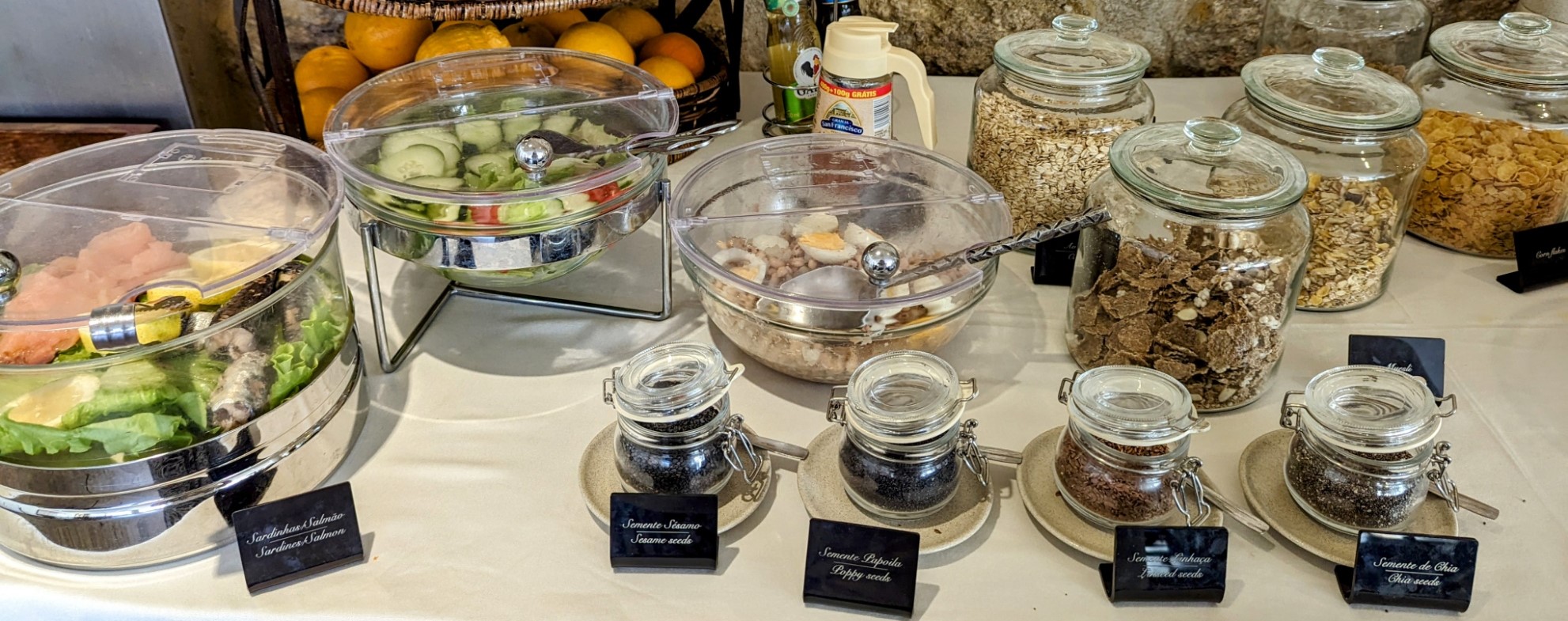
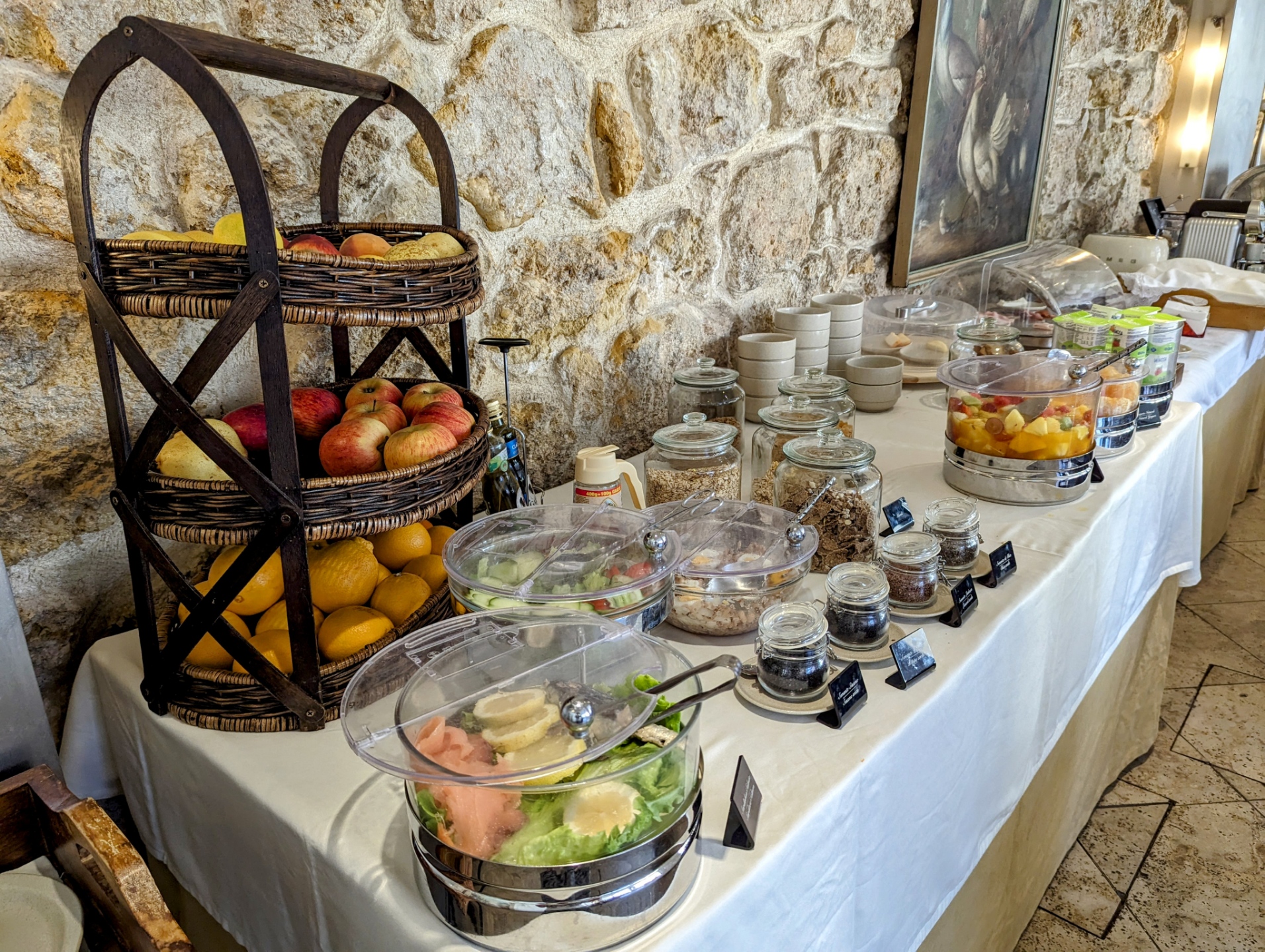
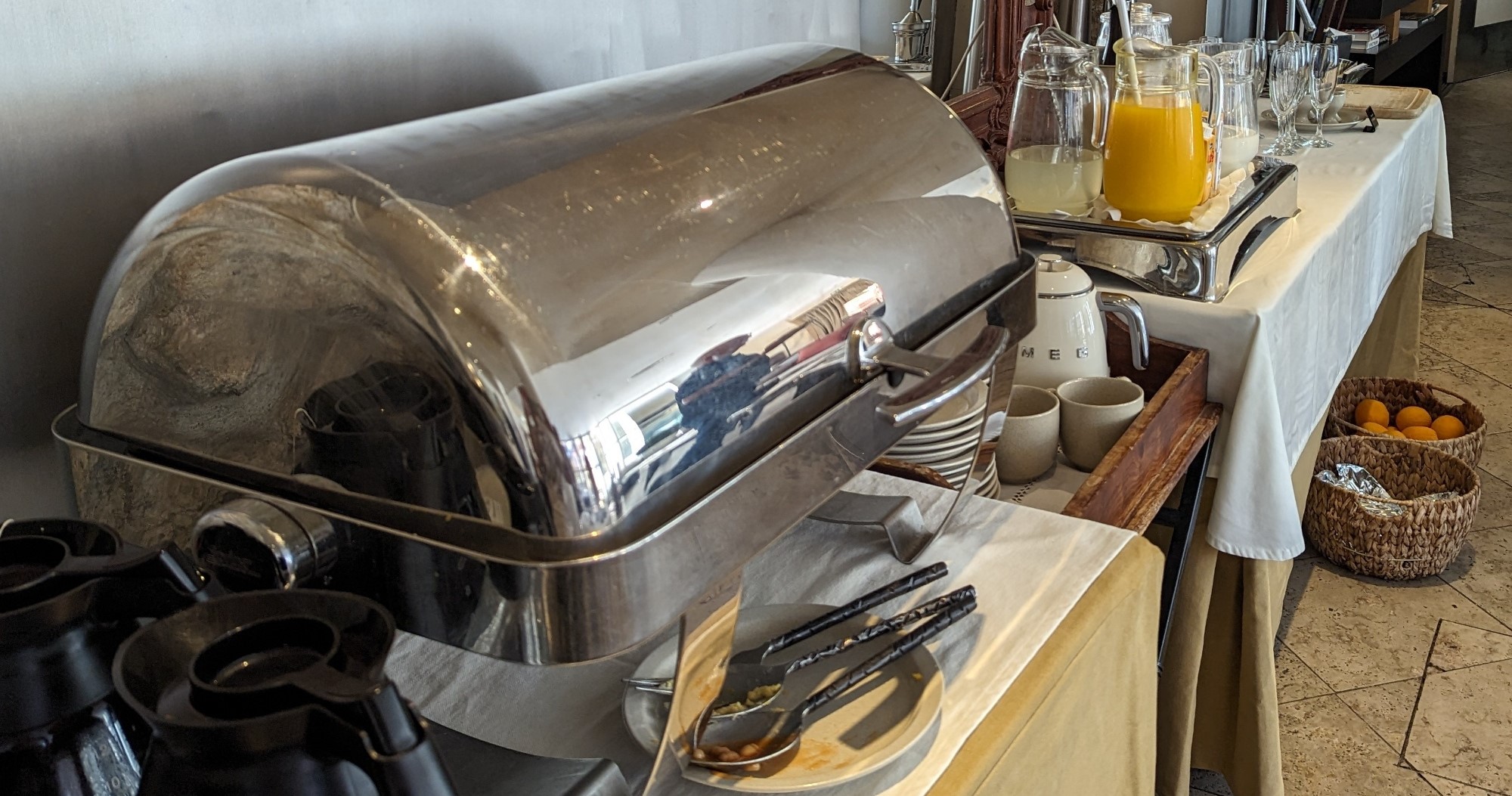


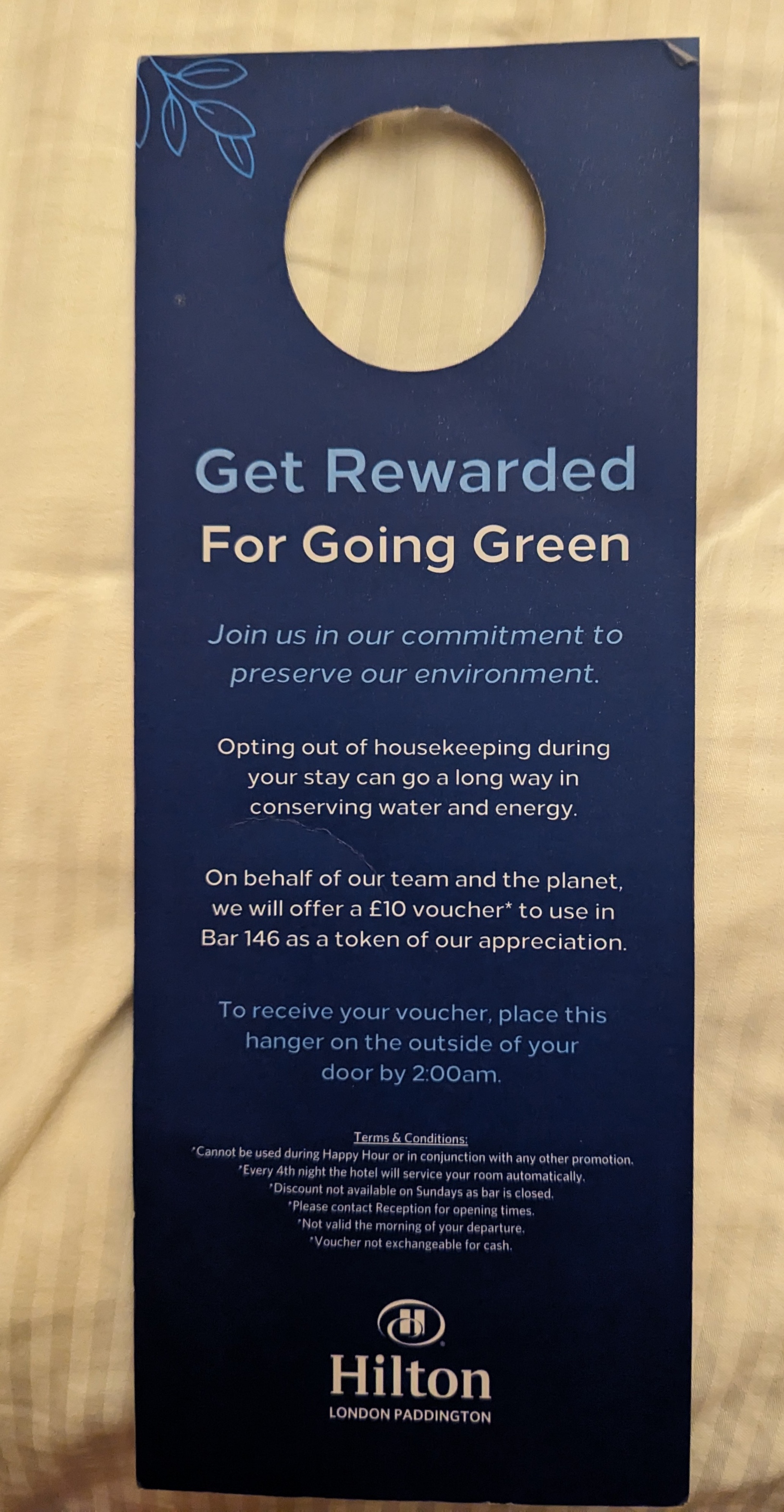


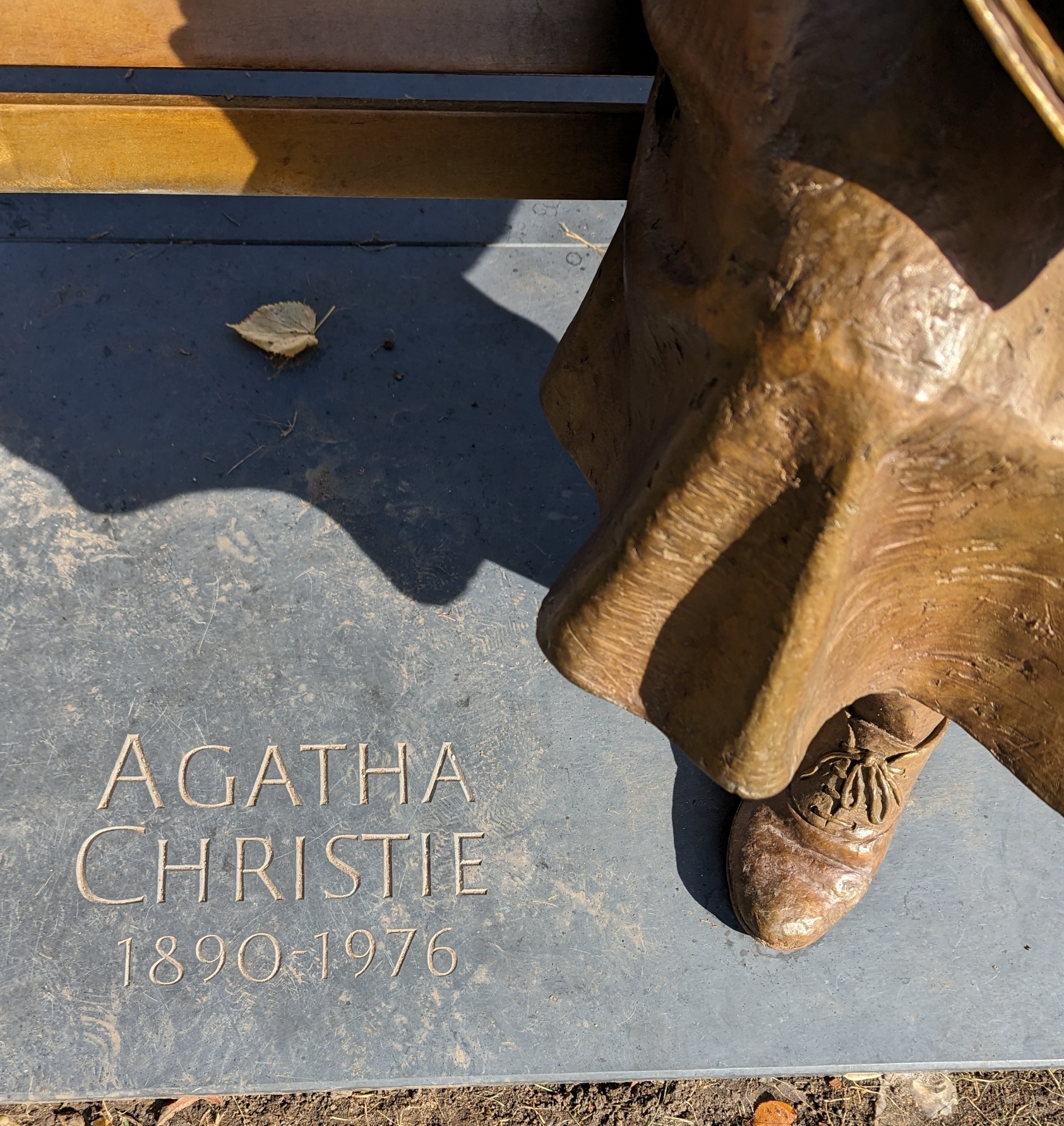
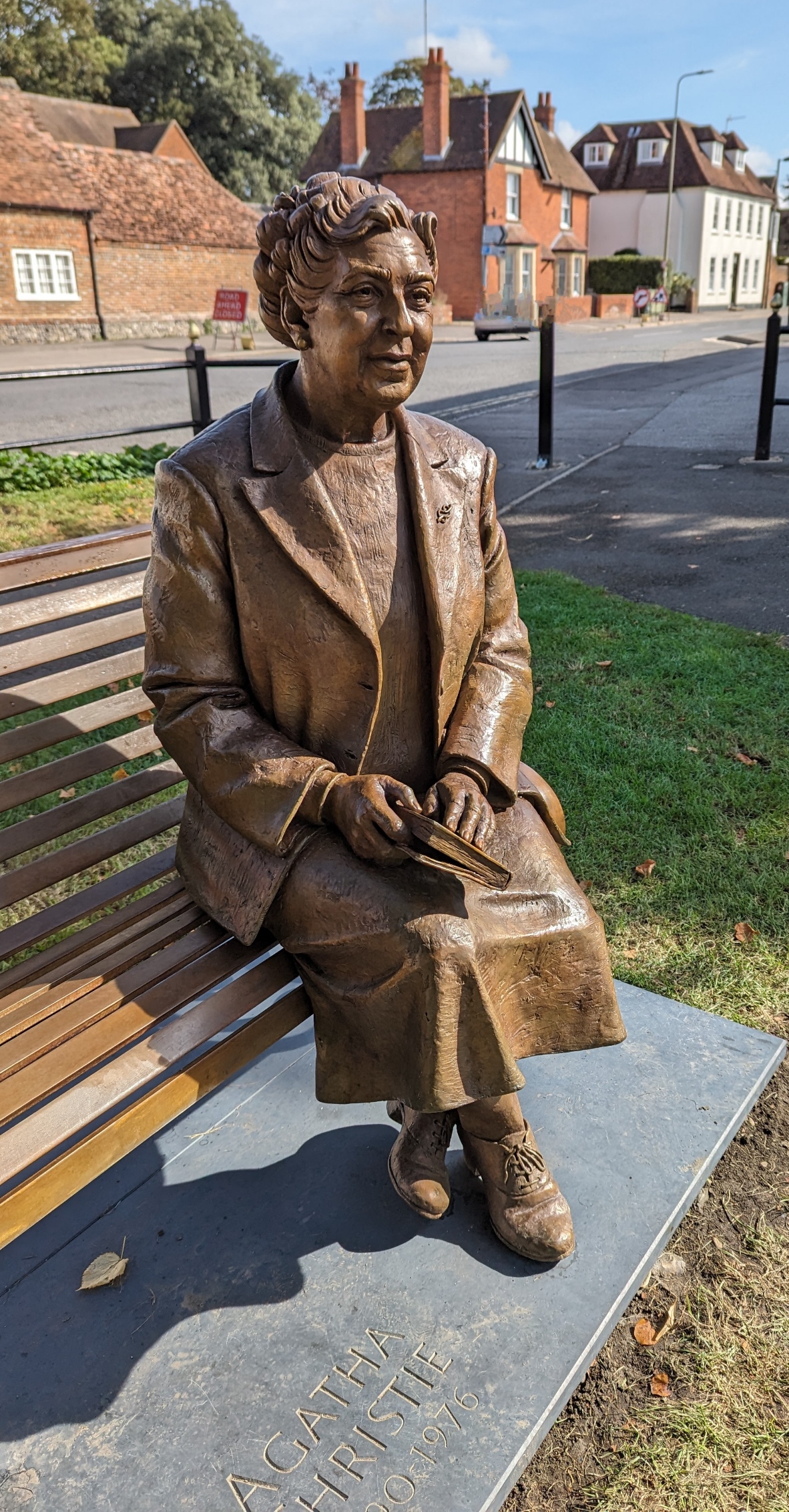

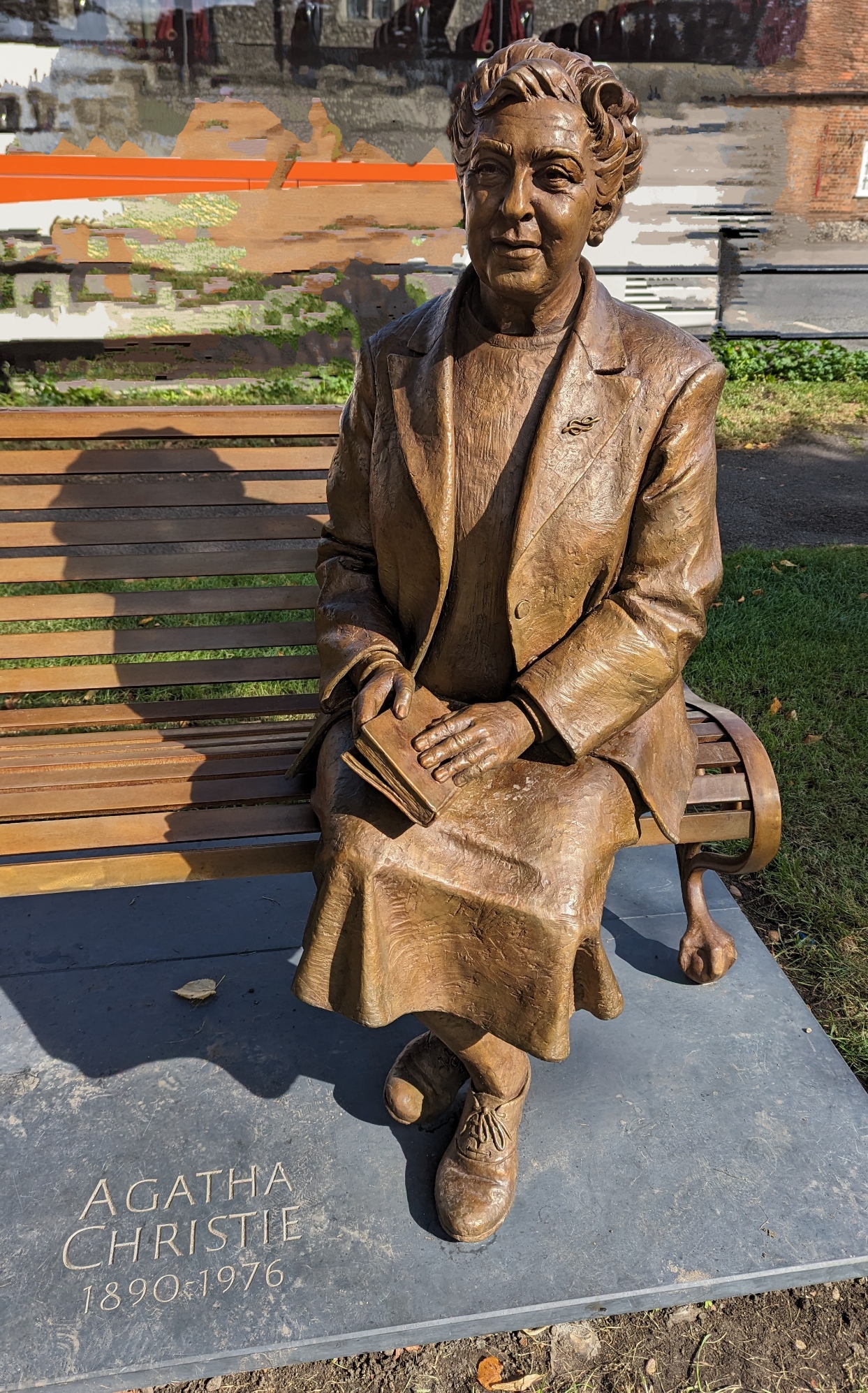


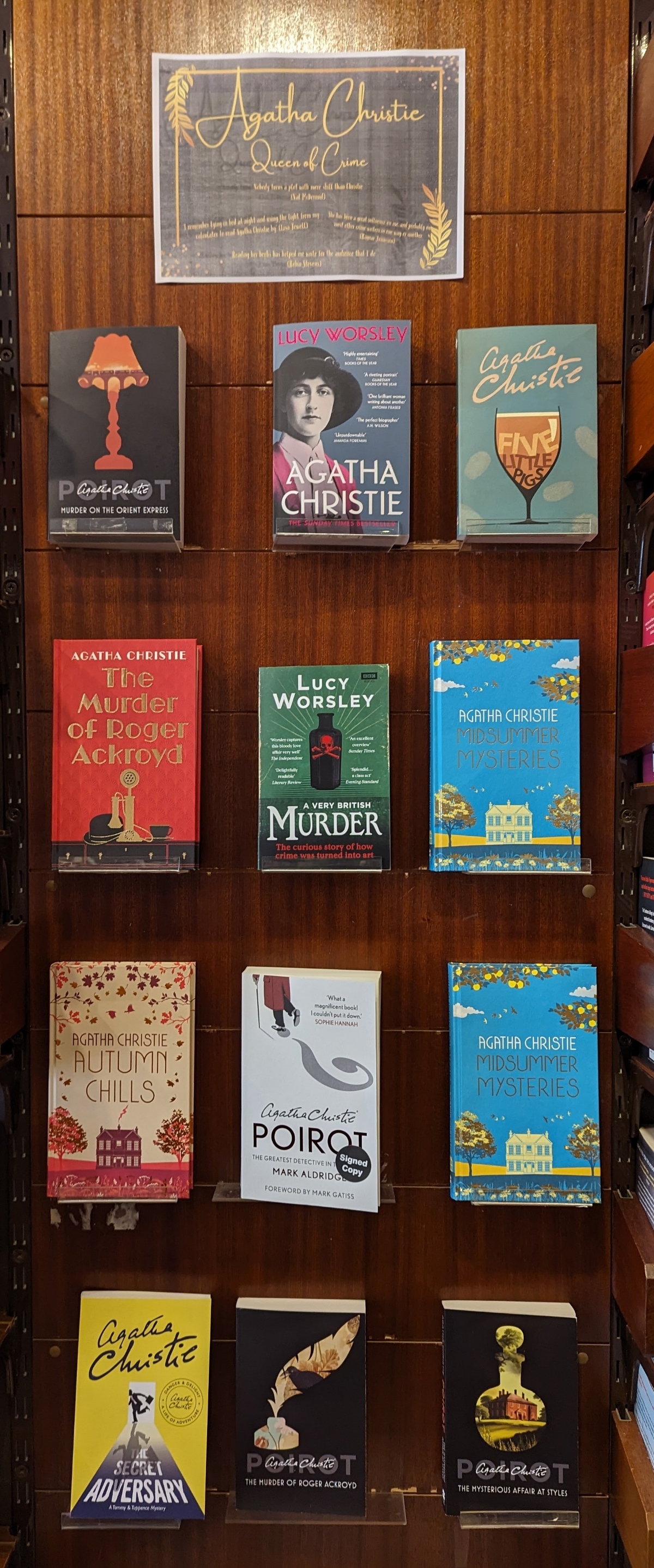

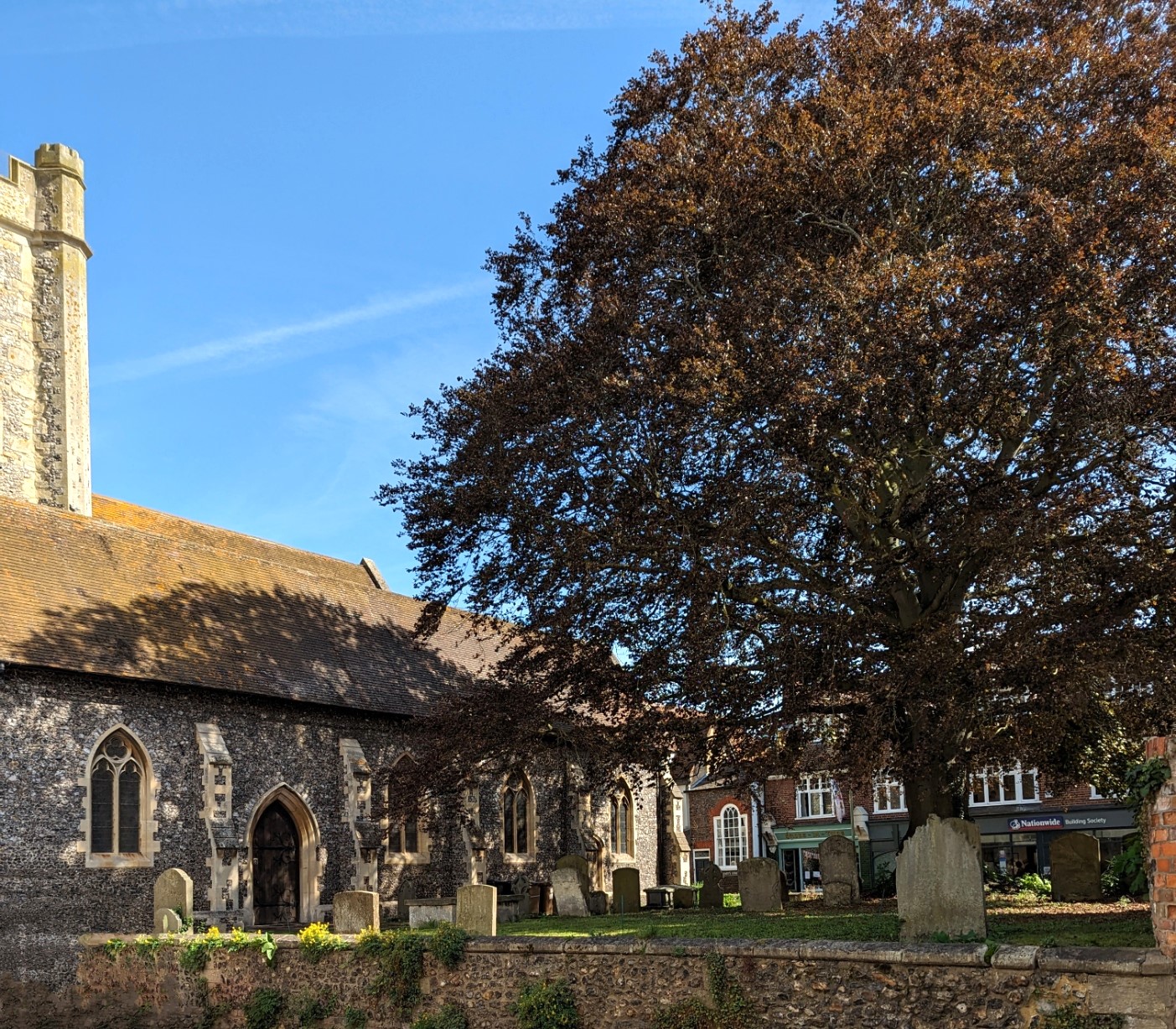



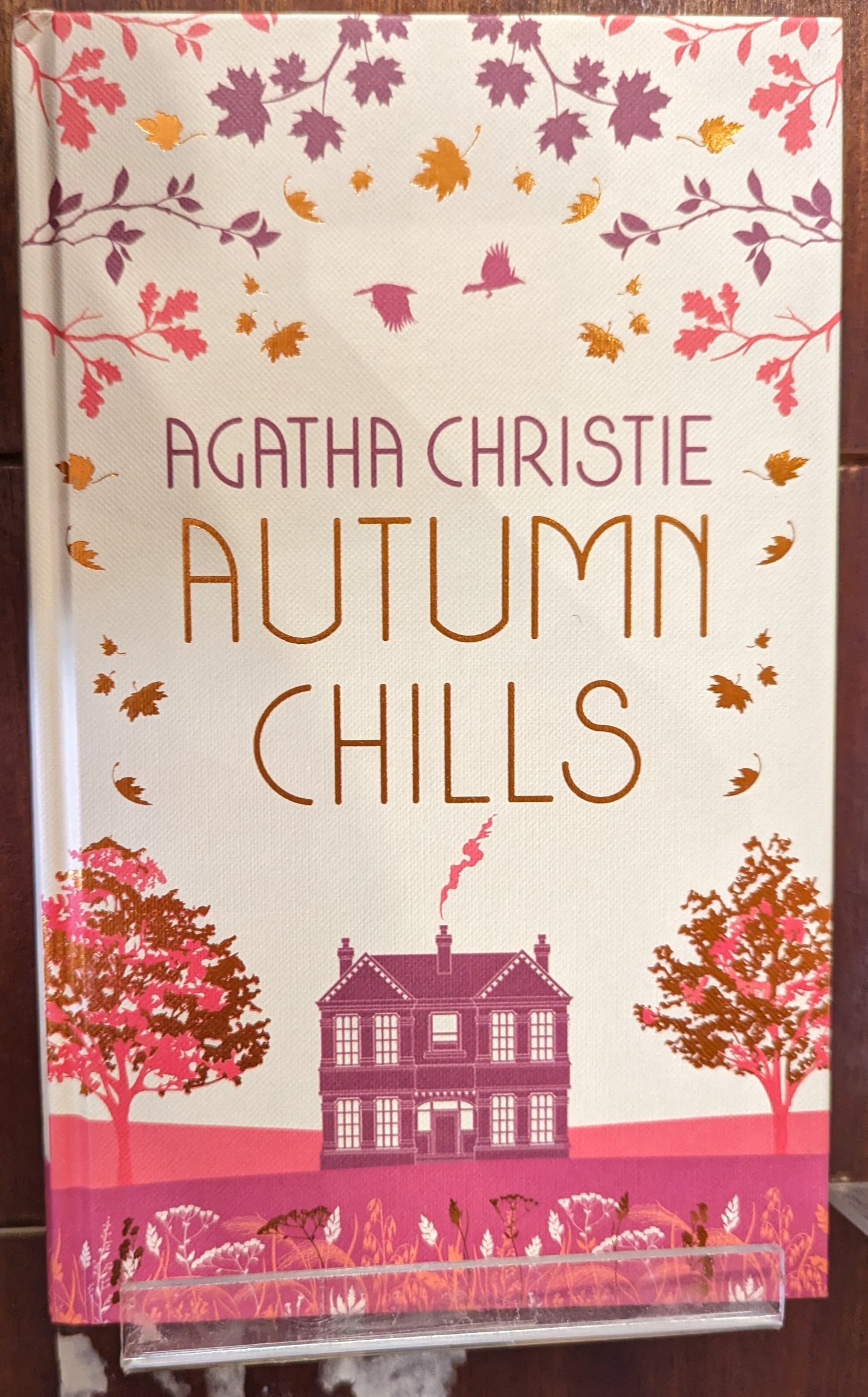
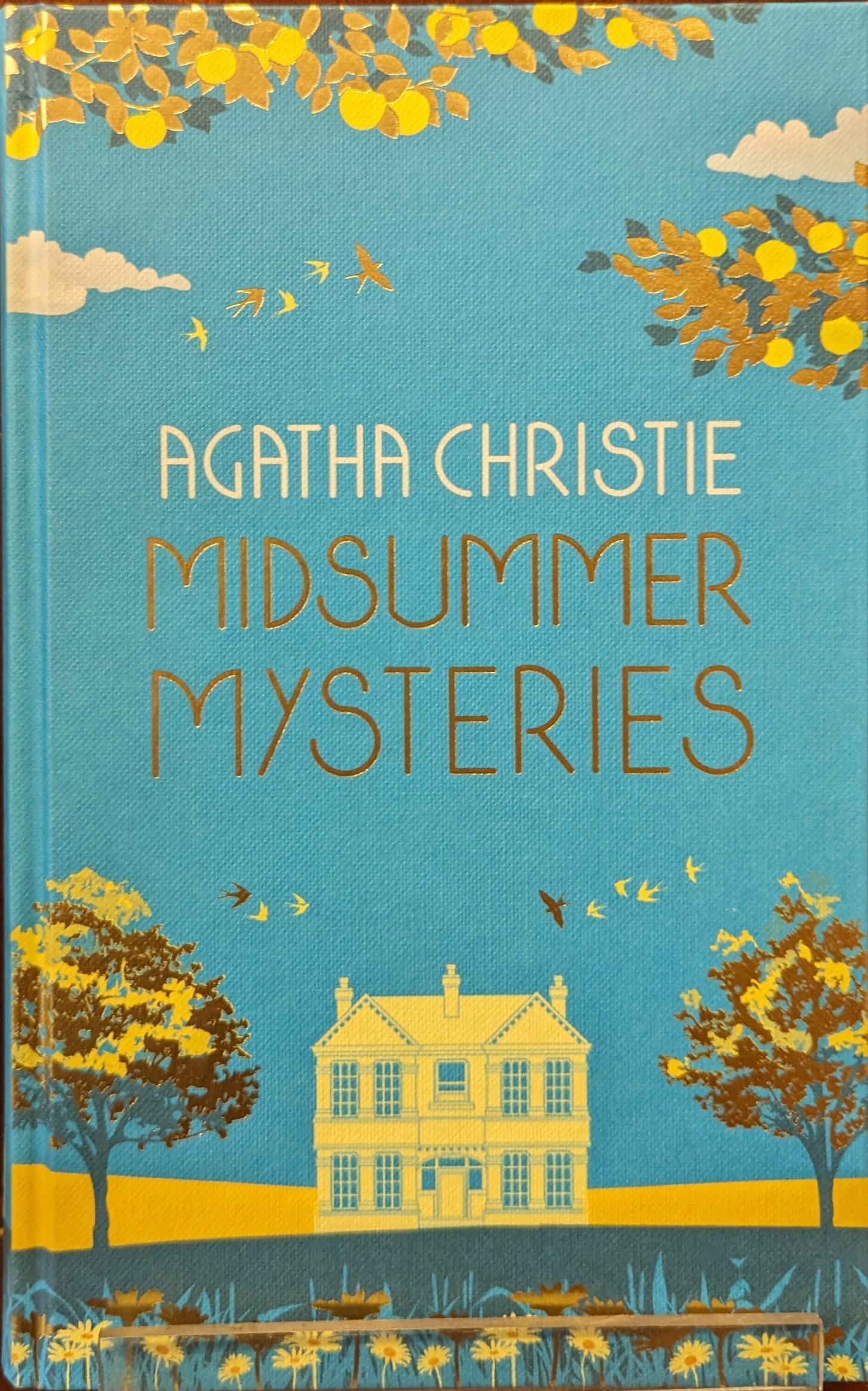
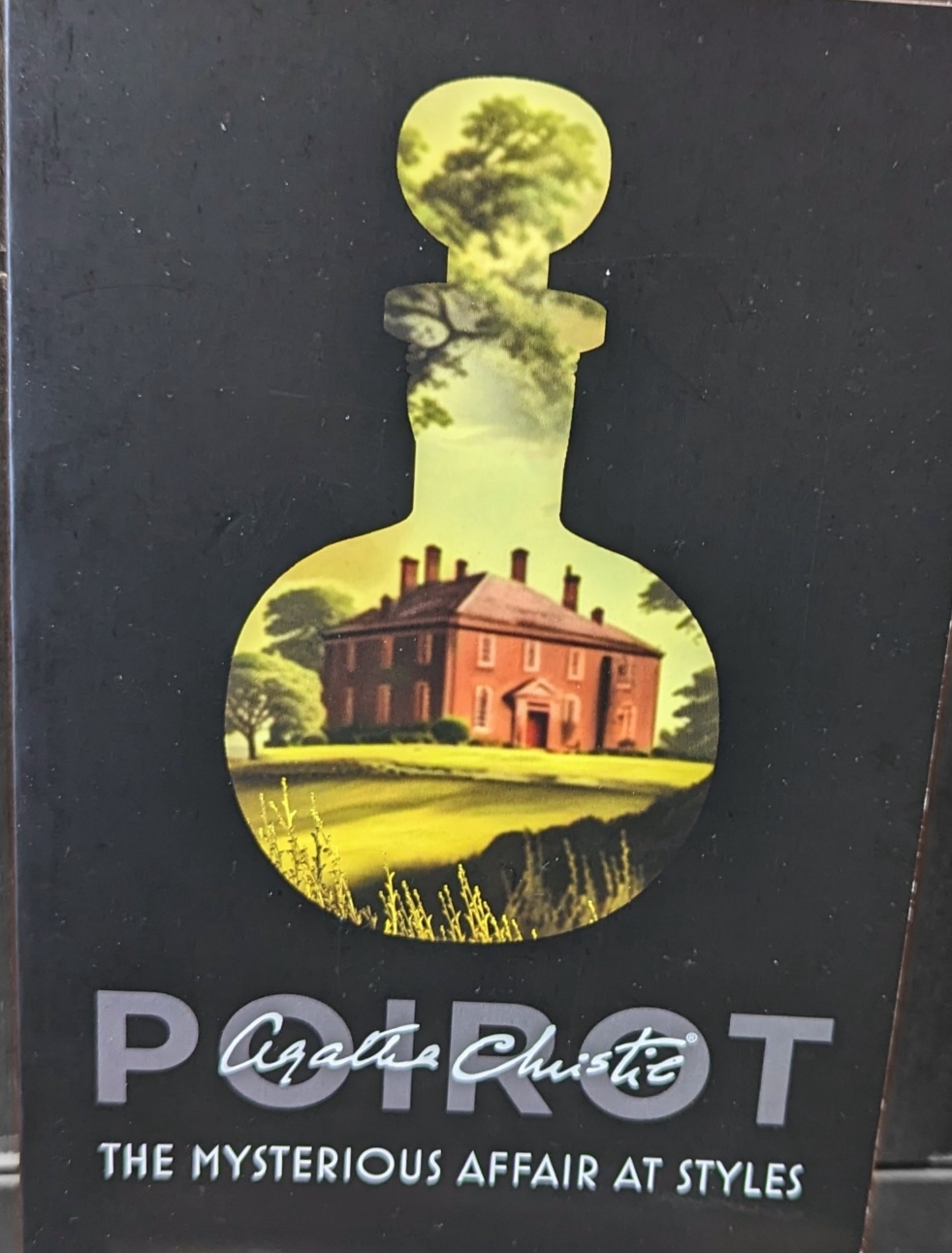
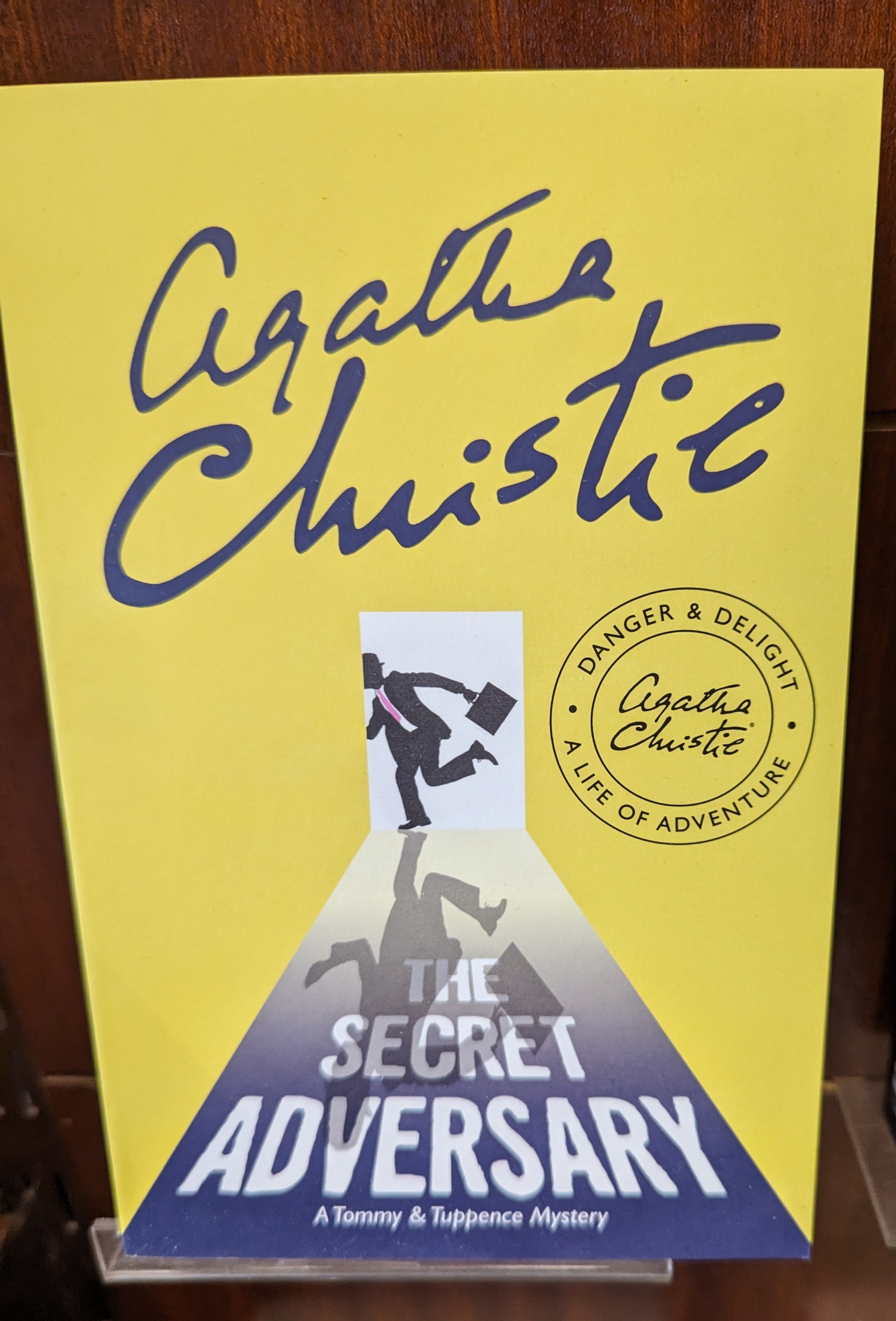
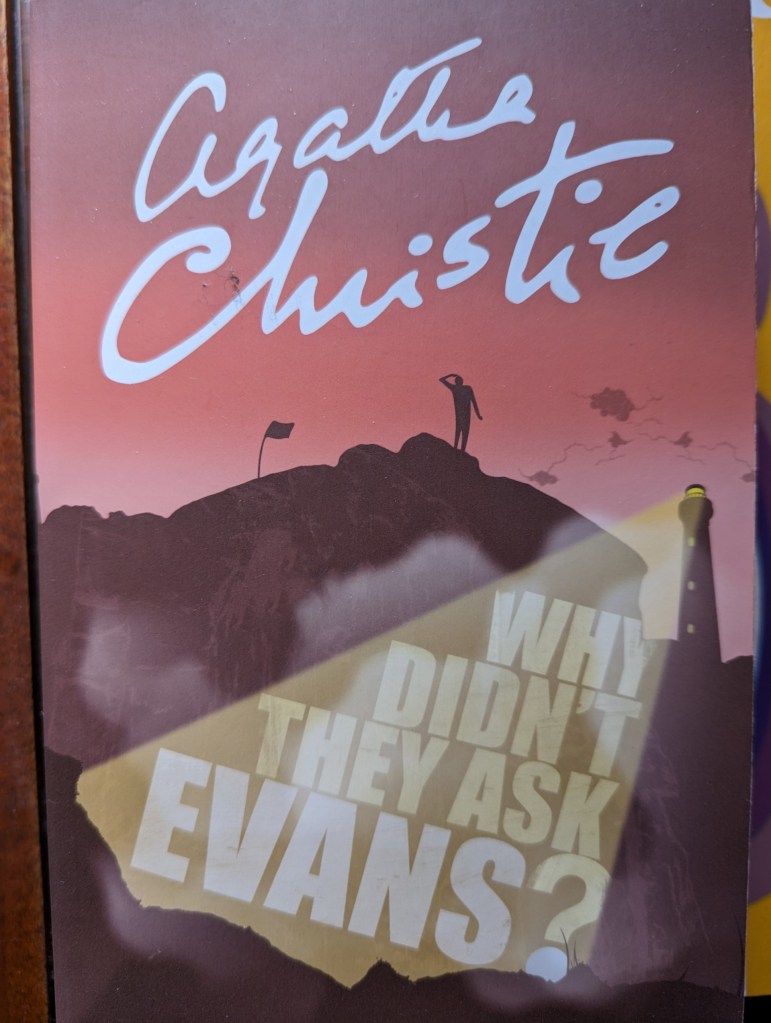




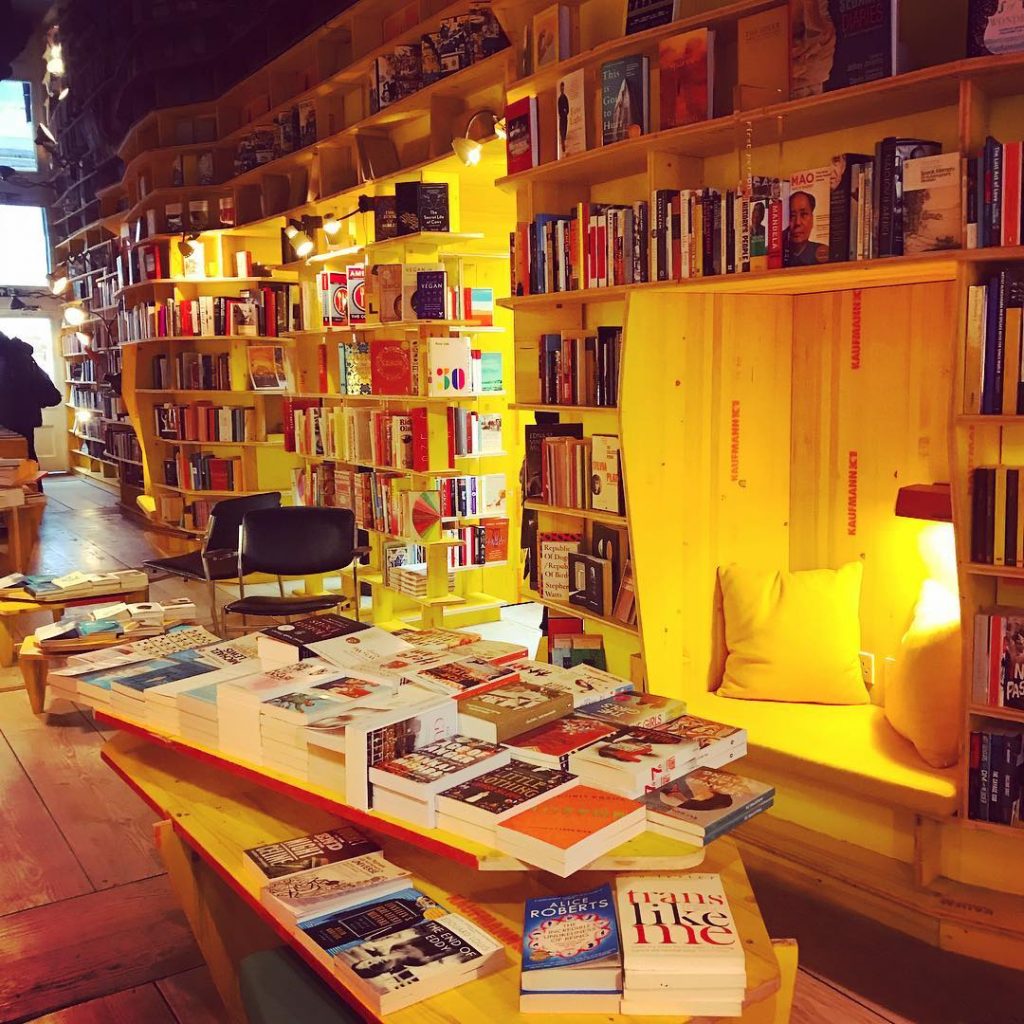


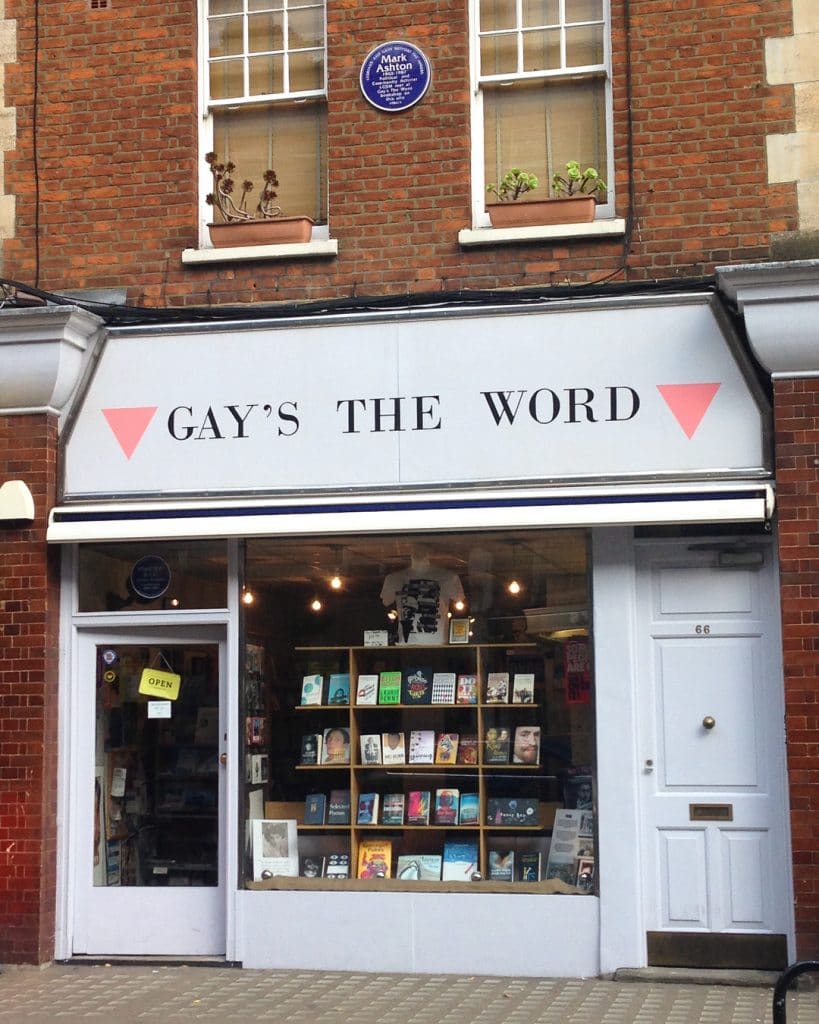











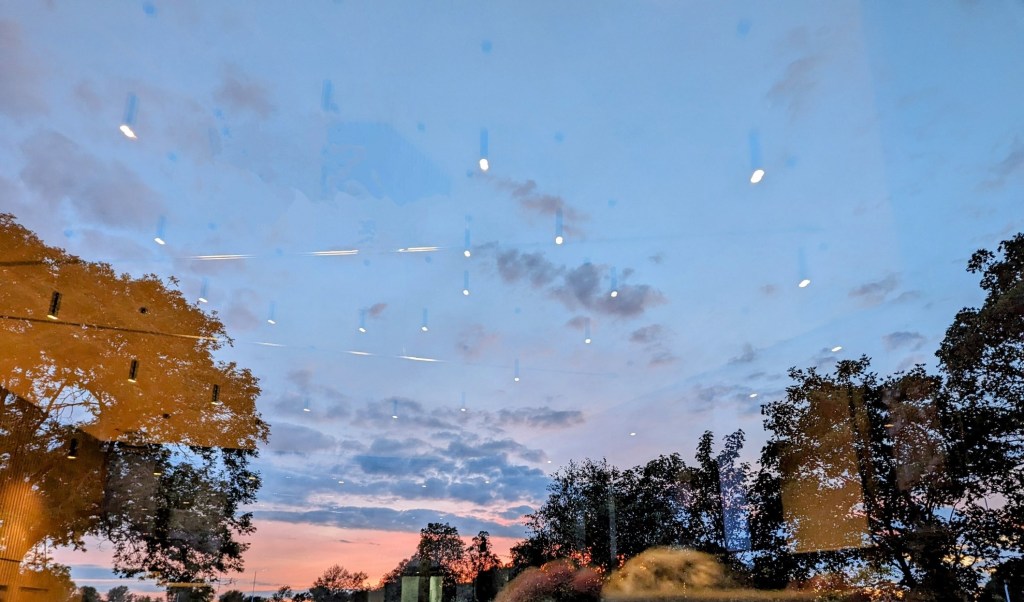

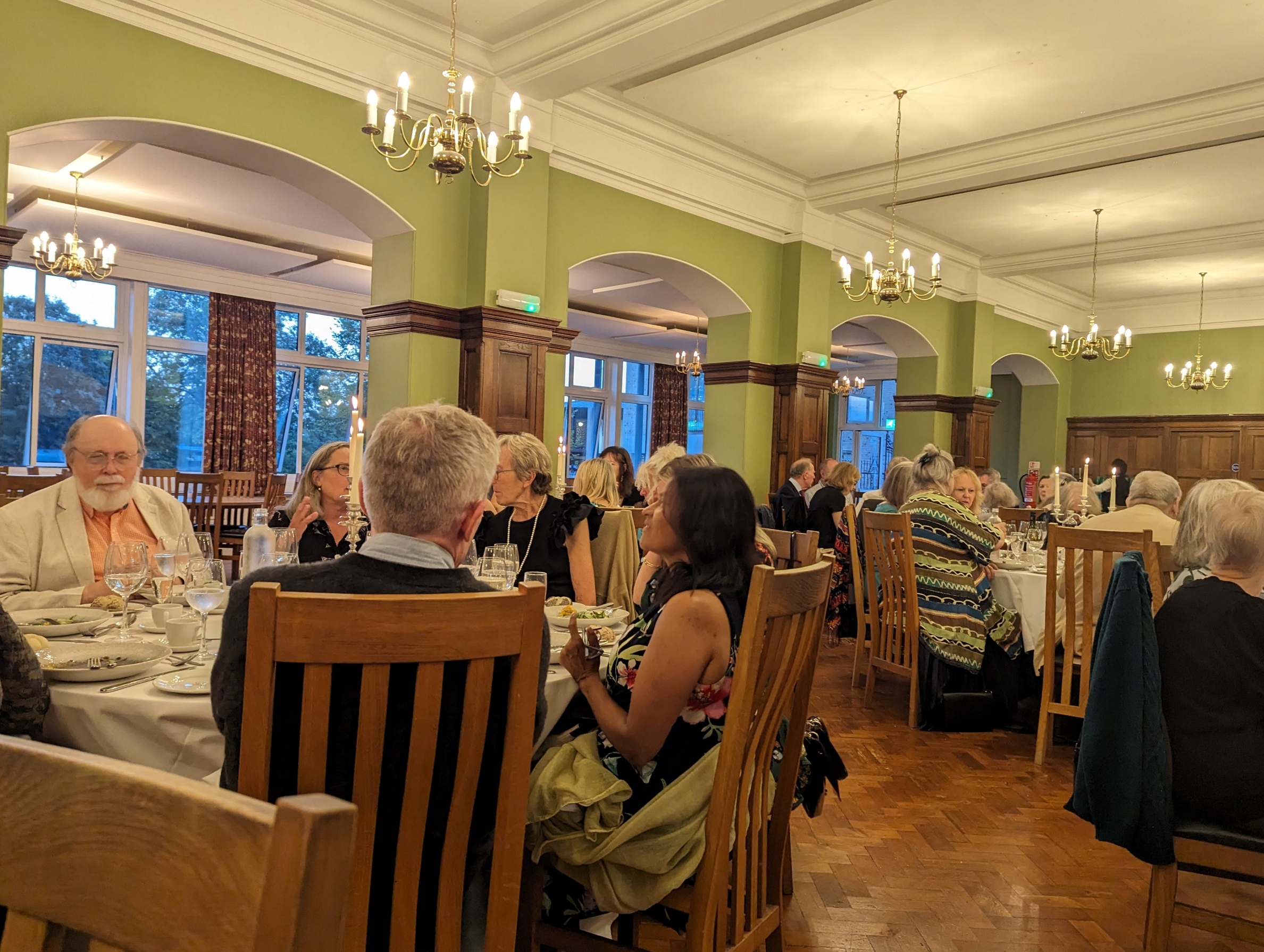

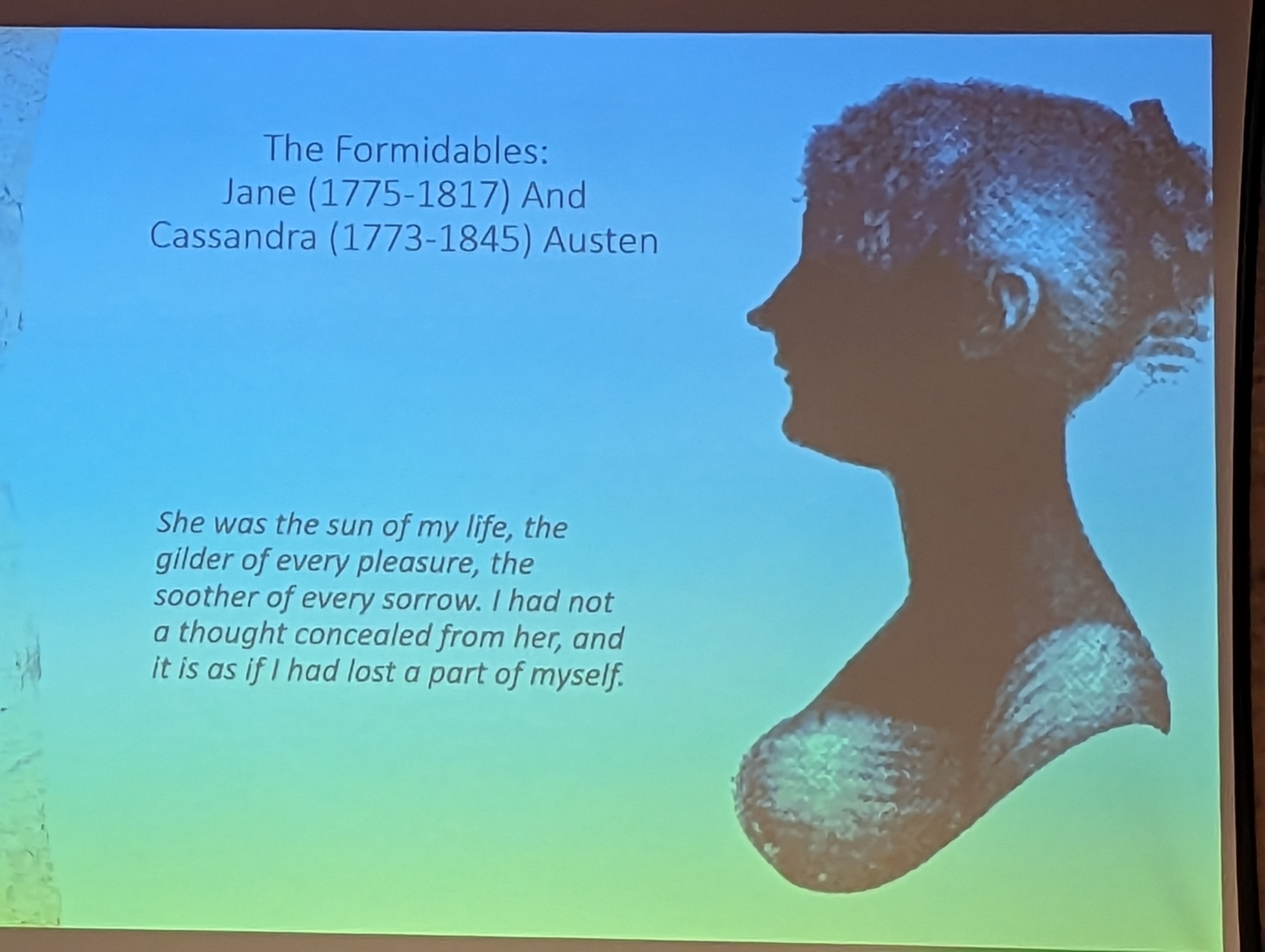

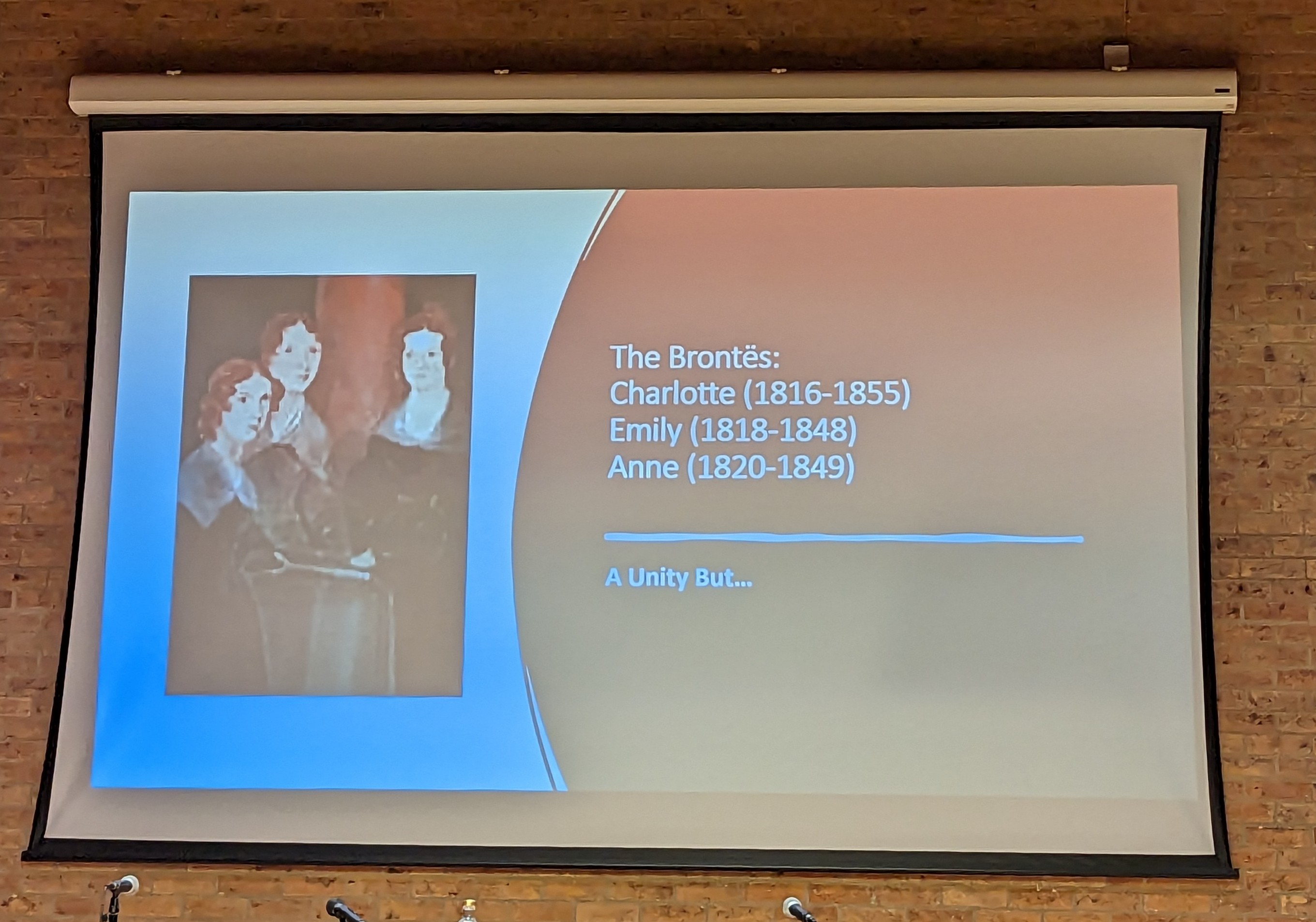


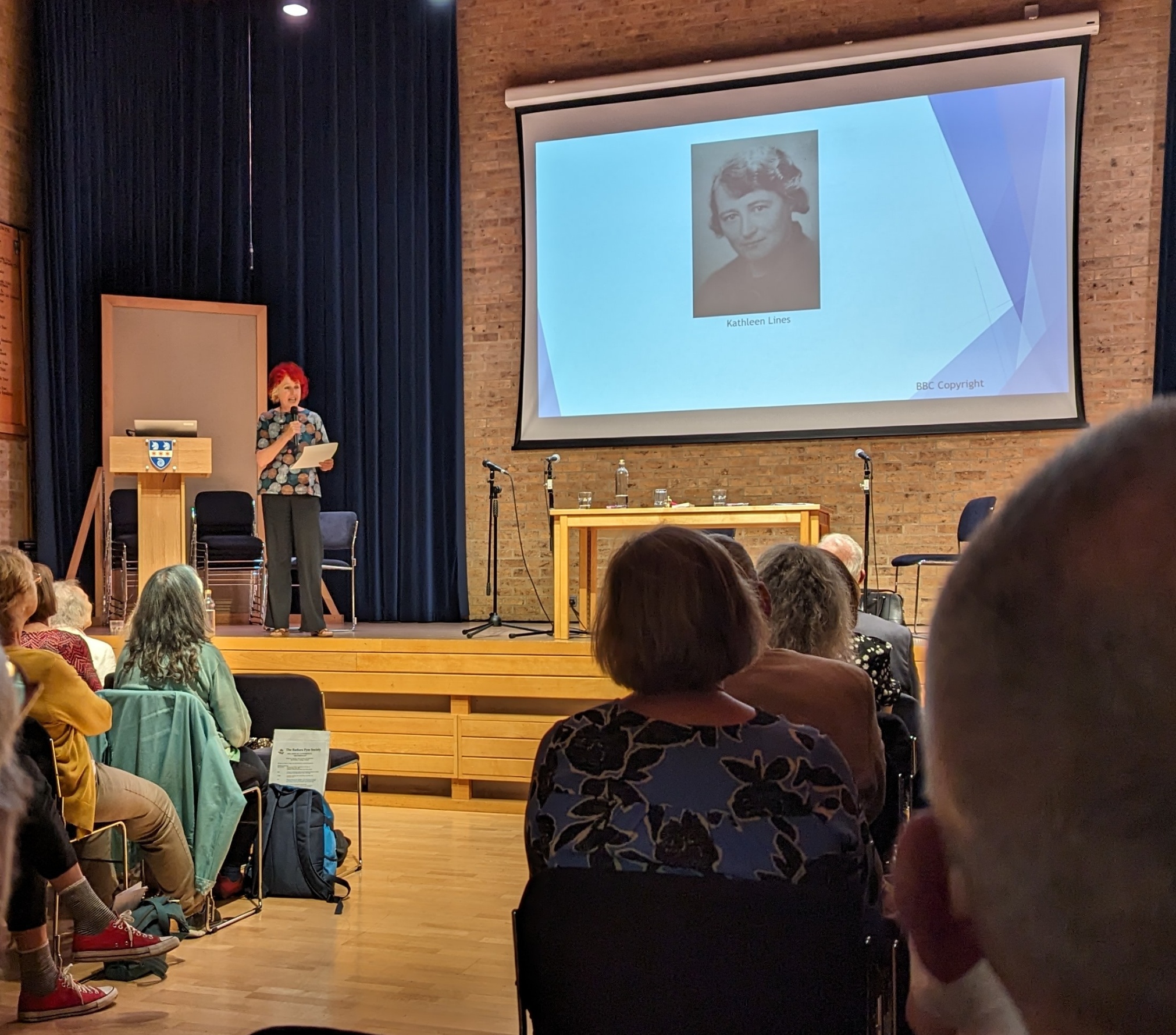
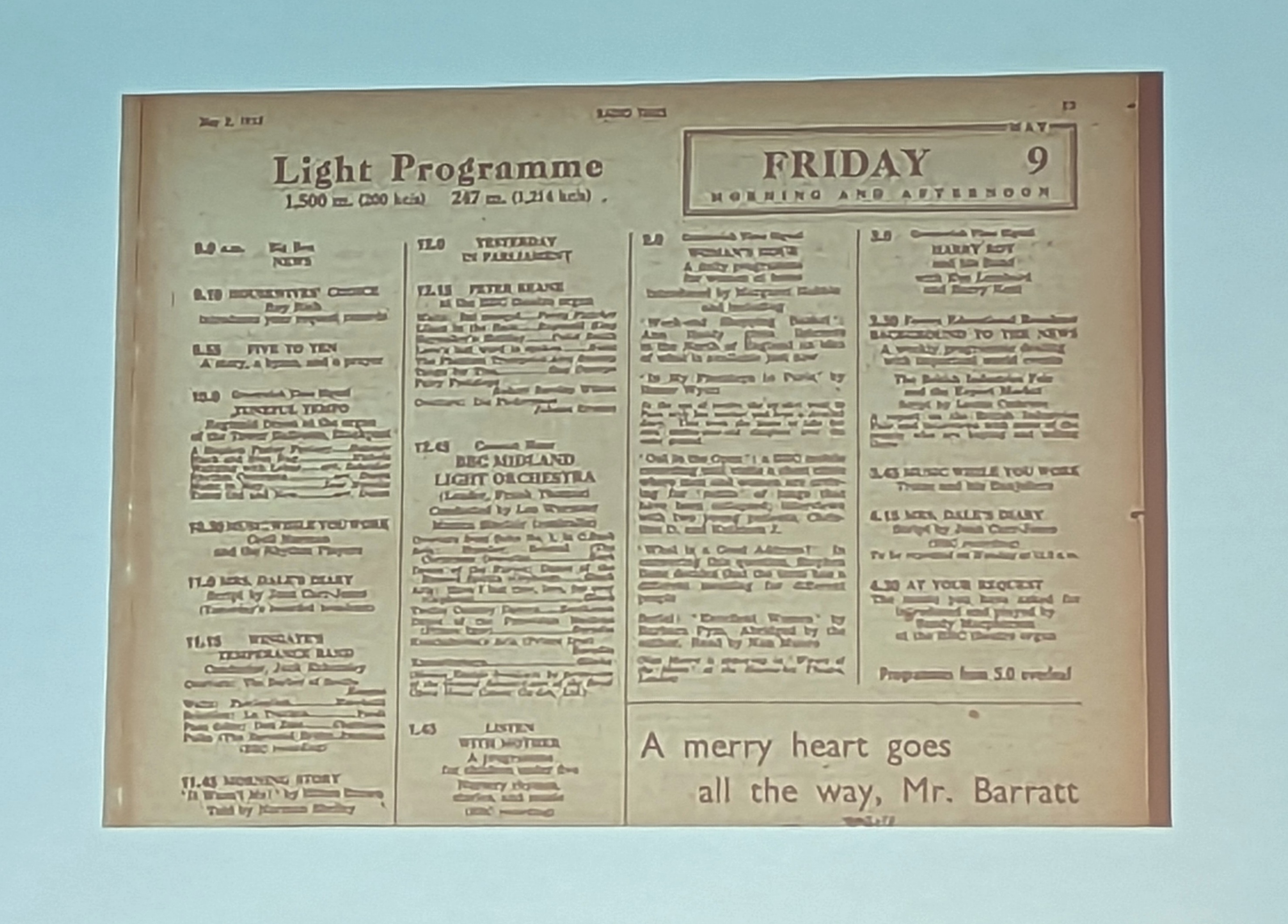
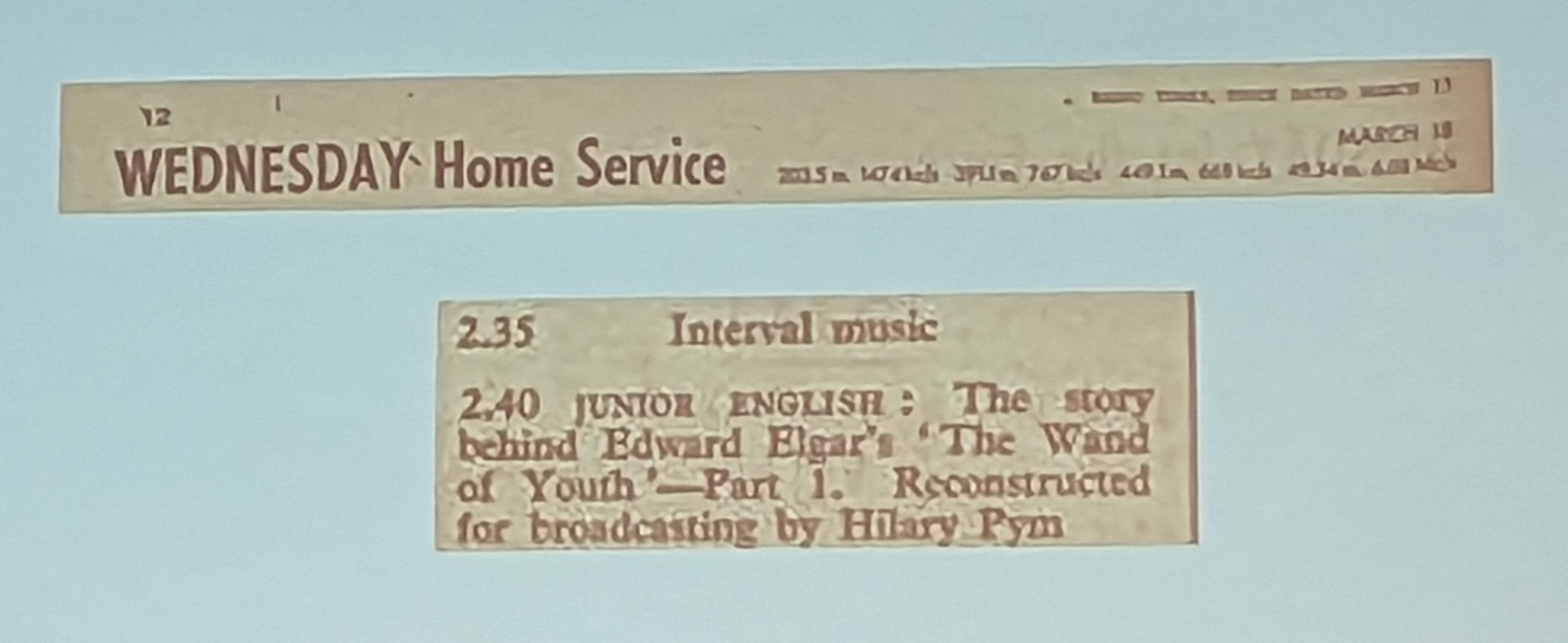

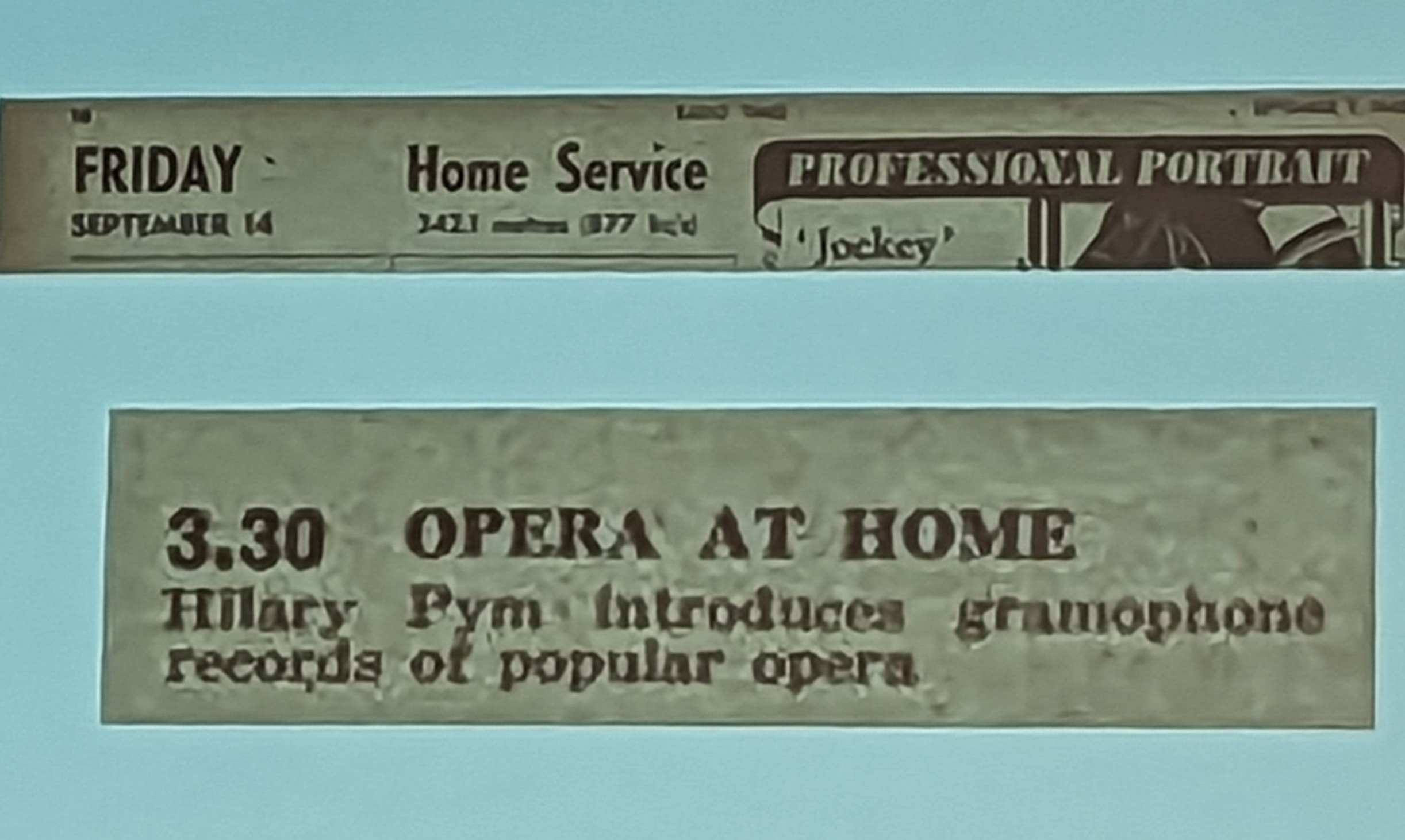
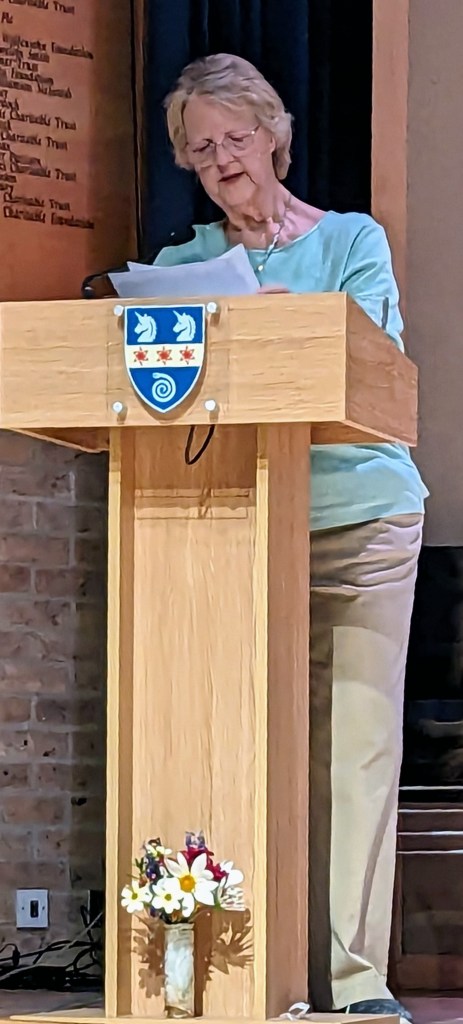


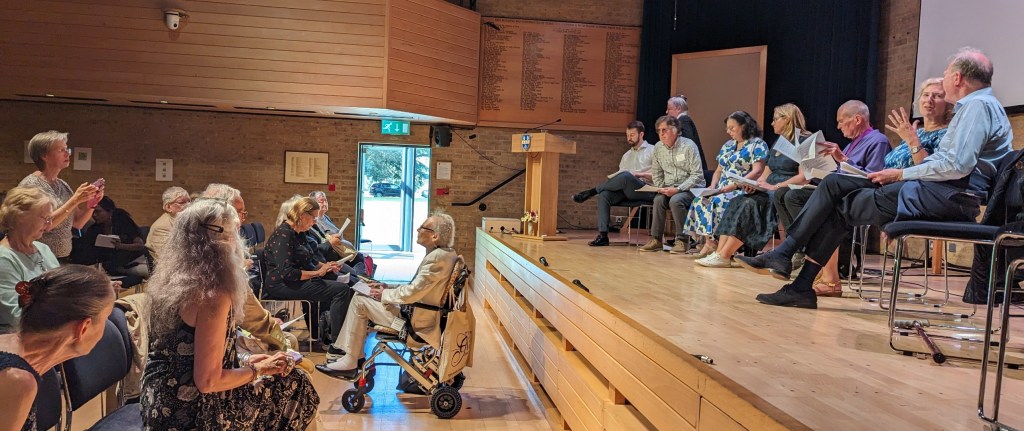


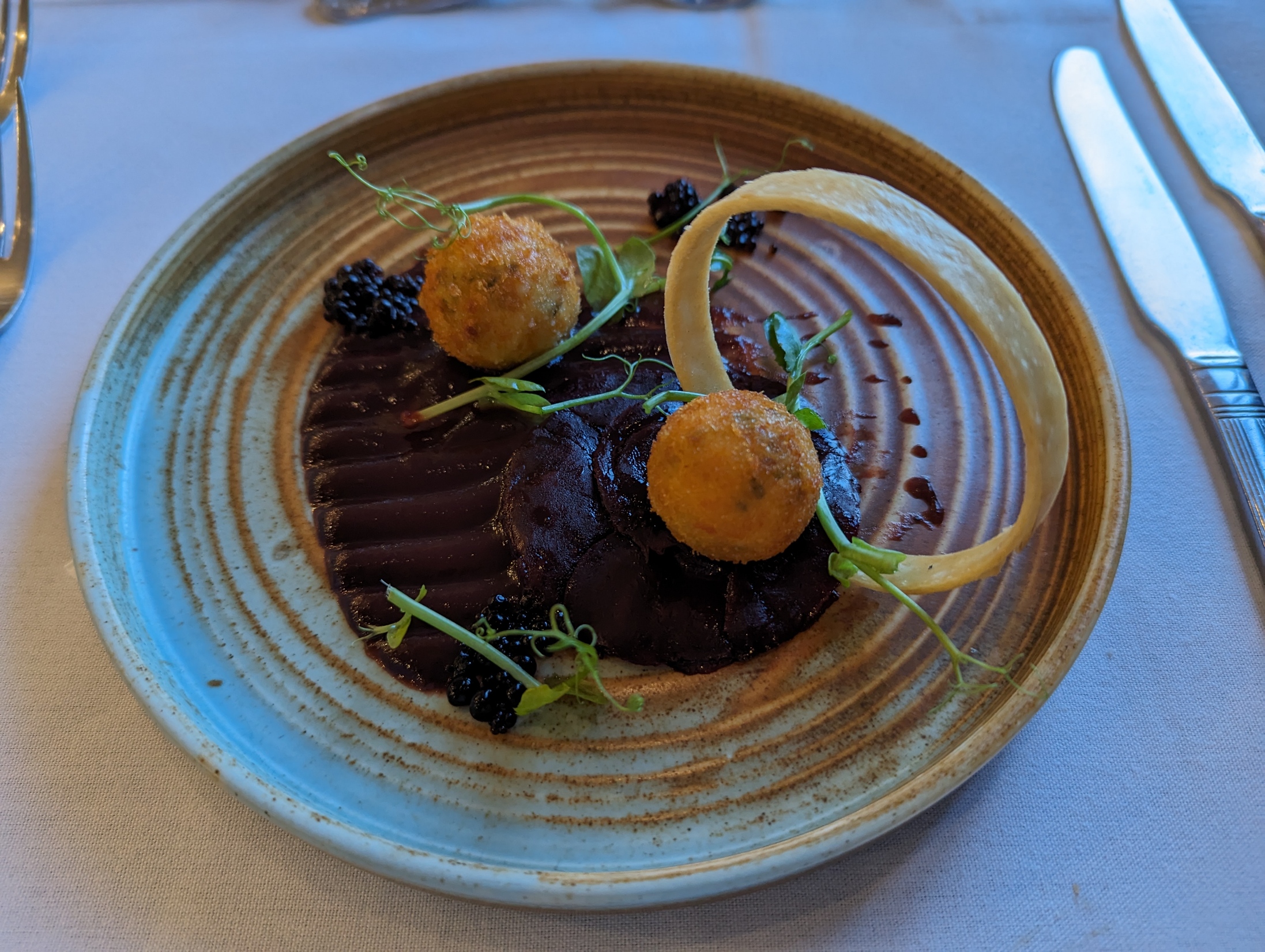
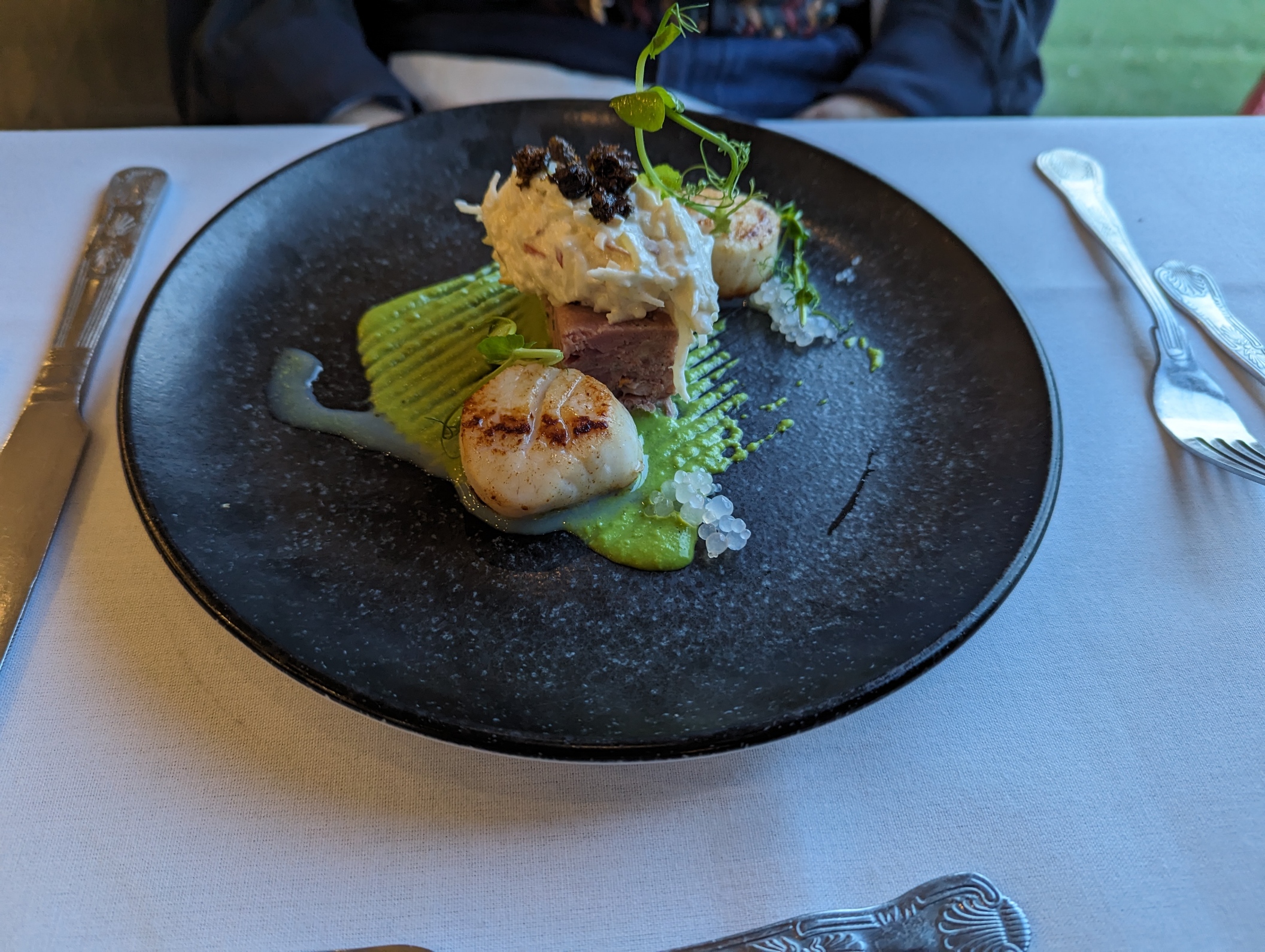




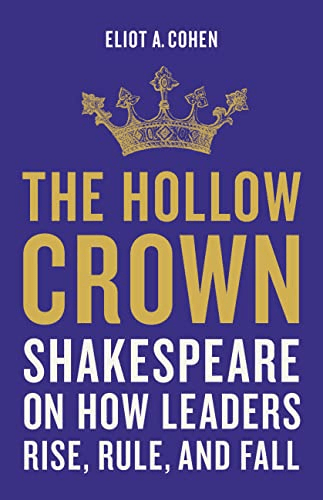











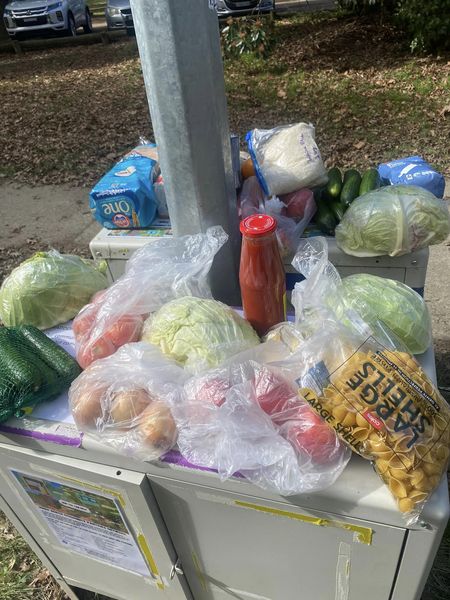

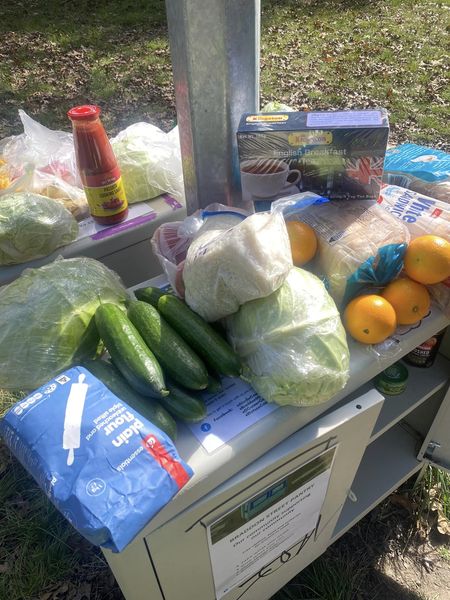
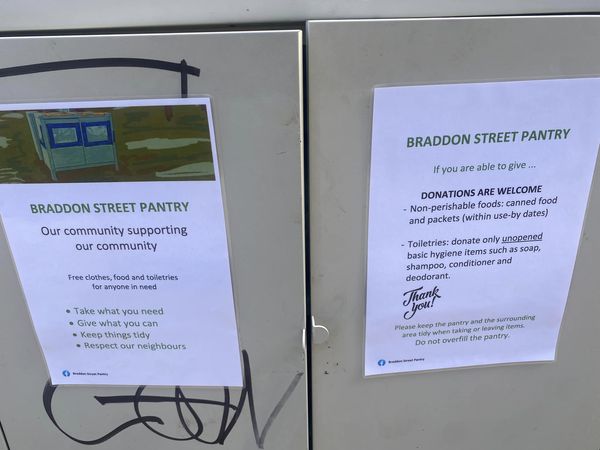



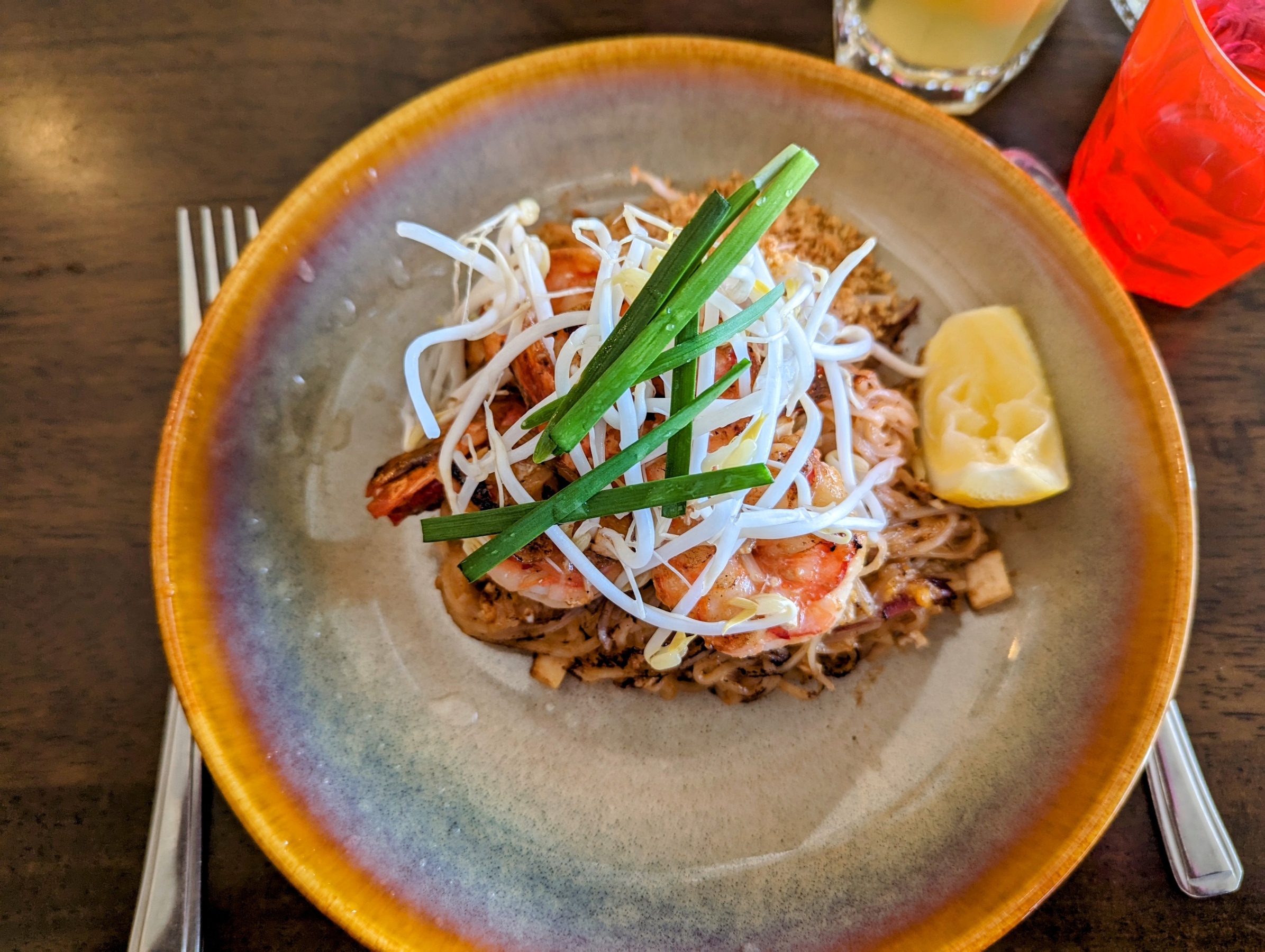
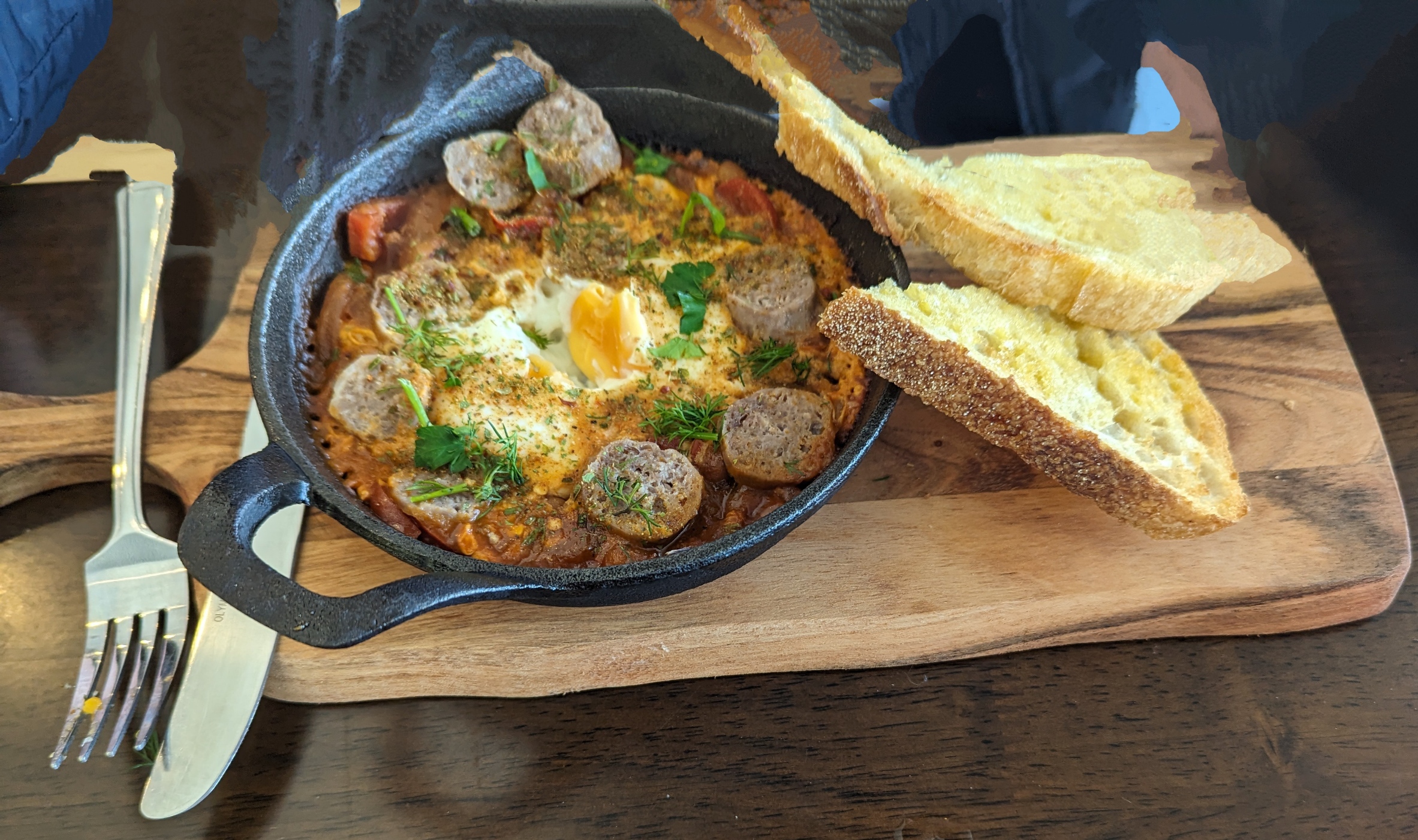
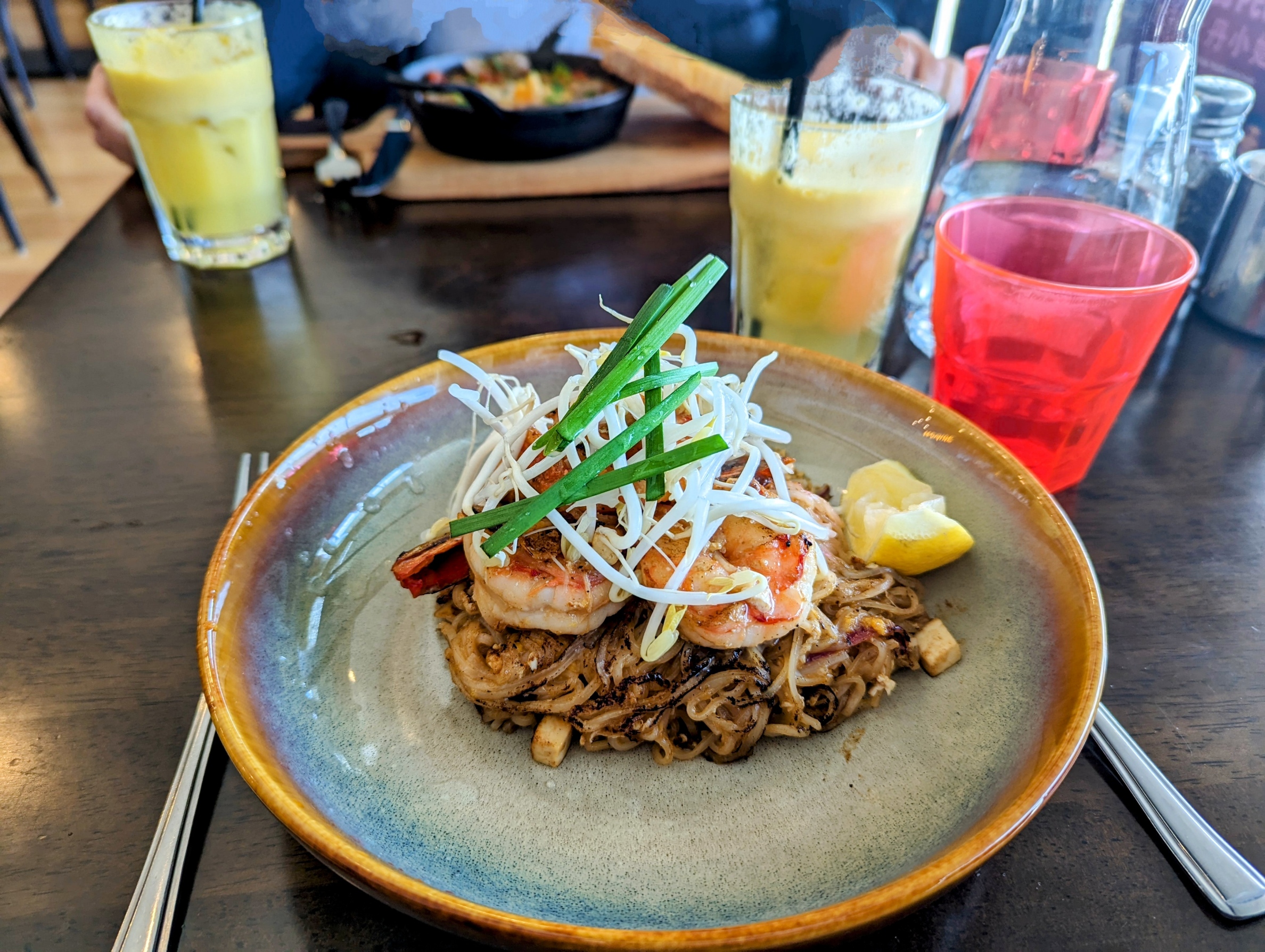

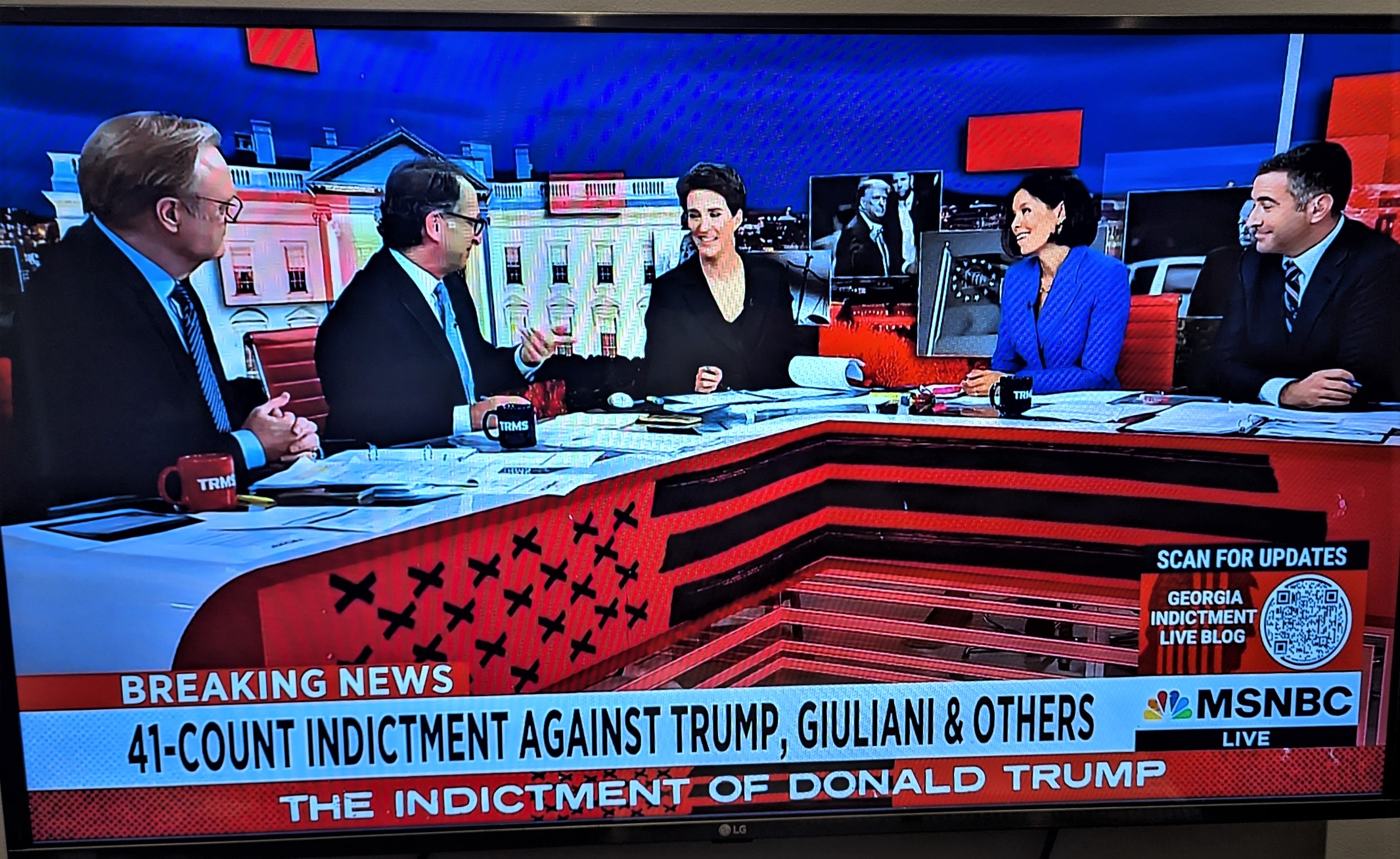
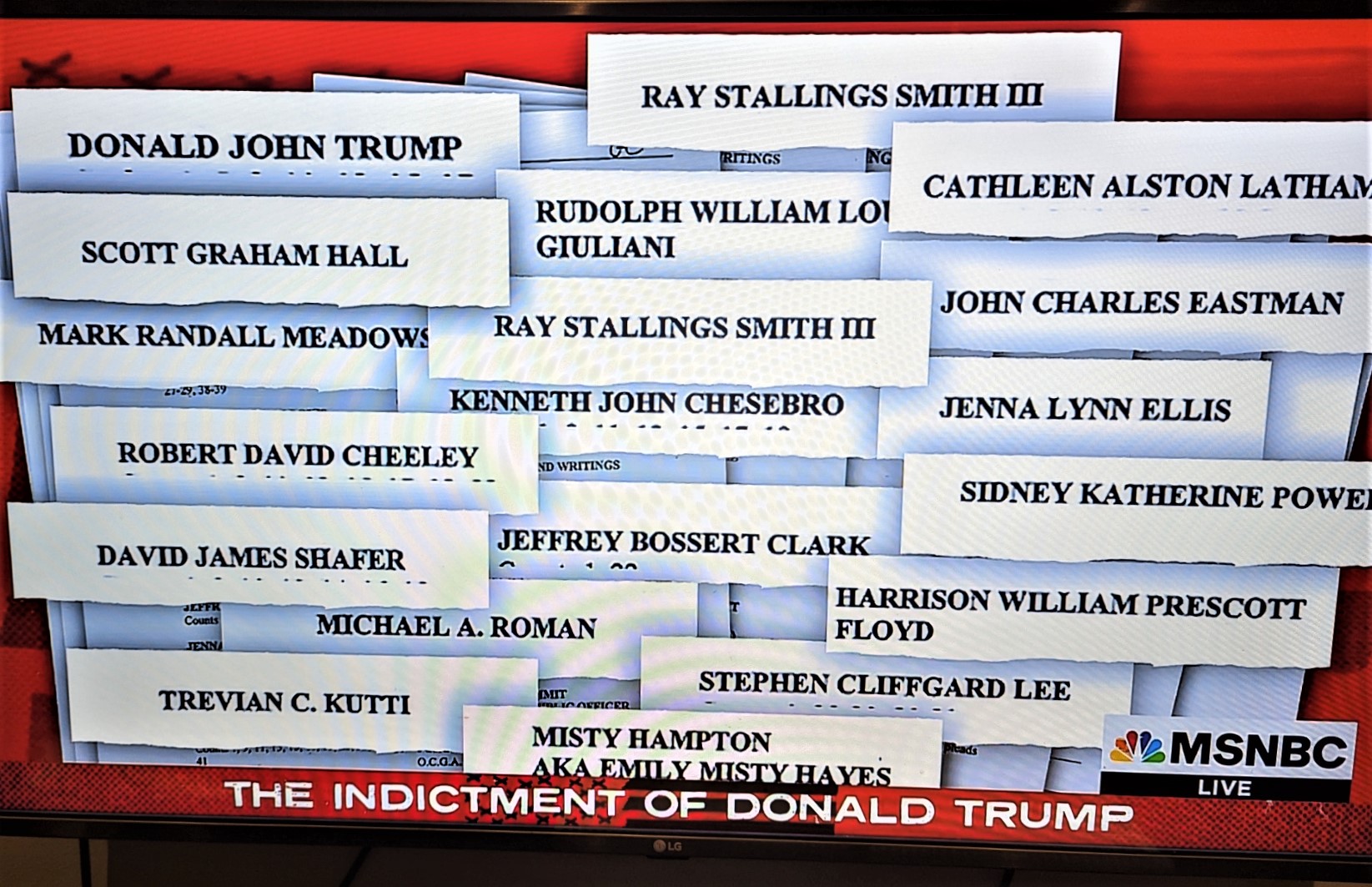
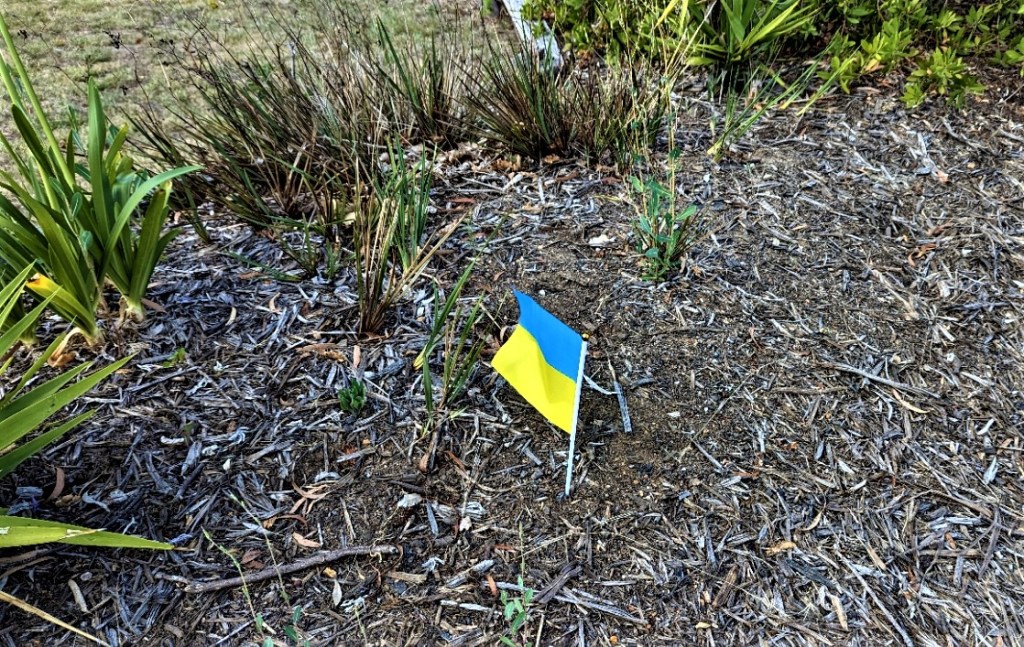
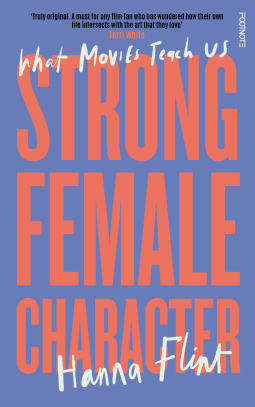




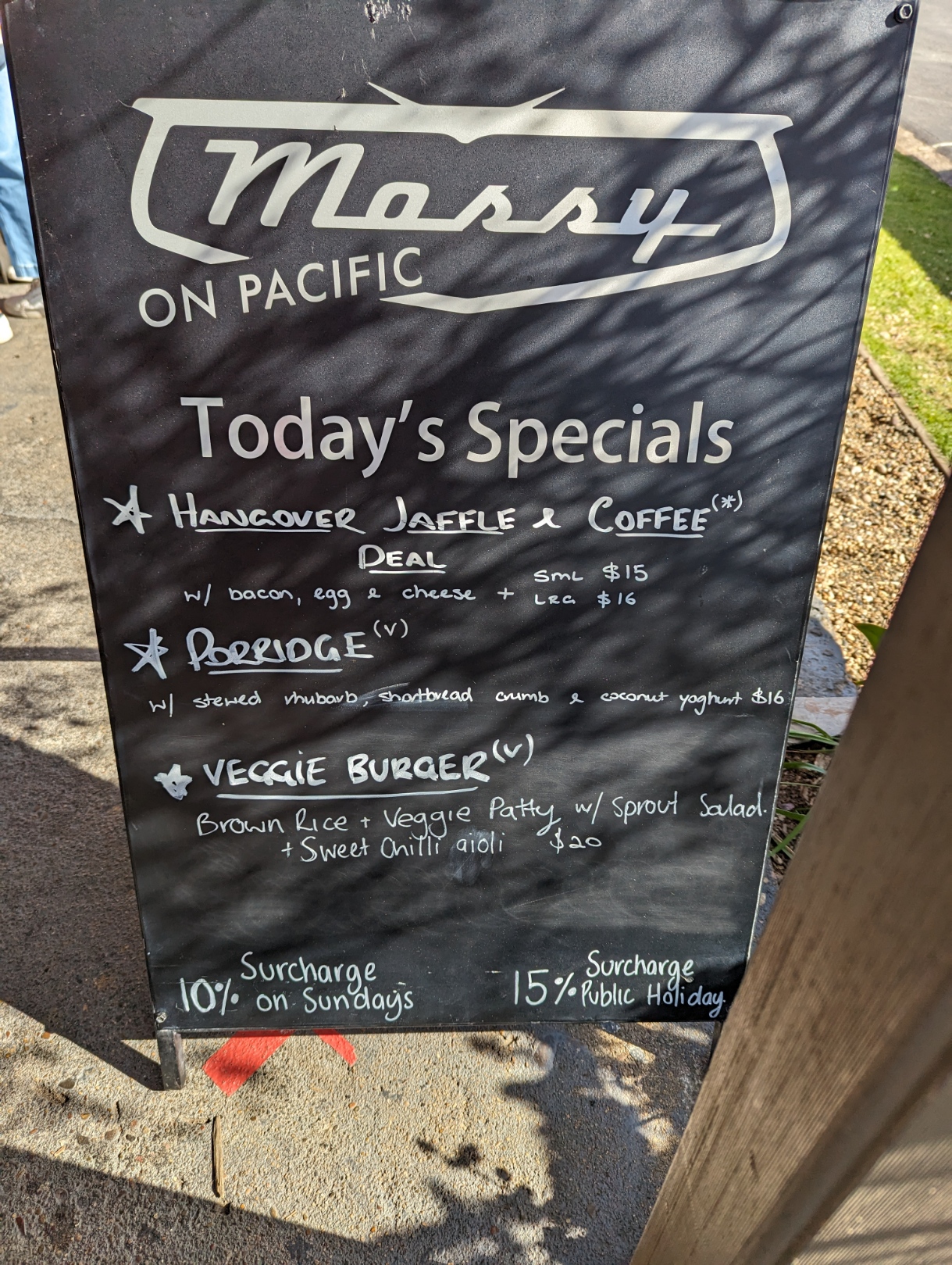




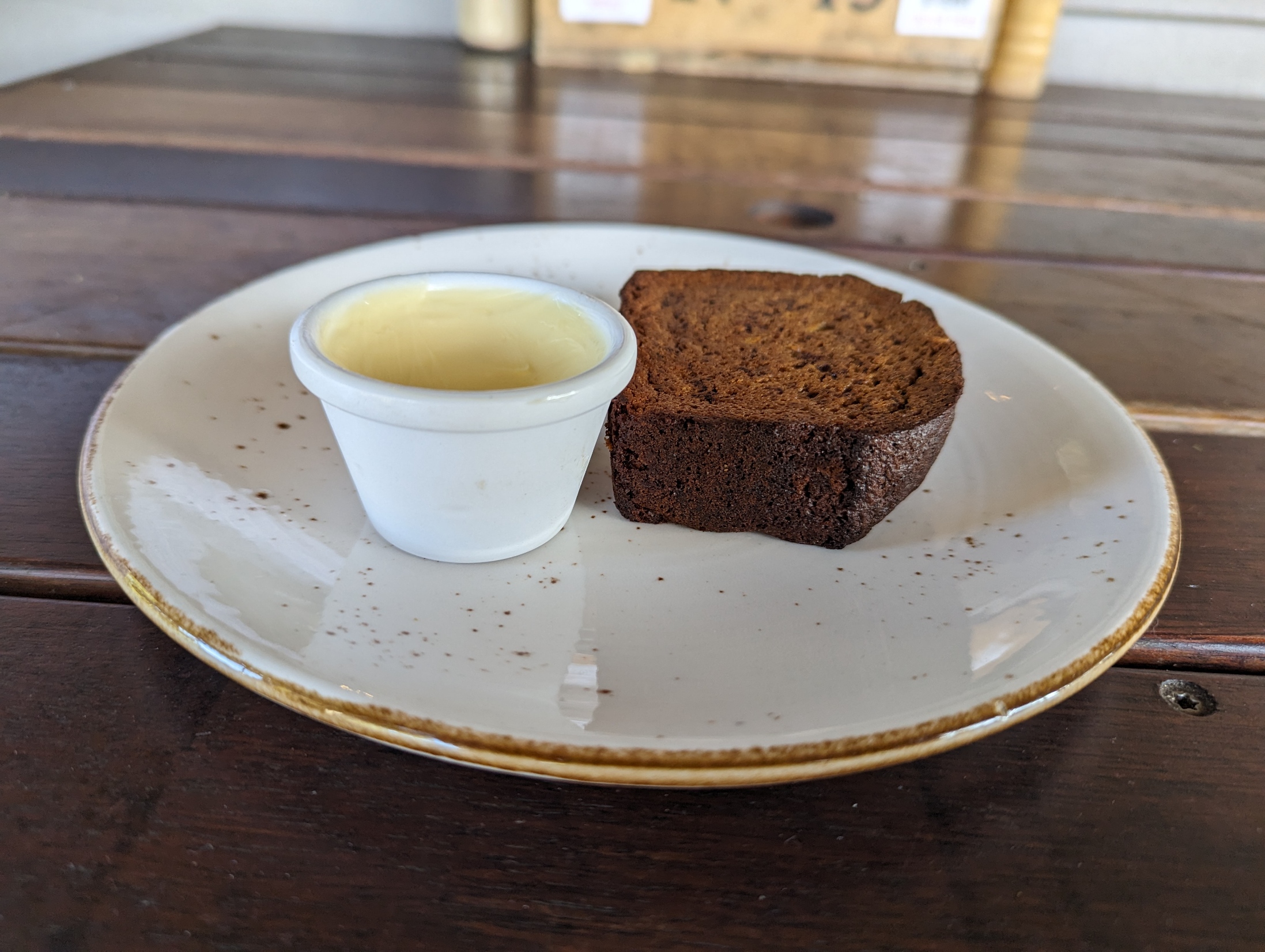
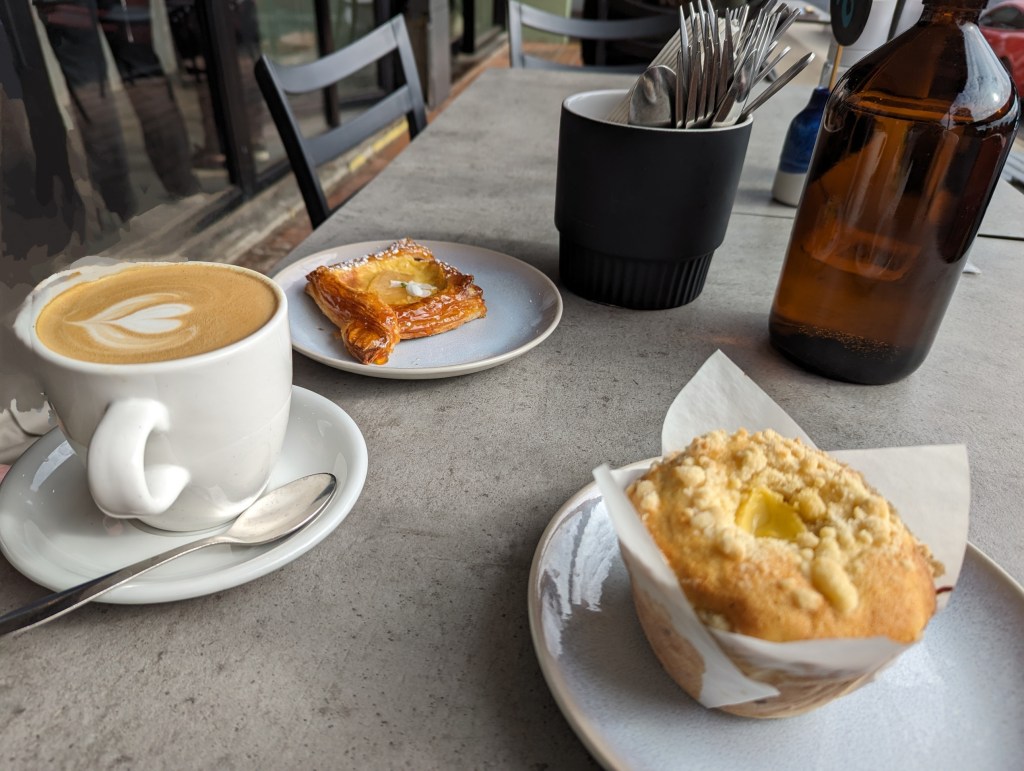







 Robin's Room